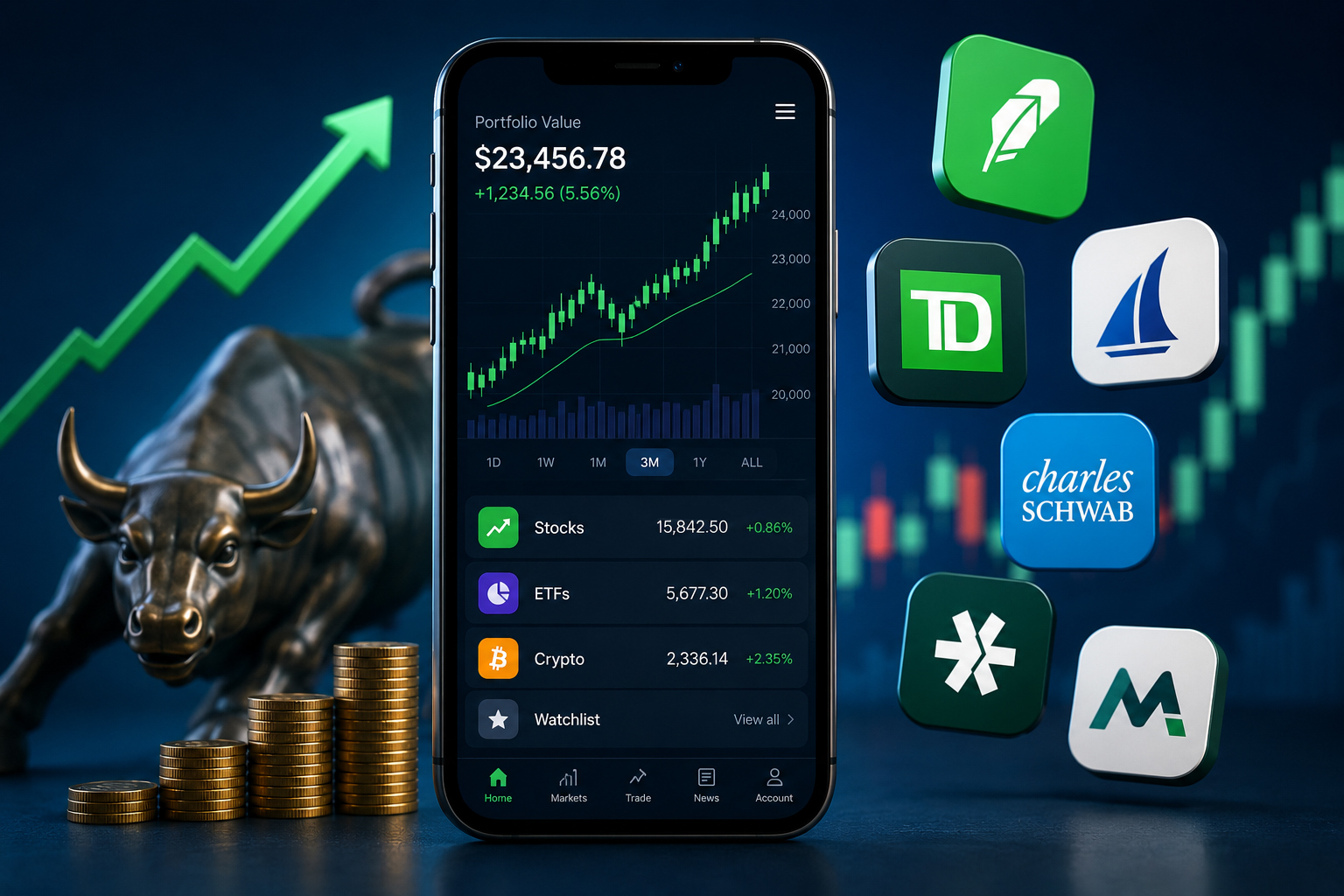
The retail investing landscape has undergone a monumental shift. What began as a commission-free revolution a decade ago has evolved into an ecosystem driven by artificial intelligence, multi-asset consolidation, and high-yield cash management.
According to financial market data, macroeconomic factors like sticky interest rates and a flight to value have made investors highly sensitive to platform fees, execution speeds, and alternative yield options. Furthermore, major technological shifts—such as major crypto brokerages integrating thousands of traditional equities have turned the “all-in-one” financial super-app from a luxury into an industry benchmark.
Whether you are an active options day trader seeking institutional-grade technical charts or a beginner looking to build passive wealth, choosing the right platform is critical. This comprehensive review breaks down the best stock trading and investing apps available today, analyzing their fees, core features, technology, and target user profiles.
Active Risk Mitigation Simulation
To choose the app that fits your budget and safety needs, test out our interactive comparison model below. Adjust your planned trading volume, average account size, and margin requirements to visualize how platform styles impact your bottom line.
Interactive Trading Platform Comparator
Adjust your trading volume, choices, and styles to find your mathematically optimal broker platform.
Our Top Platform Recommendation:
Fidelity Investments
Best for long-term investors looking for zero expense ratio index funds and extensive fractional shares freedom.
Platform
Est. Monthly Fee Cost
Est. Margin Rate
Suitability Index
Expert Insight: Casual investors should focus heavily on high cash-sweep yields and structural account wrappers (IRAs). If you are processing heavy options volumes, prioritize platforms that eliminate per-contract friction or optimize order executions to lower your slippage.
Market Overview: The Brokerage Landscape at a Glance
The following table outlines how the top-tier mobile investing applications compare across baseline costs, platform availability, and standout structural features.
Trading App
Best Used For
Base Stock/ETF Commissions
Standard Options Fee
Standout Innovation
Charles Schwab
Full-Service Investing & Advanced Charting
$0.00
$0.65 per contract
thinkorswim integration & exceptional 24/7 client support
Fidelity Investments
Fractional Shares & Retirement Accounts
$0.00
$0.65 per contract
Automated zero-expense index funds & robust research libraries
Interactive Brokers (IBKR)
Professional Trading & Global Markets
$0.00 (Lite) / Tiered (Pro)
$0.15 to $0.65 per contract
Trader Workstation (TWS) and access to 150+ international markets
Robinhood
Casual Derivatives & Margin Customization
$0.00
$0.00 per contract
24-hour market trading, high-yield cash sweep, and seamless UI
Kraken (Equities)
Multi-Asset Consolidation
$0.00 (US Equities)
N/A
Unified wallet for 11,000+ stocks, ETFs, and major cryptocurrencies
Deep-Dive Reviews: The Best Trading Apps
1. Charles Schwab: Best Overall Platform for Comprehensive Investing
Charles Schwab remains a dominant force in retail wealth management. Following its complete integration of TD Ameritrade’s legendary thinkorswim technology suite, Schwab successfully bridges the gap between everyday passive investors and professional desktop day traders.
Platform Experience: The core Schwab Mobile app is streamlined for retirement planning, mutual fund execution, and account oversight. However, active users can switch to the dedicated thinkorswim mobile app, which contains elite technical indicators, customizable charting capabilities, and live-streaming financial news feeds.
Pricing Structure: $0 online commissions for US listed stocks and ETFs. Options run at a standard $0.65 per contract.
Pros: Access to institutional-grade research reports, unparalleled customer service infrastructure, and zero account minimums.
Cons: The multi-app approach (Schwab vs. thinkorswim) can occasionally feel fragmented for intermediate traders who want a single unified interface.
2. Fidelity Investments: Best for Long-Term Wealth & Fractional Purchases
Fidelity is a premium ecosystem for self-directed investors who prioritize fractional-share freedom, security, and elite fundamental data.
Platform Experience: Fidelity’s app is highly intuitive, providing structural clarity across taxable accounts, Roth IRAs, and corporate 401(k) structures. Their native layout places automated research pipelines at your fingertips.
Fractional Share Leadership: Unlike platforms that restrict dollar-based fractional investing to a small list of blue-chip stocks, Fidelity opens up fractional execution across thousands of independent equities and ETFs from as little as $1.00.
Pricing Structure: Zero commission on traditional domestic stocks and ETFs. No account maintenance fees or hidden transfer penalties.
Pros: Access to “Fidelity Zero” index funds (which carry absolutely zero expense ratios), excellent order execution quality that saves retail users pennies per share, and strong cash-sweep yields.
Cons: The mobile layout is packed with data, which can occasionally overwhelm clean-UI purists who prefer hyper-minimalist designs.
3. Interactive Brokers (IBKR): Best for Advanced Traders and International Markets
For active professionals, margin accounts, and international asset allocation, Interactive Brokers is the global standard.
Platform Experience: IBKR provides two distinct mobile experiences: IBKR Mobile (for seasoned market participants using complex derivative ladders) and IBKR GlobalTrader (a modern, simplified app built for rapid cross-border stock buying).
Unmatched Global Access: IBKR allows users to fund accounts in multiple currencies and trade assets across more than 150 global markets. If you want to buy equities directly on European, Asian, or North American exchanges from a single interface, this is your solution.
Pricing Structure: IBKR Lite offers $0 commissions on US stocks/ETFs. IBKR Pro uses a low, tiered, or fixed per-share model (e.g., fraction-of-a-cent per share) but offers dramatically superior smart order routing to capture optimal price execution.
Pros: Industry-low margin loan rates, massive short-sale inventory for active short sellers, and highly customizable algorithmic order types.
Cons: The Pro mobile dashboard features a steep learning curve that is explicitly punitive to complete beginners.
4. Robinhood: Best App for UI Simplicity and Option Execution Costs
Robinhood completely transformed retail brokerage infrastructure and continues to capture massive market shares among younger demographics.
Platform Experience: Robinhood boasts a highly responsive interface design. Complex actions—such as rolling over multi-leg options spreads or executing automated recurring crypto/stock buys—can be done in a few taps.
Extended Hours & Cash Features: A key differentiator is their 24-Hour Market, allowing overnight trading on a select list of high-volume equities and ETFs. Furthermore, their premium gold tier offers competitive cash-sweep interest rates, turning idle uninvested balances into active yield generators.
Pricing Structure: True $0 commission on stocks, ETFs, and options contracts.
Pros: Completely free option trading (no per-contract fees), beautiful visual analytics, and immediate access to instant deposits.
Cons: Limited structural account varieties (lacks comprehensive trust accounts or business structures) and bare-bones fixed-income tools (bonds/mutual funds).
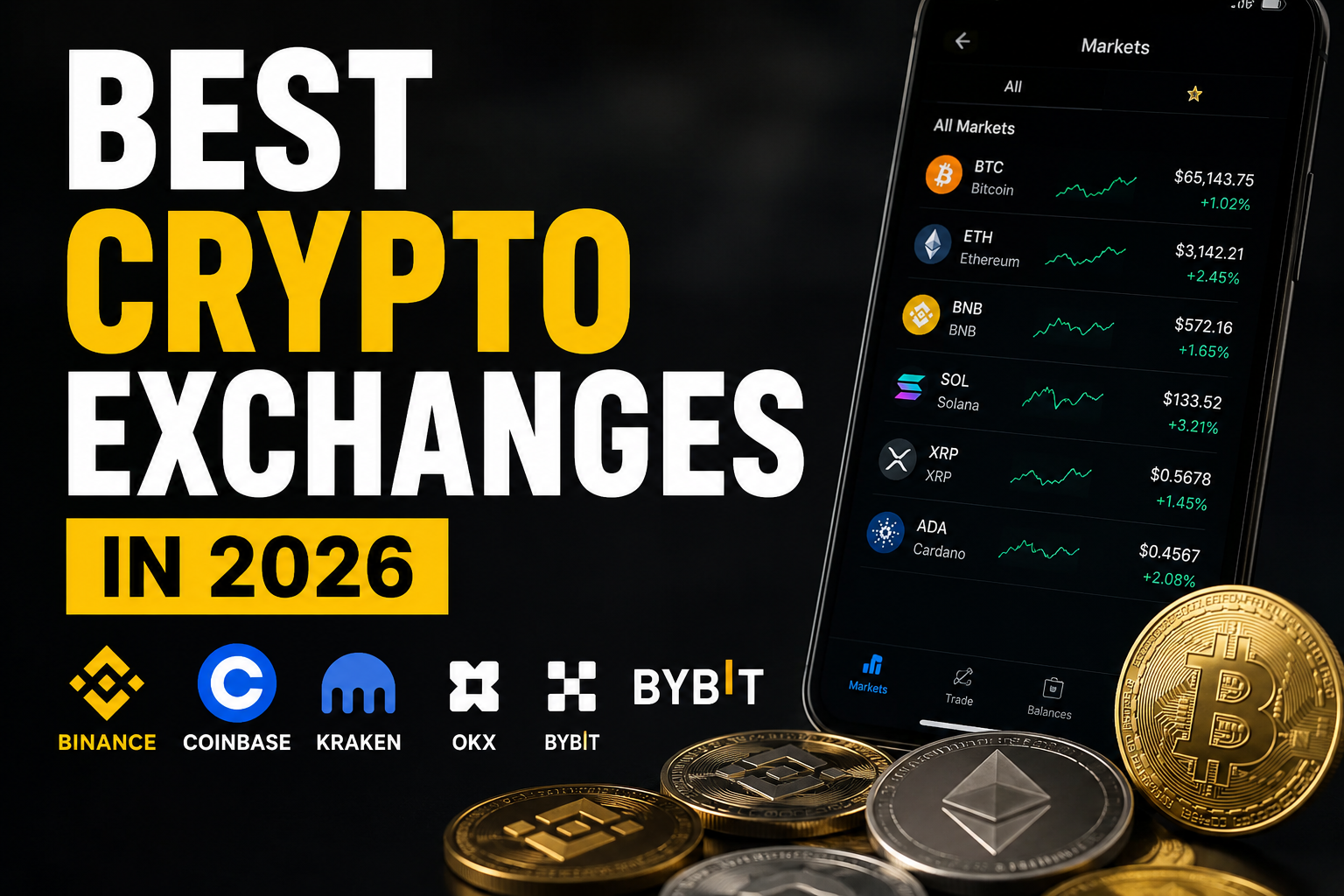
5. Kraken: Best New Multi-Asset Competitor for Crypto & Equities Consolidation
As traditional finance and digital assets converge, major cryptocurrency institutions have branched directly into traditional equities. Kraken represents this new category of modern financial platforms.
Platform Experience: Kraken has expanded its core trading interface to support over 11,000 US-listed stocks and exchange-traded funds alongside its deep cryptocurrency markets. This allows modern digital-native investors to rebalance out of volatile crypto assets straight into traditional equities without leaving the app ecosystem.
Pricing Structure: Zero commissions on traditional US stock and ETF trades with zero account minimums.
Pros: Instant settlement usability between digital assets and traditional equities, high-tier biometric security protocols, and clean modern aesthetic layouts.
Cons: Lacks legacy retirement account wrappers (like traditional IRAs) and advanced traditional stock screening toolkits found in older platforms.
Key Strategic Factors to Assess
1. Understanding Order Execution Quality (PFOF)
Many apps claim “$0 commissions,” but brokerages must still make money. Most consumer-facing apps utilize Payment for Order Flow (PFOF).
How PFOF Works: When you submit a market order, the app routes that order to a wholesale market maker rather than directly to a public exchange (like the NYSE). The market maker pays the brokerage a tiny fraction of a cent per share for this order flow.
While this keeps your nominal upfront commission at zero, it can sometimes result in slightly less favorable execution prices on massive block orders. Platforms like IBKR Pro let you bypass this entirely by routing directly to your exchange of choice for a small transparent fee.
2. High-Yield Cash Sweeps
With global central bank rates fluctuating, keeping uninvested cash idle inside a brokerage account is a massive missed opportunity. Look closely at your app’s cash-sweep program. Top platforms automatically transfer your uninvested trading cash into program partner banks, ensuring your money earns high interest rates and remains protected by expanded FDIC insurance wrappers up to standard limits.
3. Account Types and Legal Structures
Before worrying about the charting interface, confirm the platform supports your required legal tax structure:
Taxable Brokerage Accounts: Standard capital gains accounts with no contribution maximums or withdrawal age penalties.
Retirement Wrappers (IRAs): Tax-advantaged structures (Roth or Traditional IRAs) vital for long-term compound growth.
Custodial Accounts (UGMA/UTMA): Specialized frameworks managed by adults for minors.
Which Mobile Platform Wins?
The absolute “best” trading app is entirely dependent on your personal operational style:
Go with Charles Schwab (thinkorswim) if you require institutional technical analysis tools, robust stock screeners, and access to premium human financial advisory experts.
Choose Fidelity if your core goal is building long-term generational wealth through automated, fractionally scaled index portfolios and specialized retirement tax accounts.
Opt for Interactive Brokers if you are an advanced algorithmic active trader handling high volumes of multi-asset classes across international border configurations.
Download Robinhood or Kraken if you prefer a streamlined user interface, need immediate crypto-fiat interoperability, or aggressively trade short-term retail derivatives with zero per-contract fee overhead.
Disclaimer: All financial investments carry inherent structural market risks. Past asset performance does not guarantee future portfolio returns. Ensure your brokerage accounts are protected via SIPC insurance frameworks before committing large-scale capital resources.