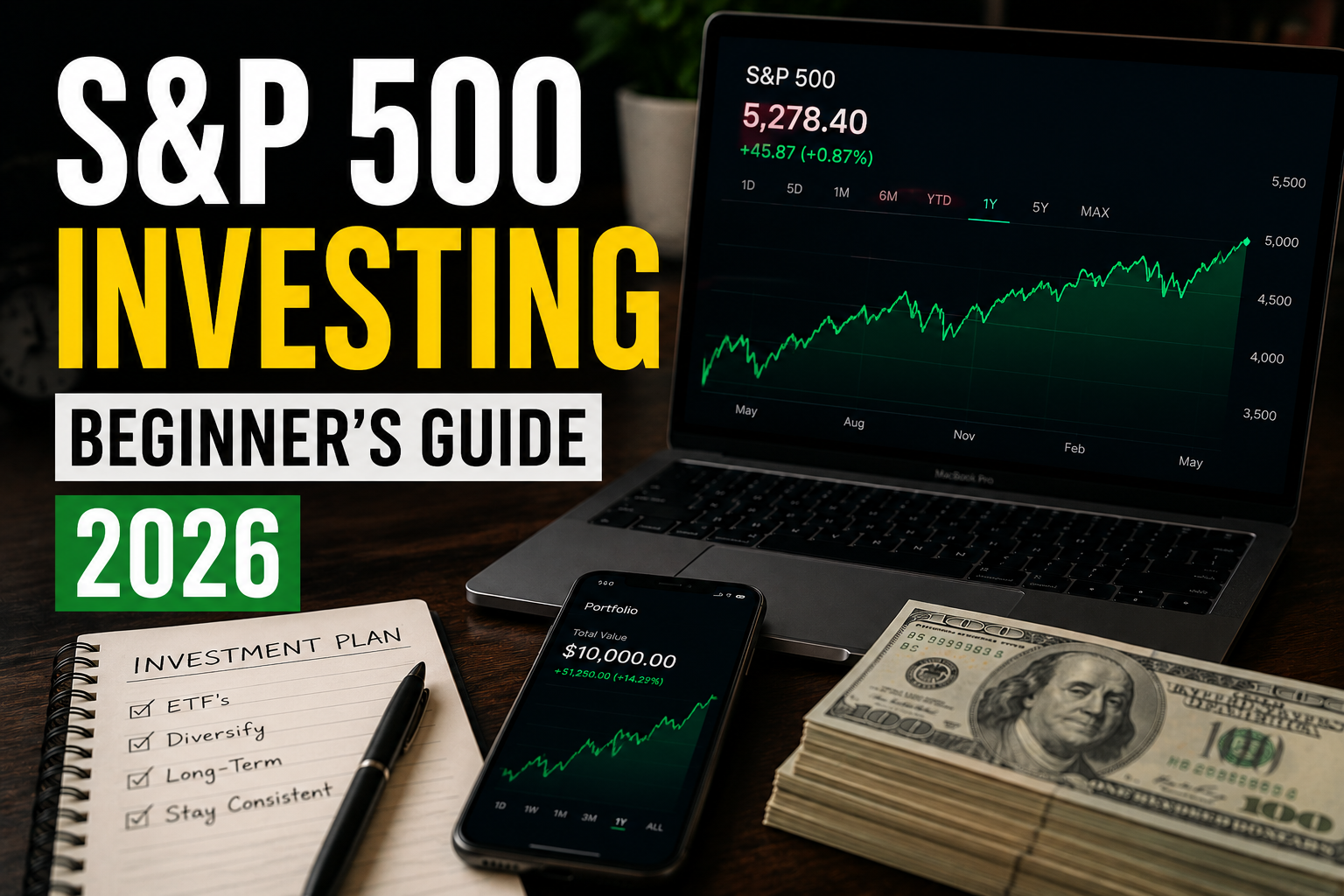
The S&P 500 is widely considered one of the most effective long-term investments available. It has helped millions of investors build wealth through diversification, compounding, and exposure to some of the world’s largest companies.
Whether you’re investing your first $100 or building a six-figure portfolio, understanding how the S&P 500 works can help you make smarter investment decisions.
What Is the S&P 500?
The S&P 500 is a stock market index that tracks 500 of the largest publicly traded companies in the United States.
It includes businesses from sectors such as:
Technology
Healthcare
Financial Services
Consumer Goods
Energy
Communications
Some of the world’s most influential companies are represented in the index.
Because the S&P 500 covers a large portion of the U.S. stock market, it is often viewed as a benchmark for overall market performance.
Why Investors Love the S&P 500
Diversification
Instead of investing in a single company, investors gain exposure to hundreds of businesses through one investment.
This helps reduce company-specific risk.
Long-Term Growth
Historically, the S&P 500 has produced strong long-term returns, making it a popular choice for retirement accounts and wealth-building strategies.
Simplicity
Many investors prefer a simple investment approach.
Buying an S&P 500 ETF can provide broad market exposure without requiring constant research and stock selection.
Low Fees
Many S&P 500 ETFs have extremely low expense ratios, allowing investors to keep more of their returns.
How to Invest in the S&P 500
Most investors gain exposure through Exchange Traded Funds (ETFs).
Popular options include:
Vanguard S&P 500 ETF (VOO)
SPDR S&P 500 ETF Trust (SPY)
iShares Core S&P 500 ETF (IVV)
These funds track the index and aim to mirror its performance.
How Much Should You Invest?
The answer depends on:
Income
Goals
Risk tolerance
Time horizon
Many investors follow a strategy of investing consistently over time rather than attempting to time the market.
For example:
$100 per month
$500 per month
$1,000 per month
Consistency often matters more than trying to predict short-term market movements.
Lump Sum vs Dollar-Cost Averaging
Lump Sum Investing
Investing all available capital immediately.
Benefits:
Maximum market exposure
Historically effective over long periods
Risks:
Short-term volatility after investing
Dollar-Cost Averaging
Investing gradually over time.
Benefits:
Reduces emotional decision-making
Less concern about market timing
Risks:
Potentially lower returns during strong bull markets
Both approaches can be successful depending on investor preferences.
Historical Performance
Many investors are attracted to the S&P 500 because of its long-term growth record.
Key factors behind its historical success include:
Economic growth
Innovation
Corporate earnings growth
Reinvestment of dividends
However, past performance does not guarantee future results.
Markets can experience periods of significant volatility and temporary declines.
Risks of Investing in the S&P 500
Market Risk
Stock markets can decline during recessions, economic uncertainty, and financial crises.
Concentration Risk
Large technology companies often represent a significant portion of the index.
Emotional Investing
Fear and panic selling during market downturns can damage long-term returns.
Successful investors often focus on long-term goals rather than short-term market fluctuations.
Example S&P 500 Investment Strategy
A simple portfolio could include:
80% S&P 500 ETF
10% International ETF
10% Bonds or Cash
This provides broad diversification while maintaining strong exposure to the U.S. stock market.
Common Mistakes Beginners Make
Trying to Time the Market
Many investors wait for the “perfect” entry point and never invest.
Panic Selling
Temporary declines are a normal part of investing.
Ignoring Fees
High investment costs can significantly reduce returns over time.
Chasing Hot Stocks
Many investors underperform because they constantly jump between trends.
S&P 500 vs Individual Stocks
S&P 500
Individual Stocks
Diversified
Concentrated Risk
Lower Maintenance
Requires Research
Lower Risk
Higher Risk
Long-Term Focus
Potentially Higher Reward
Most beginner investors benefit from broad diversification rather than attempting to pick winning stocks.
Frequently Asked Questions
Is the S&P 500 a good investment?
Many investors consider the S&P 500 one of the strongest long-term wealth-building investments available.
Can beginners invest in the S&P 500?
Yes. ETFs make it easy for beginners to gain exposure to the index.
How much money do I need?
Many brokers allow investors to start with relatively small amounts through fractional investing.
Is the S&P 500 safe?
No investment is completely risk-free. However, broad diversification helps reduce individual company risk.
Final Thoughts
The S&P 500 remains one of the most popular investment choices in 2026 because it combines diversification, simplicity, and long-term growth potential. Rather than attempting to predict which individual stocks will succeed, investors gain exposure to hundreds of leading companies through a single investment.
For many people, consistently investing in an S&P 500 ETF over many years can be a powerful strategy for building wealth and achieving long-term financial goals.