When inflation begins eroding the purchasing power of fiat currency, traditional cash savings quickly become a liability. Historically, investors turn to tangible assets to weather macroeconomic storms. Hard assets—specifically precious metals—have served as the ultimate store of value for thousands of years.
Navigating the precious metals market requires looking past the historical prestige of gold and silver. It is vital to examine how structural shifts, supply deficits, and geopolitical conflicts shape the commodity landscape today.
This comprehensive guide breaks down the best precious metals to buy during inflationary cycles, highlights major risk-mitigation strategies, and details the fundamental drivers shaping the markets right now.
Why Precious Metals Act as an Inflation Hedge
To understand why precious metals excel during inflationary periods, it helps to understand the core mechanics of inflation. When central banks expand the money supply or run significant fiscal deficits, the supply of fiat currency grows relative to the supply of real goods and services. As a result, prices rise.
Unlike paper currencies, which can be printed without limit, precious metals possess intrinsic properties that make them an excellent hedge against inflation:
Scarcity: The global supply of metals is constrained by geological limits and the high cost of mining exploration, extraction, and processing.
No Counterparty Risk: Physical bullion held in your possession does not rely on a bank, corporation, or government to fulfill a promise or honor a contract.
Universal Liquidity: Gold, silver, platinum, and palladium can be bought, sold, and traded anywhere in the world, holding universally recognized value.
Inverse Relationship with Real Yields: When inflation outpaces nominal interest rates, real interest rates turn negative. Because precious metals offer no yield or dividend, they become highly attractive when interest-bearing accounts fail to beat rising consumer prices.
1. Gold: The Ultimate Safe Haven Asset
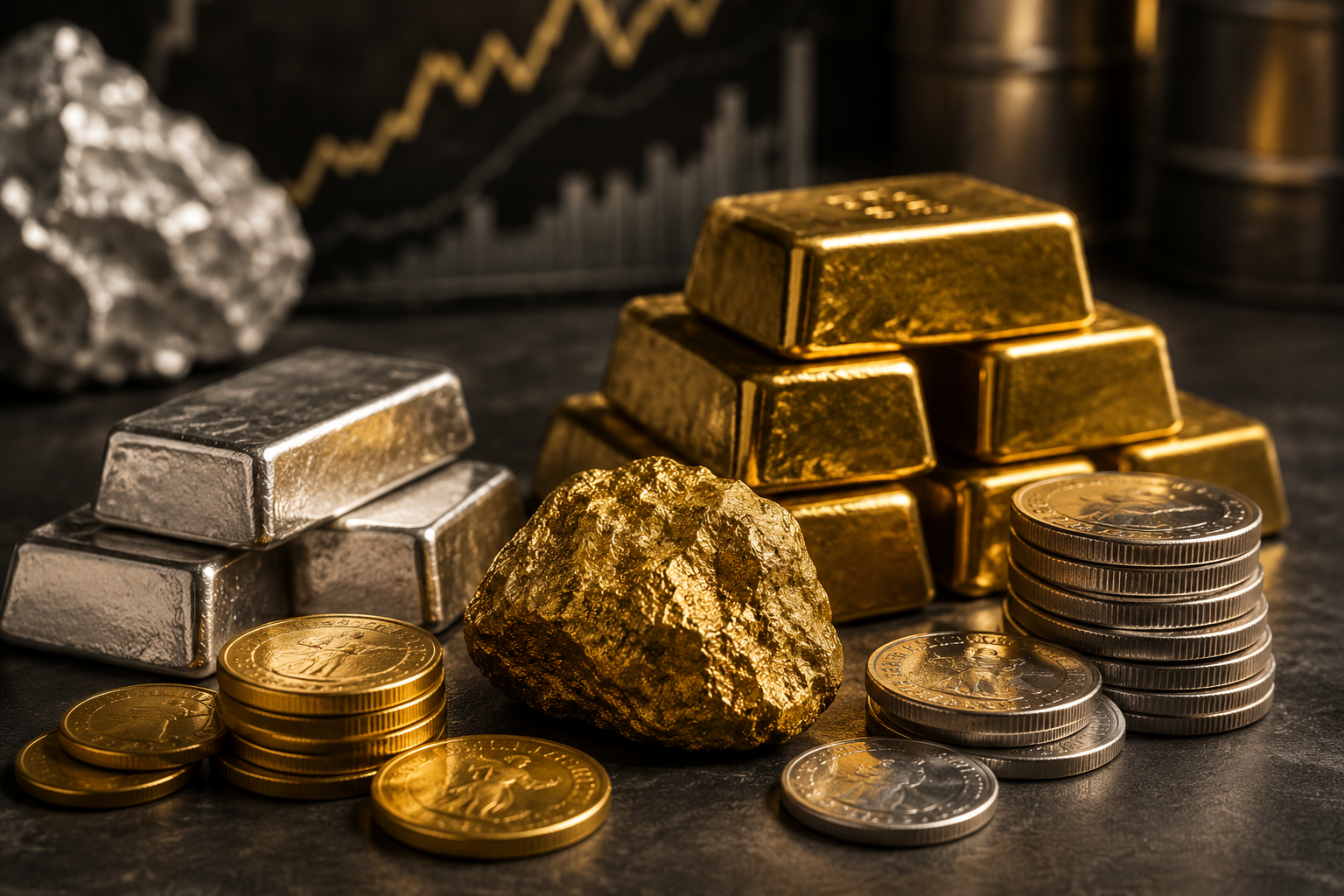
Gold remains the foundational cornerstone of any wealth preservation strategy. During extreme market volatility or multi-year inflationary cycles, gold functions as global financial insurance.
Supply and Demand Dynamics
The gold market is exceptionally deep and highly liquid. According to market data from independent consultancies like Metals Focus, a structural shift is occurring where physical investment in bars and coins is replacing jewelry as the single largest component of global gold demand.
While jewelry demand tends to pull back when prices soar, retail physical investment and institutional allocation to exchange-traded funds (ETFs) aggressively step in to absorb the available market supply.
Central Bank Accumulation
A critical long-term driver for gold is institutional buying. Central banks across the globe continue to aggressively diversify their official reserves away from traditional fiat assets like the U.S. dollar and Euro. Data from the International Monetary Fund (IMF) confirms that central bank gold holdings make up roughly 20% of global official reserves, a notable increase from prior decades. This sustained official buying provides a solid structural floor under gold prices.
How to Invest in Gold
Physical Bullion: Sovereign minted coins (such as the American Gold Eagle or Canadian Maple Leaf) and government-assayed bars are the safest ways to own physical gold.
Gold ETFs: Funds like GLD or IAU track the spot price of gold, allowing for instant liquidity within a traditional brokerage or retirement account without the burden of physical storage logistics.
Gold Mining Stocks: Buying equities in senior miners offers operational leverage to the underlying price of gold, though it introduces corporate execution, energy cost, and geopolitical mining risks.
2. Silver: The High-Beta Inflation Play
Silver is unique because it serves a dual purpose: it is highly sought after as a monetary safe haven, yet it remains an essential component across multiple industrial applications.
The Industrial Growth Engine
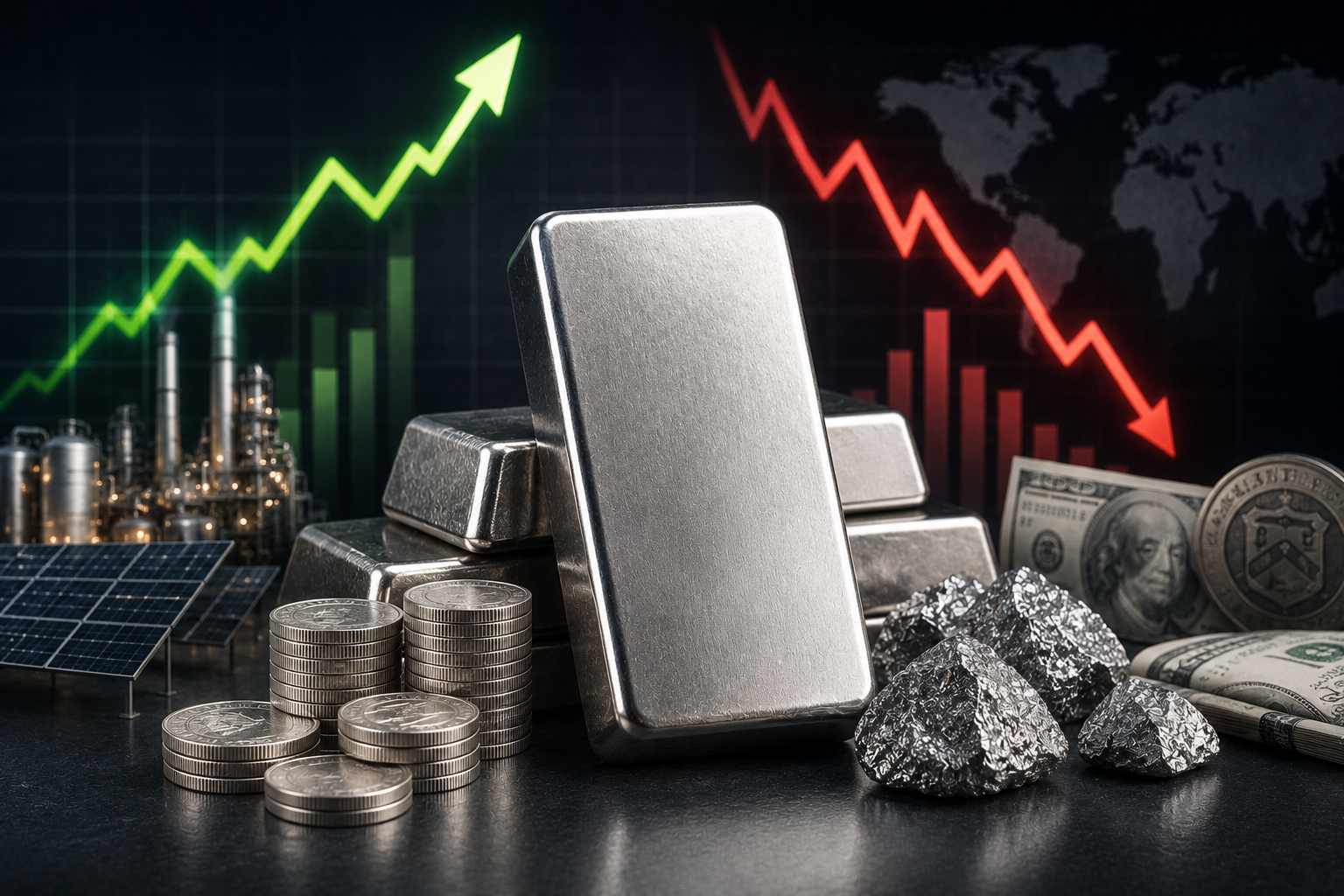
Silver behaves as a “high-beta” play relative to gold, meaning it typically exhibits higher volatility and amplifies the upward or downward price movements of gold. However, silver boasts powerful structural tailwinds stemming from the green energy transition.
Silver is the most electrically conductive metal on Earth. It is a mandatory material used in the manufacturing of photovoltaic solar panels, electric vehicle (EV) battery architectures, consumer electronics, and automated industrial components.
Deep Structural Deficits
The silver market faces multi-year structural supply deficits. Global mining output has remained relatively stagnant because silver is predominantly mined as a secondary byproduct of lead, zinc, copper, and gold mines. Major global banks, including J.P. Morgan and Bank of America, consistently note that expanding industrial demand from the solar and electronics sectors, colliding with inelastic mining supply, positions silver for significant price appreciation during broader commodity cycles.
Understanding the Gold-to-Silver Ratio
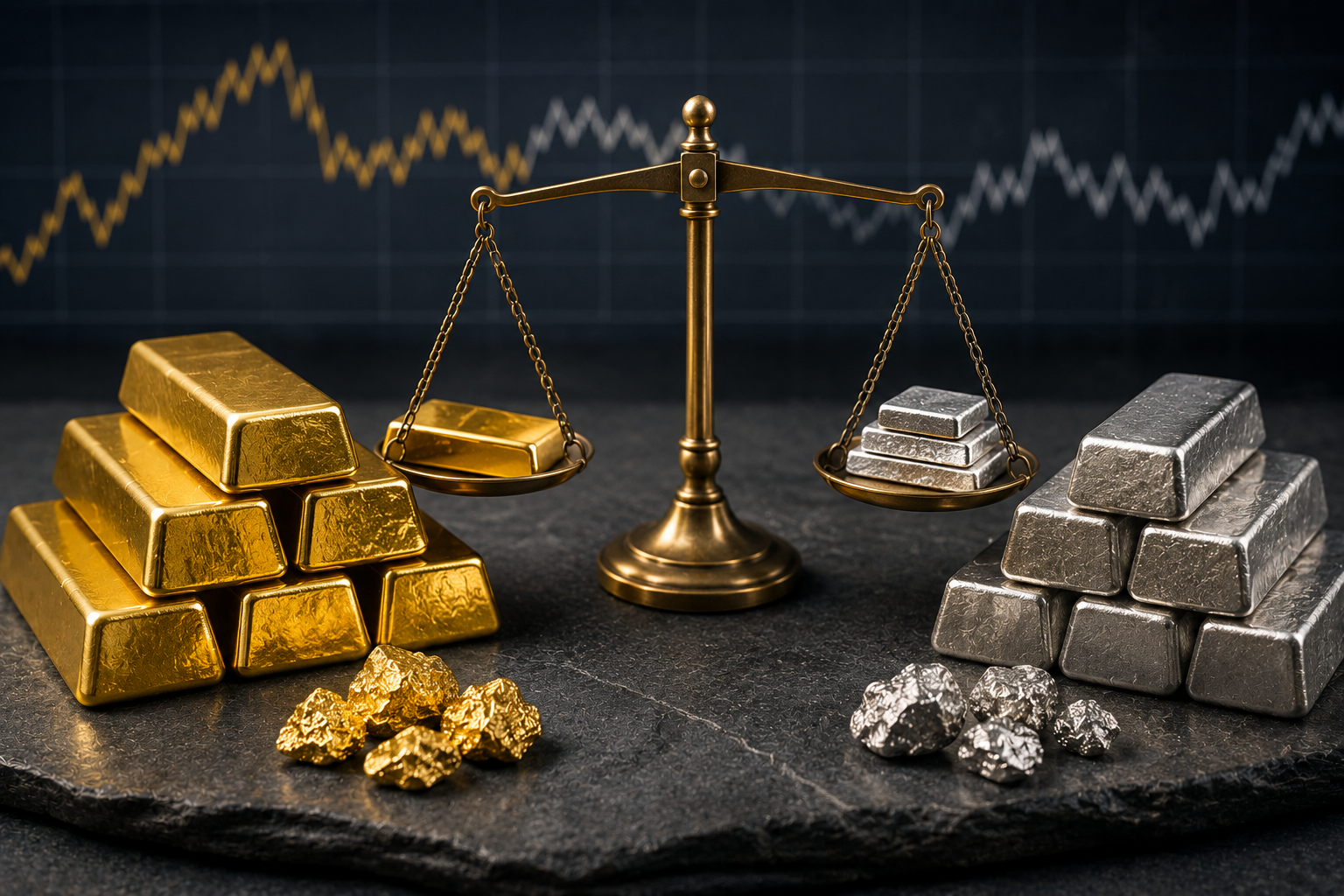
The gold-to-silver ratio measures how many ounces of silver are required to purchase a single ounce of gold. This metric provides historical context for identifying which metal may be relatively under- or overvalued.
Historically, when the ratio stretches well above its long-term historical averages, it indicates that silver is historically cheap relative to gold. Savvy investors use these moments to heavily weight their precious metals allocations toward silver, waiting for the ratio to compress as silver catches up to gold’s momentum.
3. Platinum: The Undervalued Industrial Alternative
Platinum is vastly rarer than gold or silver, yet it frequently trades at a substantial discount to gold. This deep relative-value gap makes it a compelling contrarian asset for inflation protection.
Platinum’s Primary Use Cases
Historically, platinum’s primary demand driver has been automotive catalytic converters, which scrub harmful emissions from internal combustion engine (ICE) vehicles. While the long-term rise of electric vehicles poses a risk to traditional auto-catalyst demand, platinum has found massive new applications in green hydrogen production via Proton Exchange Membrane (PEM) electrolyzers and fuel cells.
Supply Concentration Risks
The supply side of the platinum market is incredibly fragile. Over 70% of the world’s primary platinum supply is concentrated in a single geographic region: South Africa. The remainder comes primarily from Russia and Zimbabwe. Ongoing structural power grid instability, labor disputes, and geopolitical export restrictions in these nations make platinum highly susceptible to sudden supply shocks that can rapidly drive prices upward.
4. Palladium: The High-Volatility Specialty Metal
Like platinum, palladium belongs to the Platinum Group Metals (PGMs) and is primarily utilized in gasoline-powered automotive exhaust systems.
Palladium is a highly specialized asset characterized by thin trading volume and low liquidity relative to gold or silver. Because of this, it can undergo multi-hundred-dollar price swings over incredibly short timeframes.
While palladium offers explosive upside potential during broader commodity supply constraints, its heavy reliance on the automotive sector means it functions less as a pure monetary anchor and more as a cyclical industrial play. For an inflation hedge, it should be kept as a small tactical allocation rather than a core portfolio foundation.
Comparing the Best Inflation Metals
To choose the asset that aligns with your specific portfolio goals, it helps to compare the primary attributes of each metal side-by-side:
Metal
Primary Driver
Volatility Level
Liquid SPREAD
Best Investment Vehicle
Gold
Central Banks & Sovereignty
Low to Moderate
Extremely Tight
Physical Bullion & Sovereign Coins
Silver
Solar Tech & Retail Demand
High
Moderate
10 oz / 100 oz Assayed Bars
Platinum
Hydrogen Tech & South Africa Supply
Moderate to High
Wide
Physical Bars & PPLT ETF
Palladium
Gasoline Catalytic Converters
Extremely High
Very Wide
Specialized Storage or Focused ETFs
Current Macro Drivers and Central Bank Actions
The macroeconomic backdrop of the mid-2020s has fundamentally reshaped commodity markets. Understanding current conditions is essential for timing and structuring an allocation to precious metals.
Persistent Global Inflation
Core consumer price indexes across major developed economies continue to hover stubbornly above target central bank levels. Despite these structural inflationary pressures, many global central banks have chosen to lower nominal interest rates or maintain highly expansionary monetary policies to support high national debt loads. This creates an ideal environment for precious metals: sticky inflation paired with falling real yields.
Geopolitical Conflicts and Supply Shocks
The modern geopolitical landscape remains deeply fragmented. Escalating localized conflicts, such as the friction in the Middle East and ongoing supply chain realignments, routinely introduce sudden shocks to global trade.
Whenever energy costs or global shipping logistics face disruption, the costs associated with running heavy mining operations surge. This limits the extraction of new metals while simultaneously driving anxious global capital toward the safety of physical bullion.
The Fed Shift
Market dynamics show that investor expectations adjust rapidly to new macroeconomic data. For example, unexpected spikes in employment data or shifts in Federal Reserve leadership can cause short-term pullbacks in metals as traders price in a potentially more hawkish interest rate outlook.
Sophisticated investors view these sharp, data-driven pullbacks not as a breakdown of the trend, but as strategic long-term entry points. The foundational structural drivers—such as rising sovereign debt levels and ongoing currency devaluation—remain completely intact.
Step-by-Step Strategy: Building a Precious Metals Portfolio
If you want to allocate a portion of your net worth to precious metals during an inflationary cycle, executing the process systematically minimizes risk.
1.Determine Your Allocation Percentage:Portfolio Architecture.
Assess your risk tolerance and financial goals. Most conservative financial advisors suggest a baseline allocation of 5% to 10% of total investable assets in precious metals for pure wealth preservation, while aggressive contrarians may allocate up to 15% to 20%.
2.Select Your Metal Mix:Asset Diversification.
Build a balanced foundation. A resilient approach allocates 60% to 70% of your metals portfolio to gold for steady capital preservation, 20% to 30% to silver for explosive upside potential, and the remaining 10% split across platinum group metals for cyclical value.
3.Choose Your Custody and Storage:Security Execution.
Decide between home storage, bank safety deposit boxes, or third-party segregated vaulting facilities. If holding physical bullion at home, invest in a heavy, high-security fireproof safe and avoid discussing your holdings publicly.
Avoid deploying all your capital in a single transaction. Break your total investment amount into fixed monthly or quarterly tranches. This systematically irons out short-term price volatility and protects you from buying at a temporary cyclical peak.
Critical Risks to Keep in Mind
While precious metals are fantastic wealth preservation tools, they are not without clear downsides that you must prepare for before deploying capital.
The Opportunity Cost of Zero Yield: Physical gold and silver do not pay dividends, interest, or monthly cash flow. When you hold bullion, your sole source of return is pure capital appreciation. If nominal interest rates rise significantly above the rate of inflation, holding non-yielding bullion incurs a measurable opportunity cost compared to short-term government bonds or high-yield equities.
Additionally, physical investors must factor in transaction costs. The difference between the buying price and selling price (the dealer premium) can be quite wide, particularly for silver and platinum coins. You must hold your metals long enough for the spot price to overcome these initial purchase premiums to secure a net profit.
Summary: Protecting Wealth with Real Assets
When paper assets face headwinds from currency debasement and geopolitical uncertainty, physical precious metals offer a time-tested sanctuary.
Gold provides the ultimate, highly liquid anchor for capital preservation, driven by long-term central bank accumulation.
Silver pairs monetary protection with explosive industrial demand stemming from the global green energy transition.
Platinum and Palladium offer specialized, high-volatility opportunities for contrarian value investors targeting specific supply shortages.