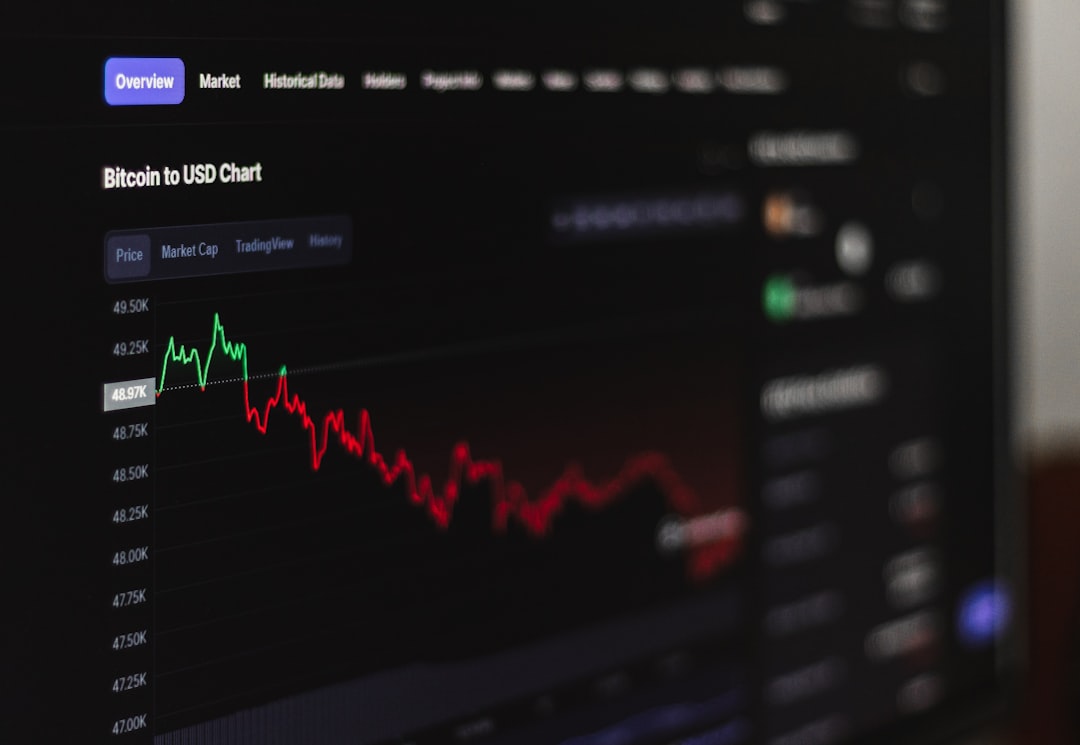
The global foreign exchange marketplace is navigating a highly dynamic macroeconomic landscape. Driven by shifting monetary policies from major central banks, unexpected leadership transitions at the Federal Reserve, and ongoing energy disruptions in shipping corridors like the Strait of Hormuz, currency volatility has taken center stage. As individual economies experience uneven inflation cooling, currency pairs are fluctuating rapidly.
To navigate these fast-moving markets, traders must master the foundational concepts of currency valuation. If you look at a live trading terminal, you will see currency exchange rates quoted out to four or five decimal places.
Unlike standard retail prices, currency values move in fractions of a cent. To track, calculate, and manage these minute movements, the global financial industry relies on a standardized unit of measurement known as the pip.
Understanding exactly what a pip is, how it works across different currency pairs, and how to calculate its real cash value is the first step toward managing risk and building a sustainable trading strategy.
1. Defining the Pip: Percentage in Point
The word pip is an acronym that stands for Percentage in Point or Price Interest Point. By definition, a pip is the standard unit used to measure the smallest change in value between two currencies.
For the vast majority of currency pairs traded globally, a single pip represents a one-digit movement in the fourth decimal place of an exchange rate quote. Expressed numerically, one standard pip is equal to 0.0001.
When you look at a major currency pair like the Euro against the U.S. Dollar (EUR/USD), the exchange rate might be quoted at 1.0852. If the market shifts and the quote updates to 1.0853, the exchange rate has increased by exactly one pip. If it drops from 1.0852 down to 1.0842, the rate has declined by ten pips.
By tracking movements in pips, the trading community can communicate price fluctuations smoothly without dealing with microscopic fractions of a cent in conversation.
2. The Great Exception: Japanese Yen (JPY) Pairs
While the fourth decimal place rule applies to almost all major and minor currency combinations, there is a prominent exception built into the global financial architecture: pairs involving the Japanese Yen.
Because the individual unit value of a single Japanese Yen is structurally much lower than a U.S. Dollar, a Euro, or a British Pound, JPY exchange rates are quoted to fewer decimal places to remain practical. For any pair where the Japanese Yen is the counter currency, a single pip is represented by a movement in the second decimal place (0.01).
Consider the U.S. Dollar against the Japanese Yen (USD/JPY). If the trading pair is priced at 157.10 and climbs to 157.11, that upward movement equals one pip. If the Yen strengthens significantly and pushes the exchange rate down to 156.10, the pair has dropped by exactly 100 pips.
3. Pips vs. Pipettes: Understanding Fractional Pricing
As global digital infrastructure advanced, liquidity providers and brokerage platforms sought to offer tighter transaction pricing to stay competitive. This led to the introduction of fractional pip pricing.
Most modern forex brokers quote currency pairs past the standard pip definition, adding an extra digit to their display. This final digit is called a pipette, or a fractional pip.
On Standard Pairs: The pipette is displayed at the fifth decimal place (0.00001). One pipette is precisely equal to one-tenth of a standard pip.
On JPY Pairs: The pipette is displayed at the third decimal place (0.001).
If the EUR/USD exchange rate ticks up from 1.08523 to 1.08524, the price has moved by one pipette. To accumulate a full single pip of profit or loss, the exchange rate must move by ten individual pipettes. On trading terminals, the pipette is usually styled in a smaller, superscript font to prevent traders from confusing fractional movements with whole pips.
4. How Position Sizing Dictates Pip Value
A common error among novice market participants is assuming that a 10-pip move carries the same financial weight for every account. In reality, a pip is simply a measure of distance and direction; it carries no inherent monetary value on its own.
The actual cash value of a single pip is completely dependent on three distinct factors:
The specific currency pair being traded.
The total volume or position size of the trade (known as lot size).
The base currency denominating your trading account.
In institutional foreign exchange markets, trade volumes are measured in standardized blocks called lots. Position sizes are broken down into three primary retail categories:
Standard Lot (1.0): Represents 100,000 units of the base currency.
Mini Lot (0.10): Represents 10,000 units of the base currency.
Micro Lot (0.01): Represents 1,000 units of the base currency.
When your trading account currency matches the quote currency (the second currency listed in the trading pair), calculating the cash value of a pip is straightforward and remains perfectly fixed.
The Standard USD Pip Value Rule
If you operate an account denominated in U.S. Dollars and you are trading a pair where the USD is the second currency (such as EUR/USD, GBP/USD, or AUD/USD), the financial weight of a single pip scales linearly with your position size:
Trading 1 Standard Lot (100,000 units): 1 pip = $10.00 USD
Trading 1 Mini Lot (10,000 units): 1 pip = $1.00 USD
This means that if you open a 1 standard lot position on the EUR/USD and the market moves 50 pips in your favor, your gross profit is 500 dollars. Conversely, if you execute a 1 micro lot trade on the same pair, that identical 50-pip price movement yields a profit of 5 dollars.
5. Step-by-Step Pip Value Calculations
When you trade a currency pair where your account currency does not match the quote currency, the dollar value of each pip fluctuates in real-time alongside global exchange rates.
To determine the exact value of a pip in these scenarios, you can utilize a standard mathematical formula.
Math Formula for Non-USD Crosses
To find the raw value of a pip denominated in the pair’s quote currency, utilize this core equation:
PipValue=PipSize×PositionSize(Units)
If your trading account currency differs from the quote currency, you must take that baseline result and divide or multiply it by the prevailing spot exchange rate between those two currencies:
AccountPipValue=ExchangeRatePipSize×PositionSize?
Practical Example: Trading USD/JPY with a USD Account
Let us calculate the pip value for a trader opening a position on the U.S. Dollar against the Japanese Yen using a standard U.S. Dollar account.
Position Size: 1 Standard Lot (100,000 units of USD)
Current Spot Rate: USD/JPY = 157.10
Yen Pip Size: 0.01
First, apply the baseline equation to find the value in the quote currency (Yen):
0.01×100,000=1,000JPYperpip
Because the account is denominated in U.S. Dollars, the trader must convert those 1,000 Japanese Yen back into USD by dividing by the current market spot rate:
157.101,000JPY??$6.37USDperpip
As the USD/JPY exchange rate climbs or descends throughout the trading day, the dollar value of each pip adjusts dynamically. Most modern trading software, such as MetaTrader or cTrader, computes these currency conversions automatically, but understanding the underlying math is critical for accurate risk management.
6. Why Pips Matter for Managing Risk
Beyond tracking raw profits and losses, pips serve as the foundational benchmark for evaluating transaction costs, platform spreads, and account risk limits.
Understanding the Spread Cost
Forex brokers do not typically charge a traditional flat transaction fee. Instead, they monetize their services through the spread, which is the difference between the buy price (Ask) and the sell price (Bid).
If a broker quotes the EUR/USD at a Bid of 1.0852 and an Ask of 1.0854, the gap between the two prices is exactly 2 pips. When you open a standard lot trade under this configuration, you instantly incur a structural cost of 20 dollars, requiring the market to move at least 2 pips in your direction before the position enters net profitability.
Structuring Position Sizes
Professional traders use pip distances to calculate maximum account risk exposure before entering any live transaction. For example, if your personal risk management parameters state that you cannot lose more than 100 dollars on a single trade, and your technical chart analysis requires you to place a protective Stop-Loss order 50 pips away from your entry price, you can calculate the exact position size required:
50Pips$100TotalRisk?=$2.00USDperpip
A pip value of 2 dollars per pip corresponds exactly to an entry size of 2 mini lots (or 0.20 lots). By calculating position sizing based on pip distance, traders ensure that an adverse market move will never breach their pre-determined capital risk limits.
Summary: The Cornerstone of Currency Trading
Whether you are executing short-term scalping strategies or analyzing multi-week global trends, the pip remains the universal language of the foreign exchange marketplace. Every exchange rate fluctuation, corporate broker spread, and automated protective order is expressed and executed in pips.
By mastering how to count pips accurately, identifying the structural exceptions of Japanese Yen pairs, and converting pip distances into actual account currency values, you insulate your capital from calculation errors. In a highly volatile macroeconomic environment driven by central bank adjustments and global trade shifts, precise mathematical awareness is the ultimate tool for navigating the international currency markets safely.
Frequently Asked Questions (FAQ)
Is a pip the same thing as a point or a tick?
No, these terms refer to different concepts depending on the specific asset class. A pip is a precise unit of measurement used exclusively within the foreign exchange market to denote price changes, usually at the fourth decimal place. A point typically refers to the smallest possible price increment displayed by a specific trading software platform, which often equates to a single pipette (0.1 pips). A tick is a terminology used primarily in futures and equity markets to describe the minimum variable price fluctuation of a stock or commodity contract.
How many pips are contained in a 100-pip move?
A 100-pip movement is frequently referred to in trading terminology as a full figure or a big figure move. For standard pairs like the EUR/USD, a 100-pip shift changes the second decimal digit of the exchange rate quote (for instance, moving from 1.0850 to 1.0950).
Do gold and oil use pips to measure price changes?
No. Commodities like spot Gold (XAU/USD) and Brent Crude Oil (WTI) do not utilize pips. Instead, price fluctuations in commodity markets are measured directly in standard dollars and cents. For example, if gold climbs from 2,450.50 dollars up to 2,451.50 dollars, the commodity has moved by exactly one dollar.
Why do different currency pairs have different pip values?
Pip values vary because pips are denominated in the quote currency (the second currency listed in a pair). If you are trading the EUR/GBP, the raw pip value is denominated in British Pounds. If your core trading account is held in U.S. Dollars, that pound-denominated pip value must be continually converted back into dollars using the current GBP/USD exchange rate, causing the net dollar value to fluctuate in real-time.