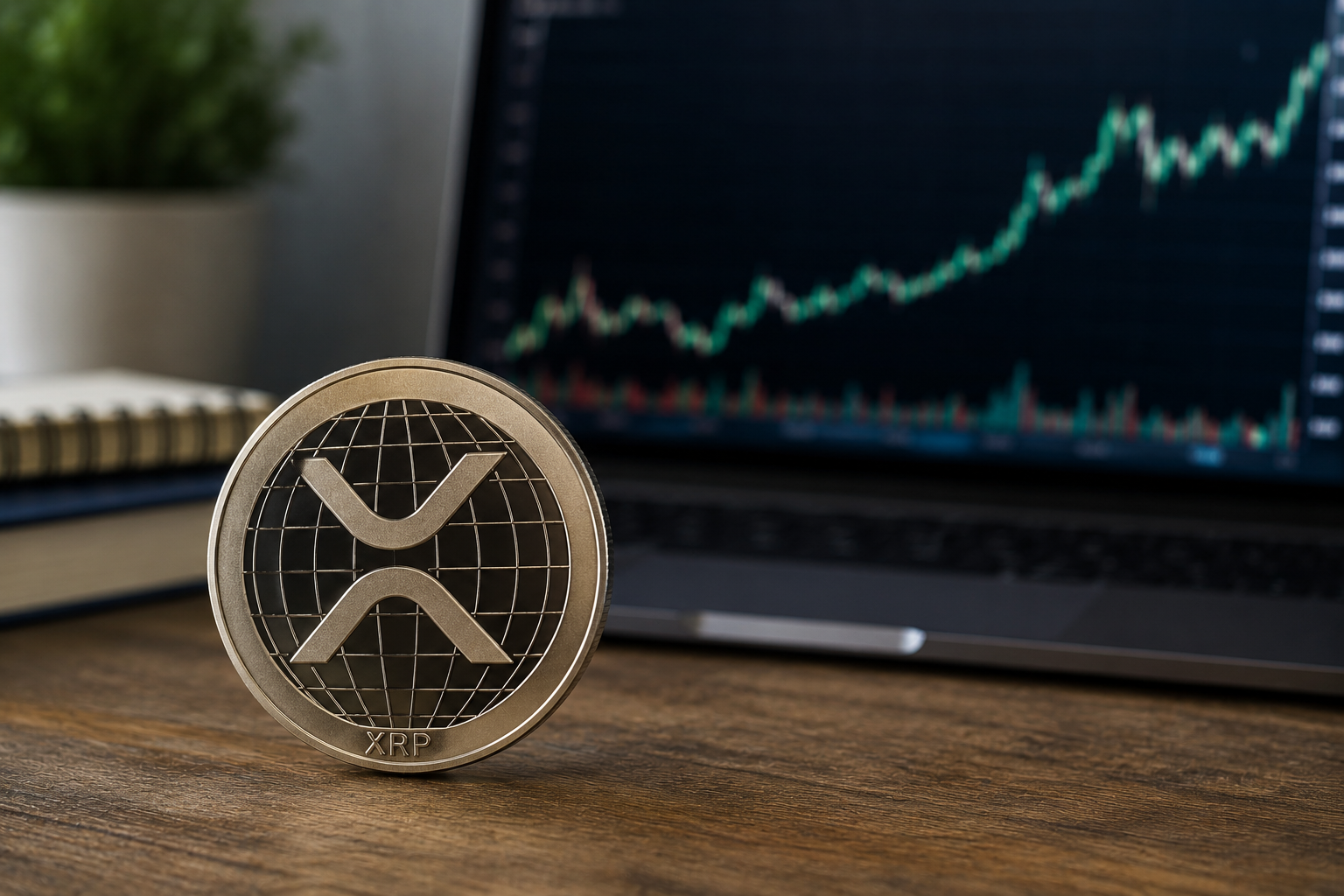
The cryptocurrency landscape in 2026 is moving through a massive structural reset. For years, XRP, the native digital asset of the XRP Ledger (XRPL), has been one of the most polarizing tokens in the entire financial ecosystem. Loved by a passionate retail community and scrutinized heavily by global regulators, its price history is a story of explosive rallies followed by sharp, prolonged corrections.
As we move through mid-2026, investors are asking a critical question: Can XRP finally break past its historic resistance levels and achieve brand-new all-time highs?
To answer this, we have to look past the social media hype. We need to evaluate the hard data, the massive regulatory breakthroughs that occurred earlier this year, the macroeconomic headwind, and the shifting dynamics of institutional utility.
The Current State of XRP: 2026 Market Context
To properly project where XRP is going, we first need to establish where it stands right now. The broader digital asset market is currently working through a notable macro correction. Following geopolitical pressures and policy shifts, major crypto assets have faced steep liquidations over the last two quarters.
XRP has not been immune to this trend. After hitting a local cyclical peak of $2.41 during a brief relief rally in January 2026, the token has corrected roughly 53%, currently hovering in the $1.12 to $1.18 range.
What makes this current price action incredibly unique is the massive divergence between XRP’s market price and its underlying fundamental health. In past years, sharp drops in XRP were tied to legal existential threats. Today, the infrastructure supporting the asset is stronger than it has ever been in its twelve-year history.
The Core Catalysts for a Potential New All-Time High
Several transformative developments have materialized over the first half of 2026. These factors provide the fuel for a potential long-term decoupling and trend reversal.
1. The Death of the Security Debate (SEC vs. CFTC)
For over five years, the primary anchor dragging down XRP’s growth was the legal battle with the US Securities and Exchange Commission (SEC). While a milestone ruling previously established that programmatic retail sales did not constitute securities transactions, structural ambiguity remained.
That ambiguity was officially shattered in March 2026. In a monumental joint regulatory pivot, both the SEC and the Commodity Futures Trading Commission (CFTC) formally classified XRP as a commodity. This structural reclassification strips away the legal liability that prevented conservative institutional funds from holding the asset on their balance sheets.
2. The Legislative Shield: The CLARITY Act
The regulatory momentum shifted even further in May 2026, when the landmark CLARITY Act cleared the Senate Banking Committee. This legislation is designed to write the commodity status of assets like XRP, Cardano (ADA), Hedera (HBAR), and Stellar (XLM) permanently into federal statute.
Moving oversight permanently from the SEC to the CFTC creates an immutable legal shield. According to ongoing market updates, the bill faces a tight passage timeline before the upcoming congressional August recess. Polymarket predictive odds currently place its final passage probability at 55%. If it crosses the finish line, it removes the last remaining regulatory hurdle for corporate adoption in the United States.
3. Institutional Inflows and Spot ETFs
Wall Street has quietly built massive direct exposure to XRP. Following regulatory clarity, multiple investment firms launched spot XRP ETFs. Accumulation data reveals that seven spot XRP ETFs have absorbed over $1.43 billion in cumulative inflows since their debut, with banking giant Goldman Sachs emerging as a prominent institutional buyer.
4. Enterprise Infrastructure Expansion
Beyond investment vehicles, the real-world utility of the XRP Ledger is scaling globally. Ripple net infrastructure now boasts a network of over 300 financial institutions globally. Key structural pillars driving utility in 2026 include:
Federal Banking Access: Ripple’s conditional OCC trust bank charter became active under the Office of the Comptroller of the Currency’s updated guidelines.
Global Pilot Programs: Expanded cross-border initiatives, including Ripple’s Monetary Authority of Singapore (MAS) BLOOM pilot, are driving tokenized treasury settlements directly across the XRPL.
Real-World Asset Tokenization: The total value of real-world assets (RWAs) tokenized on the XRPL has climbed past $474 million, turning the network into a highly functional layer for institutional debt and credit markets.
Evaluating the Hurdles: Why XRP is Struggling to Move Higher
If the fundamental news is overwhelmingly positive, why hasn’t XRP broken into new all-time highs yet? Understanding the bear case is crucial for managing portfolio risk.
Macroeconomic Pressures and Crypto Overlap
Bitcoin has experienced a notable 25.5% correction over a trailing 30-day window, dragging down the entire digital asset ecosystem. Historically, altcoins carry a high-beta correlation to Bitcoin during market-wide liquidity squeezes. No matter how strong the individual network developments are, a broader market downturn will naturally suppress individual asset price performance.
The Stablecoin Cannibalization Debate
A major internal debate within the crypto community centers around Ripple’s roll-out of its own institutional stablecoin, RLUSD. Operating under dual federal and state regulatory oversight, RLUSD is highly efficient for corporate payment routing.
Some analysts argue that because financial institutions can utilize stablecoins like RLUSD or dominant options like Tether (USDT) for transactions, the absolute transactional demand for XRP as a bridge currency could be minimized. If Ripple’s cross-border payment network can function smoothly without requiring massive open-market purchases of XRP, the organic buy pressure may scale slower than early models anticipated.
Analytical Comparison: XRP Growth Models vs. Alternative Assets
To project whether XRP can reach new historical highs, we must evaluate its structure relative to competing institutional networks. The table below outlines how XRP stacks up against other major platforms undergoing institutionalization in 2026.
Cross-border settlement, multi-currency liquidity bridging, and asset tokenization.
Institutional spot ETF inflows, sovereign pilot integrations, and sovereign debt settlement.
Cardano
ADA (Commodity)
CFTC (via CLARITY Act framework)
Decentralized applications, secure smart contracts, and identity protocols.
Resolution of exchange listing restrictions and emergence of staking-backed ETFs.
Hedera
HBAR (Commodity)
CFTC (via CLARITY Act framework)
Enterprise distributed ledger track-and-trace, governing council data infrastructure.
Live NASDAQ-traded spot ETFs and expanding Fortune 500 supply chain utility.
Ethereum
ETH (Commodity)
CFTC / SEC Hybrid
Global smart contract layer, decentralized finance applications, layer-2 execution.
Deep Wall Street capital integration and native institutional yield generation.
Technical Outlook: What the Data Shows
From a technical analysis perspective, XRP is currently testing long-term structural support lines. Analysts monitoring whale wallet behaviors note that despite the 2026 price correction, large-scale accumulation has continued quietly. Whale addresses holding significant balances have reached an all-time high of 332,230 unique wallets. This indicates a strong pattern of accumulation rather than a retail panic-driven sell-off.
Technical analysts point to two critical structural zones to watch:
The Floor Support: If current macro pressures push the price below the key $1.00 psychological support level, near-term structural floors sit between $0.75 and $0.85, with deeper historic accumulation blocks resting at $0.53.
The Breakout Target: Mainstream conservative institutional price targets for the remainder of 2026 sit between $3.50 and $8.00, assuming a broader market recovery and successful legislative implementation. While extreme speculative models float numbers in the hundreds or thousands based on total global liquidity capture, these models often rely on unrealistic supply shock parameters that ignore standard market capitalization mathematics.
Portfolio Strategy for XRP Investors
Given the high-volatility environment of 2026, navigating an investment in XRP requires a highly disciplined risk management blueprint.
Avoid Turning Points Speculation
Trying to perfectly time the absolute floor of an asset during a wider macroeconomic correction is a highly risky approach. Instead of deploying significant capital at a single point, utilizing a systematic approach can mitigate short-term pricing anomalies.
Position Allocation Strategies
XRP remains an asymmetric risk asset. While its successful institutional integration presents substantial multi-year upside potential, its historical correlation to market corrections can cause painful short-term drawdowns. Keeping your position restricted to a controlled percentage of your overall portfolio ensures your financial security remains intact, even if the timeline for a macro recovery extends further into the decade.
Conclusion: Can XRP Reach New Highs?
The baseline infrastructure needed to send XRP to historic price levels is finally built. The official commodity classification, growing spot ETF participation, and permanent legislative clarity from the CLARITY Act have removed the regulatory constraints that limited its scope for over half a decade.
While macroeconomic liquidations and internal stablecoin dynamics may slow down immediate upward momentum, the structural fundamentals point toward a robust long-term outlook. For patients investors operating on a multi-year horizon, XRP’s evolution into a fully compliant, liquid asset class makes it a strong contender for a massive breakout when the broader market winds shift.