The cryptocurrency market has entered an entirely new era. If you are asking yourself whether you should buy Bitcoin in 2026, you are looking at a market that is fundamentally different from the wild west days of 2017 or the post-pandemic retail frenzy of 2021.
Bitcoin has transformed from a speculative internet experiment into an institutional asset class and a tool of geopolitical strategy. While individual retail investors still trade it, the dominant drivers of the market are now spot ETFs, public corporate balance sheets, and sovereign governments.
Evaluating whether Bitcoin belongs in your investment portfolio requires analyzing the underlying data, the macro economic landscape, and the distinct cycles that guide its price action.
The Landscape: Where Bitcoin Stands Right Now
To understand Bitcoin’s potential, we must look at the structural changes that have occurred over the last two years.
Following the April 2024 halving event, which slashed the block reward from 6.25 to 3.125 BTC, the daily production of new Bitcoin dropped significantly. In previous cycles, a halving event typically triggered an immediate, massive bull run within twelve to eighteen months. However, the current cycle has proven to be highly unique.
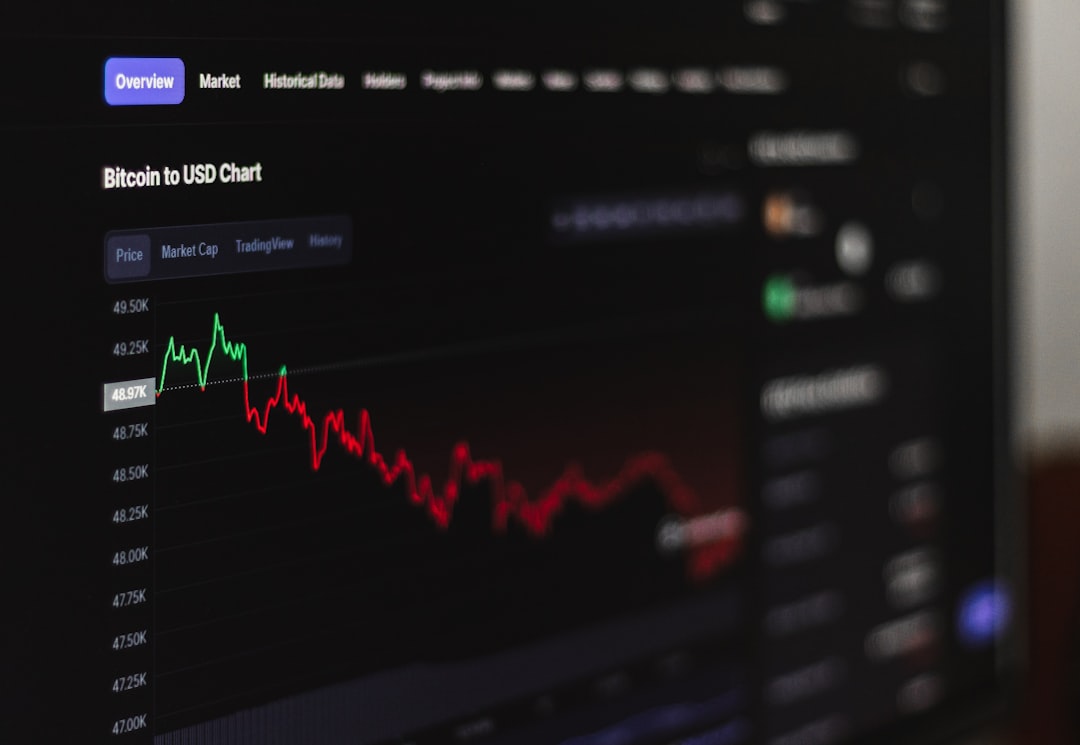
Between 2024 and 2026, the market experienced a notable consolidation phase, with the asset dropping roughly 46% from its previous cyclical highs, behaving largely as a volatile risk asset rather than a stable hedge. During this same window, the network’s underlying fundamental strength reached unprecedented heights. The network hash rate, which measures the total computational power securing the blockchain, climbed from 600 EH/s to a historic 992 EH/s.
This paradox of a correcting price alongside surging network security highlights a deeper transition: retail hype has been replaced by institutional integration.
Key Drivers of Bitcoin in 2026
If you are weighing an entry point, three core pillars are driving the long-term value thesis for Bitcoin.
1. Corporate and Sovereign Accumulation
The days when MicroStrategy was the lone public company holding digital currency on its books are over. By early 2026, more than 145 publicly traded companies had officially integrated Bitcoin into their corporate treasury strategies, with corporate holdings collectively surpassing one million BTC.
Even more revolutionary is the shift toward sovereign adoption. Landmark political shifts, including executive actions exploring strategic reserves and hidden sovereign mining operations using domestic green energy (such as Bhutan’s quiet accumulation of over $1 billion in hydro-powered BTC), have shifted the conversation. Bitcoin is increasingly evaluated not just as an alternative currency, but as a form of cyber power projection and digital infrastructure.
2. Institutional Investment Channels
The approval and maturity of spot Bitcoin ETFs have fundamentally rewritten how capital flows into the ecosystem. Institutional wealth managers, retirement funds, and multi-national corporations now have direct, regulated access to the asset class without the operational hurdles of managing cryptographic keys or navigating unregulated exchanges. This has fundamentally stabilized liquidity, even during sharp market pullbacks.
3. Maturing Crypto Ecosystem and Regulation
The broader digital asset ecosystem has achieved massive scale. For example, the market capitalization of dollar-backed stablecoins like Tether (USDT) and USD Coin (USDC) surged past $300 billion, becoming systemic players in short-term debt markets and purchasing billions in US Treasury bills. This expansion provides a highly liquid foundation for the entire crypto ecosystem.
Concurrently, US regulatory frameworks are evolving past a fragmented approach toward clearer jurisdictional boundaries between the SEC and the CFTC, building a more predictable environment for traditional financial institutions (Jaffri, 2026).
Evaluating Bitcoin Performance: A Metric-Based Overview
When deciding if you should buy Bitcoin, it is vital to balance historical performance with current data. The following table provides an analysis of Bitcoin’s market attributes, risk factors, and structural conditions as of 2026.
Bitcoin Market Analysis Profile
Investment Metric
Current Market Reality
Strategic Considerations for Investors
Supply Dynamics
Hard capped at 21 million; block rewards at 3.125 BTC per block.
The blockchain is functionally immutable and mathematically secure against attacks.
Ownership Structure
Heavily institutionalized via ETFs and corporate treasuries (145+ public firms).
Reduced retail panic-selling; higher baseline support but tied closer to traditional equity markets.
Price Volatility
High short-term fluctuations; mid-cycle corrections of 40% to 50% remain common.
Requires a long-term investment horizon; unsuitable for short-term capital needs.
Regulatory Risk
Shifting toward explicit legal frameworks and hybrid compliance models.
Mitigates systemic fraud risk but could restrict privacy-centric transactional features.
Bull Case vs. Bear Case
Like any financial asset, Bitcoin carries a distinct set of risks and rewards. Successful investing requires looking at both sides objectively.
The Bull Case: Why You Should Buy
The Scarcity Premium: Bitcoin remains the only global asset with an absolute, unalterable supply cap. As fiat currencies face persistent inflationary pressures and expanding national debts, a provably scarce asset becomes an appealing alternative store of value over a multi-year horizon.
The Valuation Disconnect: Quantitative modeling using Long Short-Term Memory (LSTM) networks and machine learning frameworks confirms that despite steep continuous volatility and short-term bearish trends, the asset maintains robust long-term momentum patterns that traditional forecasting models fail to capture.
Asymmetric Upside: Because it is still in its institutional adoption phase, the potential upside relative to downside risk remains highly asymmetric compared to mature assets like gold or large-cap equities.
The Bear Case: Why You Should Wait
Opportunity Cost: Bitcoin can undergo multi-year sideways or downward consolidation phases. If you invest capital that you might need within the next 24 to 36 months, you run the risk of being forced to liquidate at a loss during a cyclical downturn.
Correlated Risk Profile: While early theorists pitched Bitcoin as a completely decoupled non-correlated asset, empirical data shows it frequently acts as a high-beta risk asset, dropping sharply alongside traditional equities during macroeconomic liquidity squeezes.
Regulatory Tightening: While clearer guardrails protect institutional capital, increased enforcement can create friction for decentralized finance and on-chain privacy protocols.
Portfolio Strategy: How to Approach Bitcoin
If you decide to allocate capital to Bitcoin, the method of execution matters far more than trying to perfectly time the absolute bottom of the market.
Dollar-Cost Averaging (DCA)
Trying to time a market driven by algorithmic trading and institutional flows is a losing battle for retail investors. The most effective strategy is Dollar-Cost Averaging: investing a fixed dollar amount at regular intervals (such as weekly or monthly), regardless of the price. This naturally averages out short-term market noise and reduces the emotional stress of investing during pullbacks.
Asymmetric Risk Management
Because of Bitcoin’s high volatility, it should be treated as an asymmetric portfolio component. Allocating a modest percentage of your total investable net worth (for example, 1% to 5%) ensures that if the asset experiences a severe correction, your broader financial health remains completely secure. Conversely, if Bitcoin continues its historic long-term upward trajectory, that small allocation can generate meaningful real-world returns for your overall portfolio.
Final Verdict: Is 2026 the Right Time?
Buying Bitcoin in 2026 depends entirely on your investment horizon and psychological risk tolerance. If you are looking for a quick flip or overnight wealth, the current institutionalized, mature market structure is highly likely to frustrate you with its deep consolidations and professionalized trading environments.
However, if you view Bitcoin through a five-to-ten-year lens, the macro thesis has never been clearer. With public corporations deeply integrated, sovereign interest rising, and the cryptographic supply protocol operating flawlessly, buying during market corrections represents a strategic position in the emerging digital financial architecture.