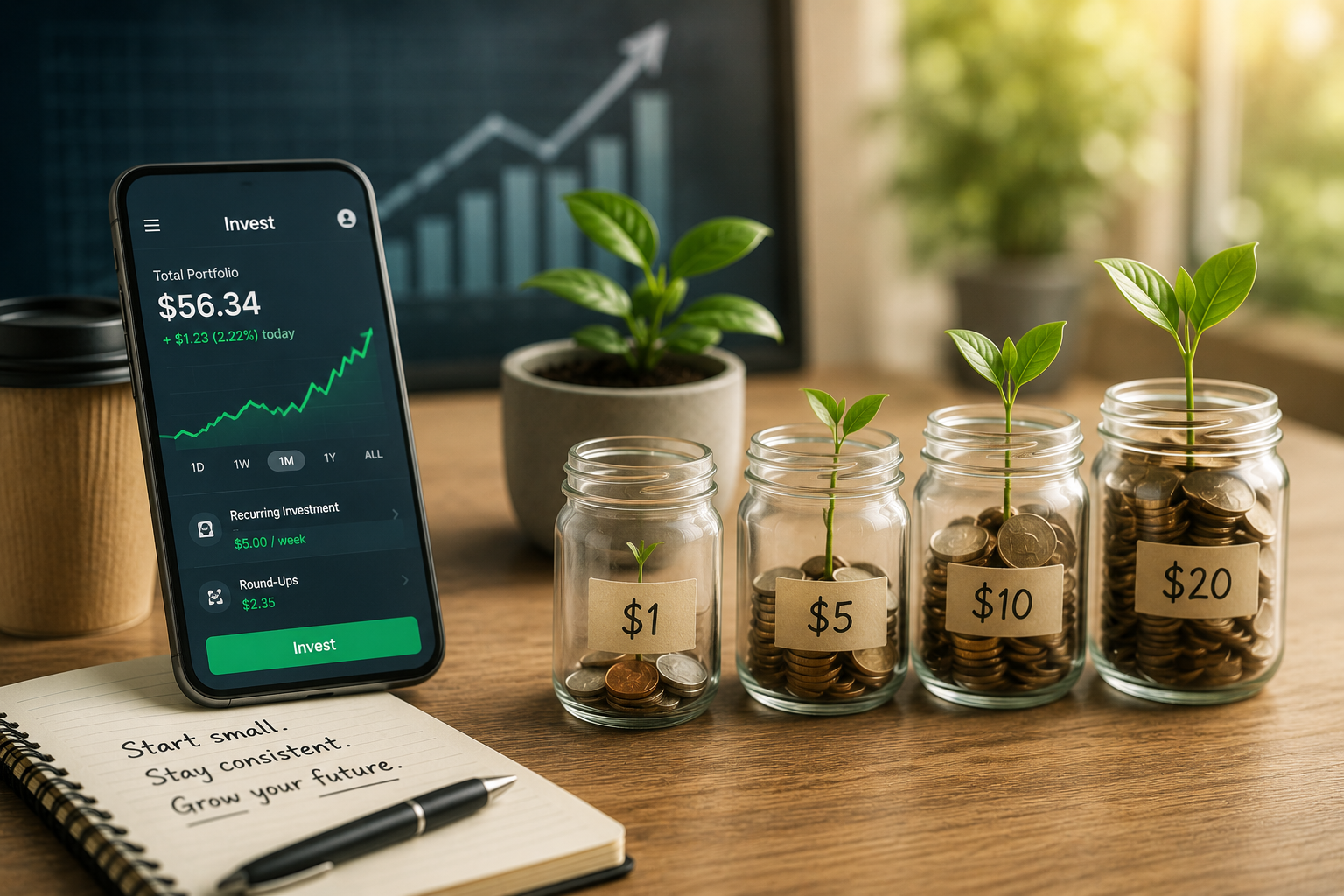
The myth that you need thousands of dollars to enter the stock market is officially dead. Financial market structural changes have broken down traditional entry barriers. Driven by cloud-based fintech infrastructure, the global micro-investing platform market is projected to reach 1.1 billion dollars this year, expanding at an annual growth rate of over 18 percent according to industry research.
This transformation means you can invest in major corporations, global real estate, or diversified index funds with nothing more than your digital spare change.
The macroeconomic climate of 2026 highlights the importance of consistency over timing. With high interest rates remaining steady and asset dispersion increasing across sectors, building a structured savings habit is the most reliable way to beat inflation. Whether you have 5 dollars or 50 dollars a month, micro-investing turns small, everyday amounts into a functional engine for long-term wealth building.
Spare Change Accumulation Tool
See how tiny, automated round-ups and weekly micro-deposits scale into a significant financial foundation over time.
Total Projected Value
$0
Total Out-of-Pocket
$0
Compound Market Earnings Element+$0
*Calculations are based on monthly compounding schedules. Real market returns fluctuate over time.
1. What is Micro-Investing?
Micro-investing is a financial framework that allows individuals to consistently save and invest small sums of money, often under 10 dollars at a time. This approach bypasses traditional account minimums and removes transaction friction by using two primary mechanics:
Fractional Shares: Instead of buying a full share of a stock that might cost hundreds of dollars, brokerage firms let you buy a tiny slice of that share for as little as 1 dollar.
Automated Round-Ups: Financial apps link directly to your everyday payment cards, automatically rounding up purchases to the nearest dollar and depositing the difference into your investment account.
By removing the behavioral hurdles of saving, micro-investing converts casual spending into an automated, wealth-building habit.
2. The Core Mechanics: Fractional Shares and Round-Ups
Understanding how these platforms operate helps you structure your savings model to get the most out of your money.
Fractional Shares
When you buy a fractional share, your broker aggregates small cash pools from thousands of retail accounts to buy full shares on the open market, dividing the ownership proportionally. If a major technology or aerospace company trades at 400 dollars per share, a 4 dollar investment gives you exactly 1 percent of that share. You get identical percentage exposure to price changes and are entitled to your proportional share of any cash dividends paid out by the corporation.
Micro-Deposits and Dollar-Cost Averaging
Automating your small deposits establishes a strategy known as dollar-cost averaging. Instead of trying to guess market highs and lows, you invest a fixed dollar amount on a set schedule, such as 5 dollars every Monday.
When stock prices drop, your 5 dollars automatically buys more fractional pieces; when prices rise, it buys fewer. Over time, this approach smooths out your average cost per share and takes emotional guesswork out of your financial plan.
3. Comparing Top Micro-Investing Approaches
Different platforms cater to different goals. To choose the right approach, compare the account requirements, fee models, and available investments across the market.
Platform Type
Minimum Account Balance
Average Cost Framework
Primary Asset Focus
Target Investor Profile
Automated Round-Up Apps
$0.00
Monthly subscription fee
Managed Exchange-Traded Funds
Hands-off beginners looking to build a saving habit
Zero-Commission Brokers
$0.00
Free trading with payment options
Individual Stocks and Options
Active traders wanting control over single shares
Robo-Advisors
$0.00 to $500.00
Percentage asset management fee
Customized Diversified Portfolios
Goal-oriented savers planning for long-term horizons
Micro-Real Estate Funds
$10.00
Annual asset servicing fee
Commercial and Residential Portfolios
Investors looking to diversify outside the stock market
4. Building Your Portfolio: Low-Cost ETFs
Investing small amounts of money works best when you diversify across multiple industries right away. Placing your entire micro-balance into a single company leaves your savings vulnerable if that specific business faces operational setbacks.
The easiest way to diversify is through Exchange-Traded Funds (ETFs). An ETF functions like a basket of individual stocks bundled into a single asset that trades on major public exchanges.
By putting your money into a broad index ETF, like one that tracks the S&P 500, a single 5 dollar deposit gives you proportional exposure to hundreds of the largest companies in the world. This approach ensures that your portfolio stays resilient, even if individual businesses experience market swings.
5. Navigating Fees and Managing Hidden Costs
While micro-investing lowers entry barriers, you need to watch out for fixed fee models that can silently eat into small balances.
Many micro-savings platforms charge flat monthly subscription fees, such as 3 dollars per month, instead of charging a percentage-based asset management fee. While 3 dollars sounds small, its impact depends entirely on your total account balance.
If your account holds only 100 dollars, a 3 dollar monthly fee translates to a 36 percent annual drag on your investment capital. Under these conditions, the fee easily outpaces your portfolio returns.
To keep fees from eating away your returns, aim to scale your total balance past 1,000 dollars as quickly as possible, or choose a zero-commission broker that offers free fractional trading without monthly subscription charges.
6. Step-by-Step Micro-Investing Action Plan
Ready to turn your spare change into an active investment portfolio? Follow this structured roadmap to set up a resilient micro-investing system.
Before putting money into the market, pay off toxic high-interest credit card balances. It makes little sense to hunt for an 8 percent annual market return while carrying debt that costs 20 percent in interest. At the same time, keep a small cash buffer in a standard high-yield savings account for immediate unexpected expenses.
2.Select Your App and Automate Round-Ups: Phase 2: Platform Onboarding.
Choose a micro-investing platform that aligns with your fee tolerance and style. Link your primary debit or credit card and turn on automated spare-change round-ups. To give your balance an extra boost, set up an automatic recurring deposit of just 5 dollars or 10 dollars every week.
3.Select Broad, Low-Cost Index Assets: Phase 3: Allocation Setup.
Direct your incoming cash into broad, diversified index ETFs rather than chasing speculative single stocks. Focus your selections on funds with very low expense ratios, ideally below 0.10 percent, to ensure your money goes toward building wealth instead of covering management fees.
4.Set Volatility Rules and Reinvest Dividends: Phase 4: Behavioral Discipline.
Set up your account to automatically reinvest all dividends back into your holdings. Establish a personal rule to limit portfolio checks to once a month. This emotional boundary keeps you from panic-selling when the market goes through natural downturns, ensuring you stay committed to your long-term plan.
7. Psychological Perks and Long-Term Scaling
The biggest benefit of micro-investing is psychological, not just financial. It lowers the stakes of entering the market, letting you learn how price movements work without risking large amounts of capital. Watching a 20 dollar account fluctuate helps you build the emotional discipline needed to handle market volatility before you manage larger sums of money.
As your financial confidence grows, you can easily scale up your system. What starts as a simple card round-up can evolve into a structured monthly savings plan, turning small, automated steps into a foundational pillar of your long-term retirement strategy.