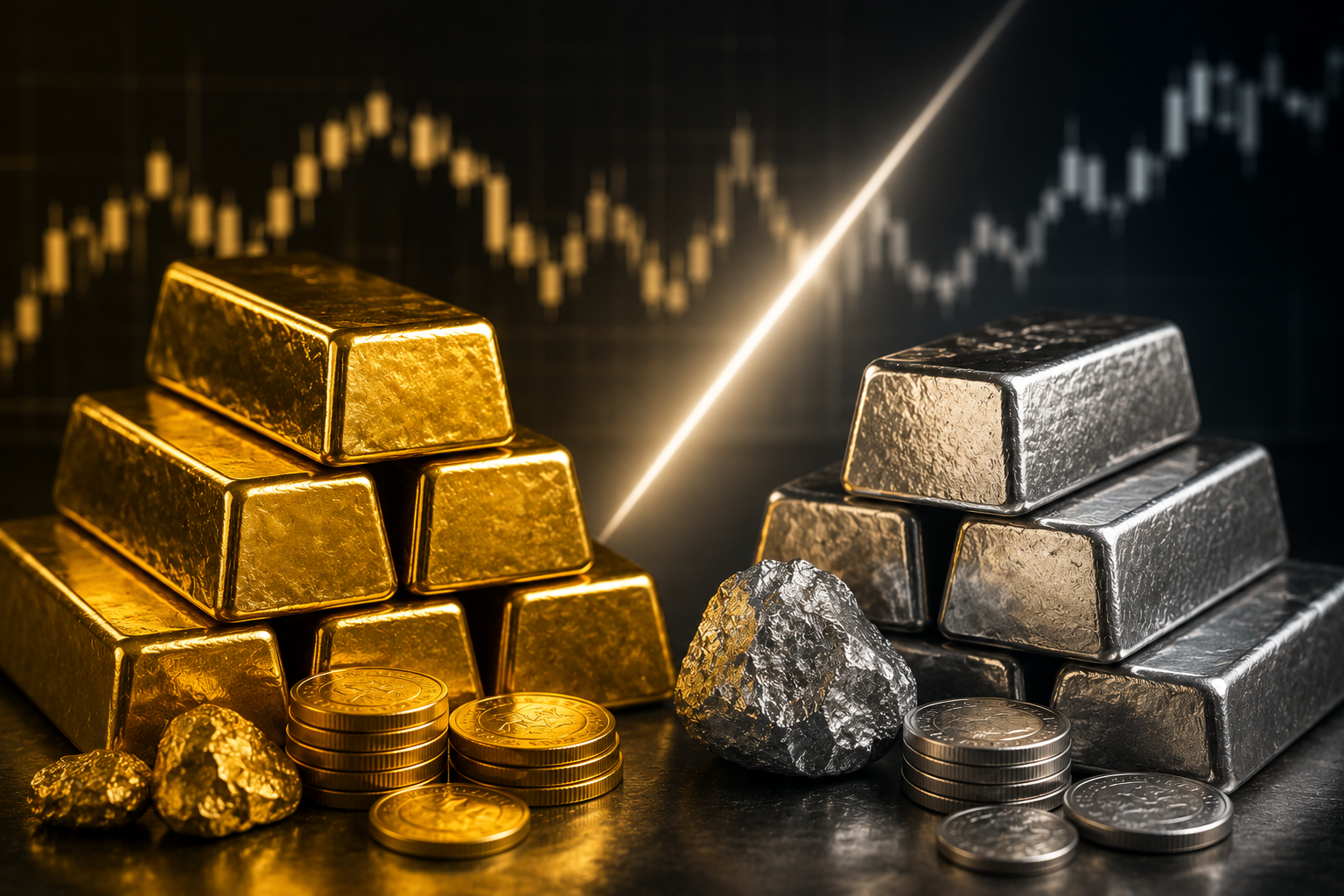
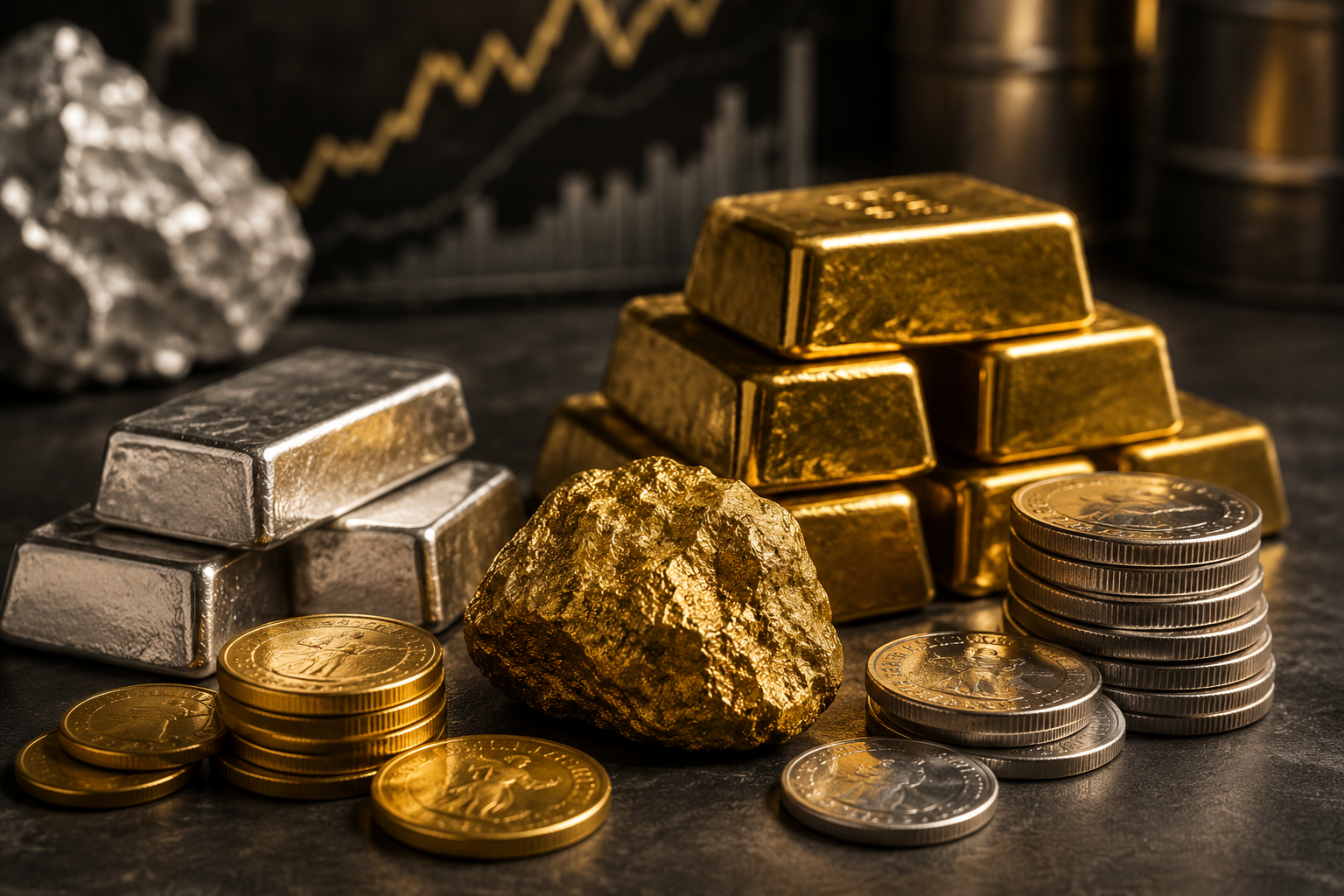
The global precious metals market has entered an extraordinary era. Driven by historic geopolitical disruptions, structural de-dollarization, and persistent, energy-driven inflationary pressures, hard assets have taken center stage in global portfolio management.
For investors navigating this landscape, the ultimate question is no longer whether to hold precious metals, but how to weight them. While gold has captured global headlines by smashing through all-time highs, platinum is quietly flashing a textbook setup of severe structural supply deficits and deep relative undervaluation.
This comprehensive investment analysis breaks down the macroeconomic fundamentals, supply-demand mechanics, and expert projections for both metals to determine which offers the superior upside potential.
The Macroeconomic Regime of 2026
To project the price velocity of gold and platinum, we must examine the specific economic forces steering the markets. Precious metals do not trade in a vacuum; they react dynamically to central bank policy, interest rates, and geopolitical realities.
Geopolitical Flares and Energy Shocks: Geopolitical tensions in the Middle East have significantly reshaped commodity risk premiums. Military developments and subsequent logistical friction in the Strait of Hormuz have pushed oil prices past $100 per barrel, driving consumer price index (CPI) inflation up to 3.8%. This energy-driven inflation environment naturally funnels capital into hard assets.
The Federal Reserve’s Dilemma: Under the leadership of Fed Chair Kevin Warsh, the Federal Reserve faces a complex inflation landscape. Markets are intensely pricing in rate-hike probabilities to curb sticky inflation, creating a tug-of-war between rising nominal yields (which can present a headwind for metals) and falling real yields due to accelerating currency debasement.
The U.S. Fiscal Imbalance: With the U.S. national debt sitting around $39 trillion and growing by billions daily, the long-term structural case for alternative currency reserves has never been stronger. Rational capital is seeking asset classes outside the direct control of sovereign central banks.
Gold in 2026: The Sovereign Heavyweight
Gold has enjoyed a historic bull run, hitting an all-time high of $5,589 per ounce in January before stabilizing in the $4,460 to $4,525 range. Despite near-term consolidation, institutional conviction remains remarkably high. Major financial institutions like Goldman Sachs maintain end-of-year price targets of $5,400 per troy ounce, while J.P. Morgan Global Research projects gold could push toward $6,000 to $6,300 per troy ounce by the final quarter if private investor allocations accelerate.
1. Structural De-Dollarization
The freezing of foreign central bank fiat reserves in recent years marked a permanent paradigm shift in global reserve management. Central banks across the Global South and the BRICS nations—led aggressively by the People’s Bank of China—are executing a multi-year diversification strategy.
According to data from the World Gold Council (WGC), global central banks accumulated 863 tonnes of gold recently, sustaining official buying well above historical norms. This structural buying is entirely price-insensitive; central banks are buying gold to reduce strategic vulnerability, not to chase short-term returns.
2. European Central Bank Confirmation
Underscoring this trend, recent reports from the European Central Bank (ECB) reveal that gold has officially surpassed traditional foreign currency holdings to become the world’s top reserve asset, now accounting for 27% of all global central bank reserve assets. This institutionalizes gold as the premier asset for sovereign wealth protection.
Platinum in 2026: The Undercoiled Spring
While gold thrives on monetary prestige, platinum’s investment thesis rests on an entirely different foundation: extreme structural scarcity, multi-year supply deficits, and emerging green technology applications.
After surging 127% to touch a record high of $2,919 per troy ounce in January, spot platinum pulled back to the $2,000 level due to short-term investment outflows and margin-call liquidations triggered by geopolitical events. However, this correction has set up an incredibly tight fundamental backdrop.
1. A Fourth Consecutive Year of Market Deficit
According to data compiled by the World Platinum Investment Council (WPIC), the global platinum market is on track to record its fourth consecutive year of supply deficits.
The WPIC raised its full-year deficit forecast to 297,000 ounces. While down from the historic 1.19 million-ounce shortfall observed during mining disruptions, the ongoing deficit is systematically starving the market of available physical supply.
2. Fragile, Concentrated Global Mining Supply
Global primary platinum mining supply remains highly inelastic at roughly 5.55 million ounces. More than 70% of this output originates from South Africa, where operations are routinely hindered by power grid instability and operational challenges.
While South African output is recovering to roughly 4 million ounces—aided by the gradual ramp-up of new operations like Ivanhoe Mines’ Platreef project—it will take years for new supply to reach capacity. Above-ground vaulted inventories have plunged 15% to 1.74 million ounces. This leaves global inventories covering less than three months of demand—a historically tight threshold that leaves the metal vulnerable to sudden price spikes if supply chains break.
3. Green Industrial and Automotive Demand
On the demand side, platinum is benefiting from two distinct catalysts:
The Green Hydrogen Revolution: Industrial demand is projected to climb 9%, heavily driven by the adoption of Proton Exchange Membrane (PEM) electrolyzers and fuel cells required for global green hydrogen initiatives.
Auto-Catalyst Substitution: Due to palladium trading at a historical premium for several years, automotive manufacturers aggressively re-engineered gasoline exhaust systems to substitute cheaper platinum for palladium. This sticky automotive demand continues to absorb millions of ounces annually.
Side-by-Side Comparison: Gold vs. Platinum
To evaluate which metal offers the superior risk-adjusted upside, we must contrast their core fundamental, behavioral, and structural attributes.
Feature / Metric
Gold (XAU)
Platinum (XPT)
Primary Price Driver
Monetary Policy, Central Banks, De-Dollarization
Industrial Demand, Green Hydrogen, Supply Deficits
Historical Price Peak
$5,589 / oz (January 2026)
$2,919 / oz (January 2026)
Consolidation Level
Near historical highs (~35% YoY increase)
Substantial discount to gold and historical highs
Market Supply State
Balanced by mining expansions and recycling
Fourth consecutive year of structural deficit
Inventory Cushion
Deep, highly liquid global vault reserves
Tight above-ground stocks (<3 months of global use)
Volatility Profile
Low to Moderate (Steady safe-haven)
High (Prone to violent supply-driven short squeezes)
Understanding the Platinum-to-Gold Ratio
The platinum-to-gold ratio tracks the relative valuation between these two sister metals. Historically, platinum has traded at a premium to gold due to its extreme scarcity (platinum is roughly 15 to 20 times rarer in the Earth’s crust than gold).
When the ratio sits deeply inverted—meaning an ounce of platinum costs significantly less than an ounce of gold—contrarian value investors view it as a strong signal. It suggests that while gold has priced in a massive safe-haven premium, platinum remains fundamentally underpriced relative to its intrinsic mining costs and industrial utility.
Step-by-Step Allocation Strategy for 2026
If you want to capitalize on the unique setups of both gold and platinum without overexposing your portfolio to unnecessary risk, consider executing a structured allocation methodology.
1.Establish Your Core Hard-Asset Anchor:Defensive Foundation.
Allocate 60% to 70% of your dedicated precious metals capital to gold. Use physically-backed ETFs (like GLD or IAU) or sovereign minted coins. This acts as your core portfolio insurance against systemic banking risks and currency debasement.
2.Layer in the Platinum Growth Component:Tactical Alpha.
Allocate 20% to 30% of your metals portfolio to platinum. This provides direct exposure to a structural supply-demand squeeze and green hydrogen technology upside without diluting your broader safe-haven parameters.
3.Utilize Dollar-Cost Averaging:Risk Mitigation.
Given the high volatility observed following geopolitical margin liquidations, do not deploy your capital in a single lump sum. Divide your capital into fixed monthly installments to smooth out short-term price swings.
4.Monitor Inventory and Central Bank Metrics:Rebalancing Signals.
Track quarterly updates from the World Gold Council and the World Platinum Investment Council. If platinum’s above-ground stocks drop below the critical three-month demand threshold, prepare for heightened price volatility and potential upside short squeezes.
The Verdict: Which Has More Upside?
Choosing between gold and platinum requires separating absolute capital preservation from percentage upside potential.
The Alpha Verdict: For pure, explosive percentage upside, platinum enters the second half of the year with the more compelling fundamental setup.