The financial landscape has shifted dramatically. If you are tracking your portfolio or preparing a fresh capital deployment, the strategies that worked during the post-pandemic bull run or the rate-hiking cycles of years past require a serious reassessment.
We are navigating a highly unique macroeconomic environment. Investors are balancing a massive technological transition driven by Artificial Intelligence (AI) productivity, sticky headline inflation fueled by global energy shocks, and a regime shift at the Federal Reserve. With newly appointed Fed Chair Kevin Warsh taking the helm and prioritizing “trimmed averages” inflation metrics while confronting a strong labor market, Wall Street is actively debating whether the central bank’s next move will be a rate hike rather than a cut.
This macro volatility is reflected in where the big money is moving. According to State Street’s U.S.-listed ETF Flash Flows report, exchange-traded funds (ETFs) are on pace to cross a historic $1 trillion in net inflows by late June, driven heavily by massive allocations into broad-market equity and record-breaking fixed-income assets.
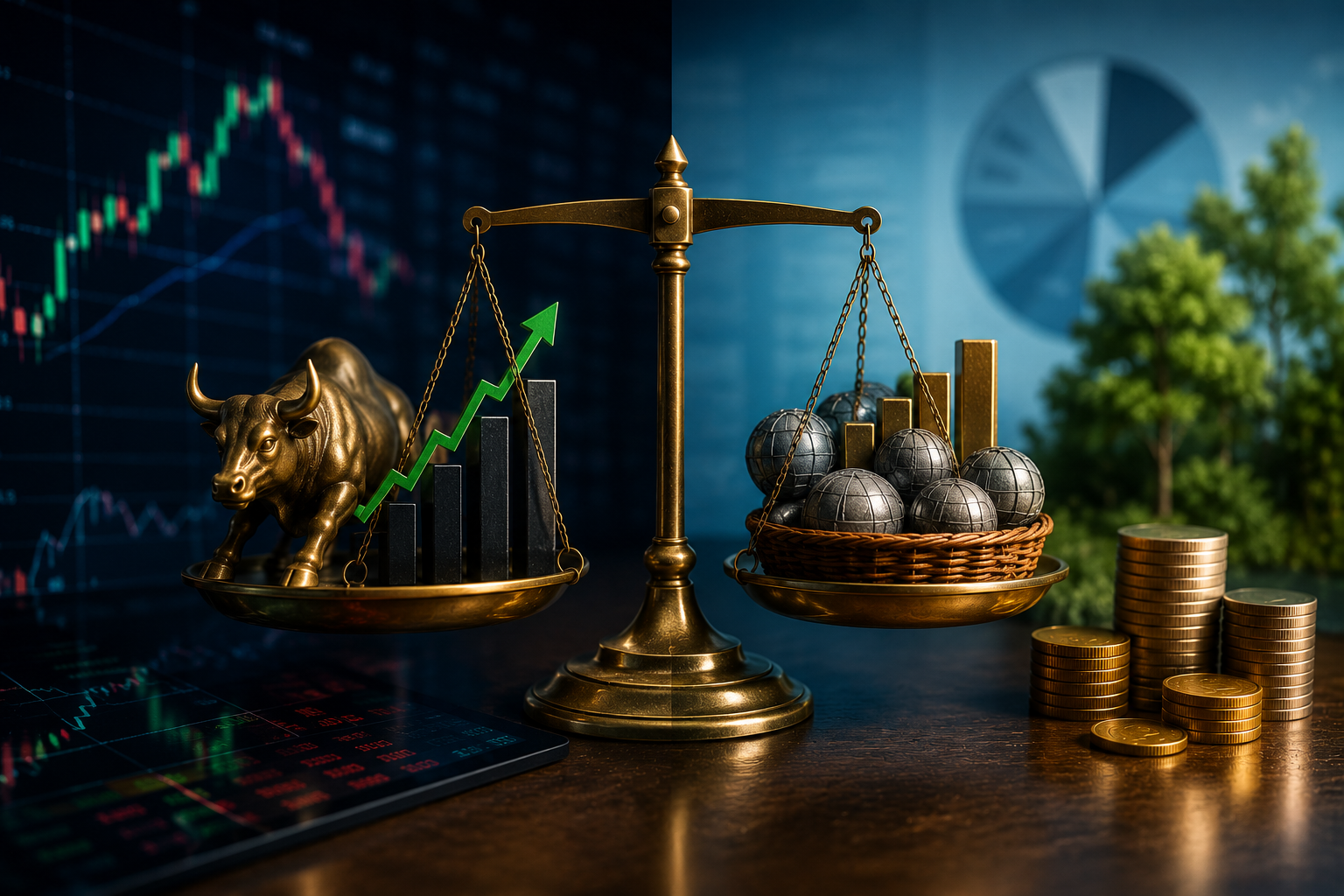
Against this backdrop, retail and institutional investors alike face a foundational question: Should you invest in individual stocks or ETFs?
Choosing between the concentrated upside of individual equities and the diversified stability of ETFs is not a one-size-fits-all decision. This comprehensive guide breaks down the core differences, weighs the pros and cons of each vehicle, analyzes how the current market changes the calculus, and provides an actionable blueprint to optimize your portfolio for the rest of the year.
1. The Core Definitions: Understanding the Vehicles
Before looking at specific strategies, let’s establish exactly what these two financial instruments are and how they operate inside your brokerage account.
What is an Individual Stock?
When you purchase an individual stock, you buy a direct equity stake in a single corporation. If you purchase shares of Microsoft (MSFT), Nvidia (NVDA), or ExxonMobil (XOM), your financial outcome is entirely tied to the operational performance, earnings results, leadership decisions, and market sentiment surrounding that specific business.
Ticker Level: You trade single corporate entities.
Ownership: Direct fraction of ownership with proportional voting rights.
Risk Profile: Highly concentrated.
What is an ETF (Exchange-Traded Fund)?
An Exchange-Traded Fund is a pooled investment vehicle that holds a basket of underlying securities—such as stocks, bonds, or commodities—and tracks a specific index, sector, or investment theme. Unlike traditional mutual funds, ETFs trade throughout the day on public exchanges just like individual stocks.
Ticker Level: You buy a single ticker (like VOO for the S&P 500 or QQQ for the Nasdaq-100) that holds dozens, hundreds, or thousands of companies behind the scenes.
Ownership: Indirect exposure to the underlying assets managed by an issuing firm (like Vanguard, BlackRock, or State Street).
Risk Profile: Diversified across an entire index or market segment.
2. Individual Stocks: Pros, Cons, and the Pursuit of Alpha
Investing in individual stocks is the classic approach to the equity markets. It appeals to investors who want complete control over their money and are willing to take on higher risk for the chance to outperform the broader market a concept Wall Street calls “generating alpha.”
The Pros of Individual Stocks
Uncapped Upside Potential: The primary reason to buy individual stocks is outperformance. If you buy a broad index ETF, your returns are mathematically bound to the average. If you correctly identify an undervalued gem or an explosive growth engine early on, your returns can scale exponentially higher than the market average.
Granular Portfolio Control: Individual stocks allow you to build a portfolio tailored exactly to your convictions. If you want to invest heavily in semiconductor memory chips but completely avoid legacy banking stocks, you can execute that precise allocation down to the dollar.
Zero Ongoing Management Fees: When you buy an individual stock, you pay no ongoing maintenance fees. Outside of any initial transaction commissions (which are virtually zero at most major brokerages today), you can hold a stock for twenty years without giving up a fraction of a percent to a fund manager.
Tax Optimization (Tax-Loss Harvesting): Holding single stocks gives you complete control over when you realize capital gains or losses. If you have a specific stock that has declined, you can sell it to offset capital gains from another winning investment, optimizing your tax liability.
The Cons of Individual Stocks
High Idiosyncratic (Company-Specific) Risk: When your capital is concentrated in a handful of companies, a single bad earnings report, a regulatory probe, a product recall, or a leadership scandal can wipe out a massive portion of your portfolio overnight.
Significant Time and Research Commitment: To build a successful individual stock portfolio safely, you cannot rely on social media hype or surface-level news. You need to analyze financial statements, assess balance sheets, evaluate competitive moats, listen to quarterly earnings calls, and monitor industry trends. This requires dozens of hours of work per month.
Emotional Vulnerability: Watching an individual stock you own drop 15% in a single trading session tests the discipline of any investor. It frequently leads to emotional decision-making, such as panic-selling at the bottom or over-allocating to a losing position in an attempt to “average down.”
3. ETFs: Pros, Cons, and the Power of Beta
If individual stocks represent the pursuit of outperformance, ETFs represent the embrace of market returns (beta). They are designed for efficiency, structural safety, and broad economic exposure.
The Pros of ETFs
Instant, Built-In Diversification: With a single purchase, an ETF allows you to spread your risk across hundreds of companies. If you buy an S&P 500 index ETF, a catastrophic collapse of any single company in the index will barely register a scratch on your overall portfolio value. This diversification reduces idiosyncratic risk to near zero.
Low Cost and High Efficiency: While ETFs carry an ongoing fee called an Expense Ratio, broad-market index ETFs are incredibly cheap. Many popular index ETFs have expense ratios below 0.05%, meaning you pay less than $5 annually for every $10,000 invested.
Passive, Hands-Off Management: ETFs eliminate the need to constantly monitor individual corporate balance sheets. The fund issuer automatically handles rebalancing, adding rising companies and removing fading ones based on the index rules. It is the ultimate “set-it-and-forget-it” vehicle.
Lower Structural Volatility: Because an ETF is an average of many moving parts, its daily price swings are typically much smoother and less volatile than individual stocks. This makes it significantly easier for long-term investors to hold through broader market corrections.
The Cons of ETFs
Guaranteed Market Averageness: When you buy a diversified ETF, you are choosing to accept the average return of that market. You will never experience the thrill of your entire portfolio doubling or tripling in a short period based on the explosive breakout of a single stock, because the winners in the fund are dragged down by the underperformers.
The Drag of Expense Ratios: While basic index funds are incredibly inexpensive, specialized, thematic, or actively managed ETFs can carry significantly higher expense ratios (often 0.50% to 0.75% or higher). Over a multi-decade investing horizon, these fees can compound into a substantial drag on your total returns.
Lack of Customization: You must take the good with the bad. If you buy a broad tech ETF because you love its top five software holdings, you are also forced to buy the dozens of older, legacy hardware companies included in that index that you might otherwise avoid.
4. Side-by-Side Comparison: Individual Stocks vs. ETFs
To visualize how these two assets match up across different operational dimensions, review this comparison:
Feature / Metric
Individual Stocks
Exchange-Traded Funds (ETFs)
Risk Concentration
High (Tied to a single corporation)
Low (Spread across a basket of securities)
Potential Returns
Uncapped upside; potential for market outperformance
Tied directly to the average of the tracked index
Time Required
High (Requires fundamental research and monitoring)
Low (Passive, automated rebalancing)
Ongoing Fees
None (No expense ratios)
Yes (Ranging from under 0.03% to over 0.75%)
Diversification
None (Unless you buy dozens of single stocks)
Instant (Hundreds of holdings in a single transaction)
Volatility Profile
High (Prone to sharp, company-specific swings)
Moderate to Low (Smoothed out by index averaging)
Trading Flexibility
Intraday trading available
Intraday trading available
Tax Control
Maximum control over capital gains/losses
High efficiency, but less control over internal holdings
5. The 2026 Macro Environment: Why Market Conditions Matter Right Now
The choice between stocks and ETFs is heavily influenced by the economic backdrop. The investing environment has experienced shifts that directly change the risk-reward profile of both asset classes.
1. The Federal Reserve Regime Shift & Sticky Inflation
The global economy is facing persistent inflationary pressures, driven heavily by geopolitical tensions and energy supply disruptions in the Middle East. With core inflation and headline metrics lingering well above the central bank’s 2% target, the era of easy money is firmly in the rearview mirror.
The appointment of Federal Reserve Chair Kevin Warsh introduces a new variable. Warsh’s preference for “trimmed mean” economic indicators and his structural focus on cutting the Fed’s balance sheet mean that interest rates are likely to stay higher for longer. Wall Street is adjusting to the reality that a rate hike is entirely on the table if labor markets remain tight.
The Portfolio Impact: Higher interest rates raise the cost of capital. This creates a stark divergence between highly profitable corporations with robust balance sheets and speculative companies reliant on cheap debt. In this environment, choosing the wrong individual stock can be devastating, prompting many investors to seek refuge in broad-beta equity funds.
2. Record-Breaking ETF Momentum
Capital flows show exactly how the market is responding to this macro fragility. Investors are pouring cash into ETFs at a historic pace. Data from State Street highlights that equity investors are aggressively favoring broad-market and growth index strategies while pulling money out of targeted regional or single-country funds. Concurrently, bond ETFs have seen unprecedented inflows as investors lock in higher yields amid fixed-income market shifts.
3. The Artificial Intelligence Productivity Divergence
We are seeing a profound split in market mechanics. While tech sector giants continue to spend heavily on AI infrastructure, generating immense revenue for hardware and semiconductor memory leaders, the wider market is experiencing a massive divergence. Speculative trading tools are seeing billions in outflows as long-term capital shifts toward plain-vanilla index exposure and stable, high-quality companies.
This concentration of gains in a select few mega-cap stocks means that standard broad-market ETFs (like the S&P 500) have effectively become heavily concentrated technology plays. If you own an S&P 500 ETF, you are already deeply exposed to the individual success of the market’s largest tech giants.
6. Strategic Framework: Which Path is Right For You?
Choosing your path requires evaluating your personal financial goals, your psychological tolerance for risk, and the hours you can dedicate to portfolio management.
You Should Focus on ETFs If:
You prefer a passive approach: You want to secure long-term wealth without spending your evenings reading corporate cash flow statements or balance sheets.
You want to minimize emotional stress: You want a portfolio that won’t experience extreme, unexpected drops because of a single company’s bad news.
You are investing for retirement: Your goal is steady, reliable wealth compounding via dollar-cost averaging into foundational assets over a 10 to 30-year horizon.
You want automated diversification: You want exposure to major themes (like global technology, healthcare, or clean energy) without needing to guess which specific corporate winner will conquer the space.
You Should Focus on Individual Stocks If:
You want to beat the market average: You are actively pursuing alpha and are entirely comfortable taking on higher risk to achieve it.
You love financial analysis: You legitimately enjoy researching business models, tracking product adoption cycles, and hunting for undervalued equities.
You have a long-term capital cushion: You are using capital that you do not need for near-term living expenses, allowing you to patiently weather intense stock-specific volatility.
You want absolute customizability: You want to intentionally avoid certain companies or industries that are structurally included in traditional index funds.
7. The Hybrid Strategy: The “Core and Satellite” Approach
You do not have to make an absolute choice. Most sophisticated modern investors utilize a hybrid framework known as the Core and Satellite Strategy. This model gives you the structural safety of passive diversification alongside the wealth-building potential of individual equity picking.
Building the Core (80% to 90% of Portfolio)
The core of your portfolio serves as your financial anchor. It is built entirely out of low-cost, highly liquid, broad-market ETFs. This capital tracks the steady growth of the global economy.
Broad Equity: A low-cost S&P 500 ETF or Total Stock Market ETF.
International Exposure: A Total International Stock ETF to capture global growth outside the U.S.
Fixed Income: Given the higher yields driven by current Fed policy, a portion allocated to short-duration Treasury or high-quality corporate bond ETFs to capture reliable yield.
Building the Satellites (10% to 20% of Portfolio)
The remaining allocation represents your high-conviction ideas. This is where you deploy capital into individual stocks or highly targeted thematic ETFs where you believe you have a clear analytical edge.
High-Conviction Equities: Investing in specific companies with rock-solid balance sheets, pricing power against sticky inflation, and clear tailwinds from AI or infrastructure development.
Thematic Playbooks: Specialized sectors, such as cybersecurity, advanced robotics, or specialized medical hardware.
If a satellite stock performs exceptionally well, it provides a meaningful boost to your overall returns. If it suffers a sharp decline, your foundational core ensures your broader financial plan remains perfectly intact.
Conclusion: Crafting Your Playbook
The question of whether to invest in individual stocks or ETFs does not have a single correct answer—it has a correct answer for you.
Navigating sticky inflation, central bank communication shifts under Kevin Warsh, and a highly concentrated technology market means that risk management is paramount. For the vast majority of people, leaning heavily on low-cost, broad-market ETFs offers the safest, most time-efficient, and structurally sound path to long-term wealth.
However, if you have the time, financial literacy, and risk tolerance to hunt for individual corporate leaders, allocating a tactical portion of your capital to single equities can provide the portfolio engine needed to outperform the market. Assess your timeline, define your risk tolerance, and construct a resilient portfolio that leverages the unique strengths of both vehicles.
External Resources for Advanced Financial Research
To deepen your market research and track the metrics discussed in this article, utilize these authoritative financial platforms: