From choosing your first exchange to storing your Bitcoin safely — everything an American beginner needs to know to make their first purchase with confidence.
Bitcoin has gone from a fringe internet experiment to a federally regulated asset class held by Fortune 500 companies, pension funds, and tens of millions of ordinary Americans. Buying it has never been more straightforward — but the number of choices, warnings, and conflicting advice online makes it feel far more complicated than it is. This guide cuts through all of it and walks you through every step, clearly and honestly.
Before spending a single dollar on Bitcoin, there are a handful of foundational facts every American beginner needs to understand. Skipping these leads to the most common and most expensive mistakes new buyers make.
Bitcoin Is Legal in the United States
Bitcoin is entirely legal to buy, sell, hold, and use in the United States. The federal government classifies it as a commodity (under the CFTC) and as property for tax purposes (under IRS guidance). Several major US financial institutions including BlackRock, Fidelity, and Franklin Templeton now offer Bitcoin investment products. This is not a gray area — Bitcoin is a mainstream, regulated financial asset in America.
Bitcoin Is Volatile
Bitcoin has historically produced extraordinary long-term returns, but it has also experienced drawdowns of 50%, 70%, and even 80% from peak prices. These are not rare events — they have happened multiple times in Bitcoin’s history. Anyone buying Bitcoin needs to be genuinely prepared for their investment to drop significantly in value before (and if) it recovers. Only invest money you could afford to lose entirely.
You Do Not Need to Buy a Whole Bitcoin
One of the most persistent misconceptions among beginners is that you need to buy an entire Bitcoin. You do not. Bitcoin is divisible to eight decimal places. The smallest unit is called a satoshi (0.00000001 BTC). You can buy $10, $50, or $500 worth of Bitcoin and receive the equivalent fraction. Most US exchanges allow purchases starting at $1 to $10.
Not All Exchanges Are Equal
There are hundreds of cryptocurrency exchanges operating globally. For US residents, you should only use exchanges that are registered with FinCEN (Financial Crimes Enforcement Network), comply with state money transmission laws, and are ideally licensed under the BitLicense in New York if they serve New York residents. Using offshore, unregulated exchanges exposes you to significant legal and financial risk.
The FTX lesson: In 2022, FTX, once the world’s second-largest crypto exchange, collapsed and billions of dollars in customer funds were lost. The exchange was not properly regulated. This is why choosing a well-regulated, US-based exchange is not optional for anyone who wants their money to be safe.
Step 1: Choose a US-Regulated Exchange
1
Select Your Exchange Based on Your Needs
Your exchange is where you will buy, sell, and sometimes store Bitcoin. For US beginners, the decision comes down to a handful of well-established, regulated platforms. Each has different fee structures, user interfaces, and additional features.
The most important criteria when choosing an exchange as a US resident: regulatory compliance, insurance on USD deposits, ease of use, fee structure, and customer support quality.
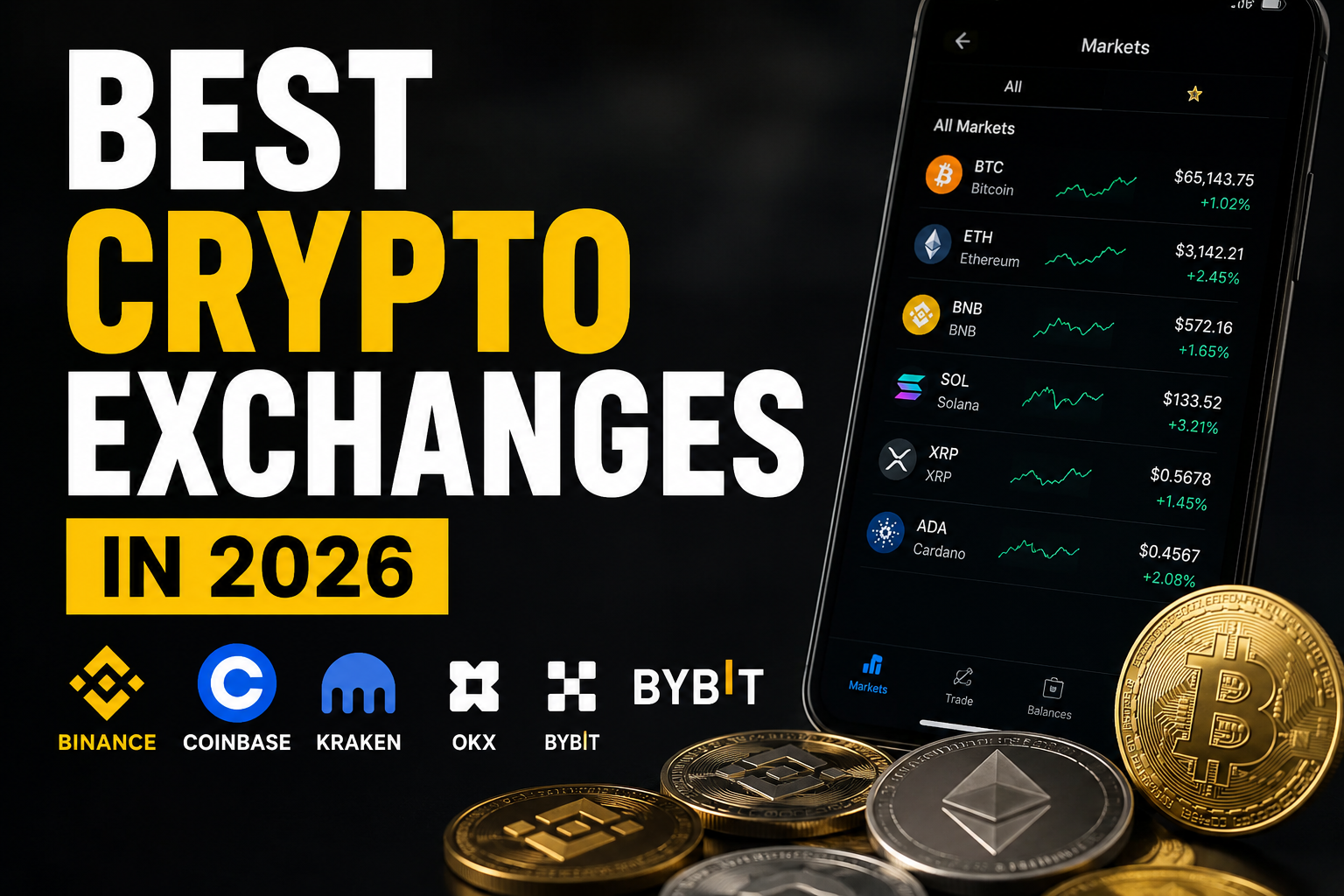
Here are the main US-regulated exchanges worth considering in 2026:
Coinbase
Best for Beginners
FDIC-insured USD balances
Publicly traded (NASDAQ: COIN)
Available in all 50 states
Simple mobile app
Higher fees on basic platform
Kraken
Best for Low Fees
Among lowest fees in the US
Strong security track record
Available in most US states
Good for intermediate traders
Slightly steeper learning curve
Gemini
Best for Security
NY BitLicense holder
SOC 2 Type 2 certified
FDIC-insured USD deposits
Available in all 50 states
Gemini Earn insurance program
Cash App
Best for Simplicity
Buy BTC in under 60 seconds
Integrated with existing Cash App
Auto-invest (DCA) feature
Bitcoin withdrawals to wallet
Higher spread than dedicated exchanges
Fidelity
Best for Existing Investors
Trusted name in US finance
Bitcoin in retirement accounts
No trading fees on crypto
Institutional-grade custody
Limited to Bitcoin only
Recommendation for most US beginners: Start with Coinbase for its simplicity and regulatory standing, or Fidelity if you already have a brokerage account with them. Once you are comfortable, consider moving to Kraken for lower fees on larger purchases.
Step 2: Create and Verify Your Account
2
Sign Up and Complete Identity Verification (KYC)
Every legitimate US-regulated exchange is legally required to verify your identity before allowing you to buy Bitcoin. This process is called Know Your Customer (KYC) and is mandated by US anti-money laundering law. There are no shortcuts around this, and any exchange that lets you buy Bitcoin with no identity verification should be treated with extreme caution.
Here is exactly what the verification process involves at most major US exchanges:
Verification Stage
What You Provide
Typical Time to Complete
Basic account
Email address and password
2 minutes
Identity verification
Legal full name, date of birth, home address, Social Security Number (last 4 digits or full)
5 to 10 minutes
Document upload
Government-issued photo ID: US driver’s license, state ID, or US passport
5 minutes (plus processing time)
Selfie verification
Live photo or short video to match your face to your ID
2 to 5 minutes
Approval
Exchange reviews and approves your submission
Minutes to 48 hours depending on exchange and volume
Security Setup After Account Creation
Once your account is approved, before you add any money, set up all available security features. This is non-negotiable.
Two-factor authentication (2FA): Use an authenticator app like Google Authenticator or Authy rather than SMS-based 2FA. SMS can be intercepted through SIM-swap attacks. Authenticator apps generate codes locally on your device.
Strong unique password: Use a password manager to generate and store a long, random password you have never used on any other site.
Withdrawal whitelist: Many exchanges let you whitelist specific wallet addresses for withdrawals. Enable this so that even if someone accesses your account, they cannot send Bitcoin to an address you have not approved.
Anti-phishing code: Coinbase and some other exchanges let you set a personal code that appears in all legitimate emails from them, so you can spot fakes immediately.
Step 3: Fund Your Account
3
Deposit US Dollars Into Your Exchange Account
Before you can buy Bitcoin, you need to get US dollars into your exchange account. The method you choose affects how quickly you can buy and what fees you pay. Each funding method has real tradeoffs worth understanding.
Funding Method
Speed
Fees
Limits
Best For
ACH Bank Transfer
3 to 5 business days to fully settle
Usually free
$25,000+ per day at major exchanges
Most buyers — lowest cost
Wire Transfer
Same day or next day
$10 to $25 per wire (from your bank)
Very high (often $1M+)
Large purchases over $10,000
Debit Card
Instant
2% to 3.99% per transaction
$1,000 to $5,000 per day
Small, urgent purchases despite high fees
Credit Card
Instant
3% to 4% exchange fee plus cash advance interest from your bank
Usually $1,000 to $2,500
Not recommended for most buyers
PayPal / Venmo
Instant
1.5% to 2.5%
$25,000 per week (PayPal internal only)
Buying Bitcoin within PayPal/Venmo only (cannot withdraw BTC)
Do not buy Bitcoin with a credit card if you can avoid it. Most US banks classify crypto purchases on credit cards as cash advances, which means you are immediately charged cash advance fees plus interest from day one with no grace period. On top of the exchange’s own fee, the true cost of a credit card Bitcoin purchase can exceed 8% to 10% before you even consider whether Bitcoin’s price moves in your favor.
The recommended approach for most US buyers: Link your checking account via ACH, initiate the transfer, and wait the 3 to 5 days for it to settle. Many exchanges will actually let you buy Bitcoin immediately against your pending ACH deposit, but restrict withdrawals of that Bitcoin until the funds clear. For your first purchase, this is a perfectly reasonable way to get started.
Step 4: Place Your Bitcoin Order
4
Execute Your First Bitcoin Purchase
With funds in your account, you are ready to buy. The mechanics differ slightly between exchanges, but the core process is the same everywhere. You are specifying how much you want to spend and confirming the transaction.
Types of Orders Available
Most US exchanges offer at least two types of purchase orders for Bitcoin:
Market Order: You buy Bitcoin immediately at whatever the current market price is. This is the simplest option and what most beginners use. The downside is that in fast-moving markets, the price you see and the price you pay can differ slightly (this is called slippage). For purchases under $10,000, this difference is usually negligible.
Limit Order: You specify the maximum price you are willing to pay per Bitcoin. Your order only executes if Bitcoin’s price drops to that level. This gives you price control but means your order may never fill if Bitcoin stays above your limit. Limit orders are more appropriate for buyers with experience and clear price targets.
Recurring / Auto-Buy: Most major US exchanges offer the ability to set up automatic recurring purchases of a fixed dollar amount on a schedule (daily, weekly, bi-weekly, monthly). This approach is called Dollar Cost Averaging (DCA) and is widely considered the most sensible strategy for long-term Bitcoin investors who are not trying to time the market.
Dollar Cost Averaging explained: Instead of trying to buy at the perfect price (which nobody consistently does correctly), you invest a fixed amount at regular intervals regardless of price. When Bitcoin is expensive, your fixed amount buys fewer satoshis. When it is cheap, your fixed amount buys more. Over time, this averages out your cost basis and removes the emotional stress of trying to time every purchase.
Confirming Your Purchase
Before you confirm any Bitcoin purchase, verify the following on the confirmation screen:
The amount of Bitcoin you are receiving (in BTC)
The price per Bitcoin being applied to your purchase
The total fee being charged
The total USD amount being debited from your account
Once confirmed, the Bitcoin will appear in your exchange wallet, typically within seconds to a few minutes. You will receive a confirmation email and can view your holdings in the exchange’s portfolio dashboard.
Step 5: Store Your Bitcoin Safely
5
Decide Where Your Bitcoin Will Live
This is the step most beginners skip, and it is the one that leads to the most catastrophic losses. Where you store your Bitcoin is as important as buying it in the first place. You have two primary options: leaving it on the exchange (custodial storage) or moving it to your own wallet (self-custody).
Hot Wallets (Software)
Connected to the internet
Free to use
Convenient for frequent transactions
Mobile and desktop apps available
Examples: Coinbase Wallet, Exodus, Electrum
Higher risk than cold storage
Suitable for smaller amounts
Cold Wallets (Hardware)
Offline, air-gapped storage
Cost $70 to $200 (one-time)
Most secure storage method available
Private keys never touch the internet
Examples: Ledger, Trezor, Coldcard
Best for holdings over $1,000
Recovery seed phrase is everything
Exchange Wallet (Custodial)
Exchange holds your keys
Free and instantly accessible
No technical setup required
Convenient for active trading
Exchange controls your keys
Risk of exchange failure (FTX)
Acceptable only for short-term holding
Understanding Seed Phrases
If you move Bitcoin to a self-custody wallet, you will be given a seed phrase: a list of 12 or 24 random English words generated when you set up the wallet. This seed phrase is the master key to all Bitcoin stored in that wallet. Anyone who has your seed phrase can access your Bitcoin from any device, anywhere in the world.
The rules around your seed phrase are absolute:
Write it down on paper (two copies, stored in separate physical locations)
Never photograph it, type it into any app or website, or store it digitally
Never share it with anyone for any reason under any circumstances
If you lose your seed phrase and your device is lost or damaged, your Bitcoin is permanently gone with no recovery option
The most common way Bitcoin is permanently lost is not theft — it is owners losing or destroying the only copy of their seed phrase and having no way to recover their wallet. Back up your seed phrase carefully before storing any meaningful amount of Bitcoin in a self-custody wallet.
Practical recommendation: For your first Bitcoin purchase of under $500, leaving it on a major regulated exchange like Coinbase or Gemini is acceptable while you get comfortable. For amounts above $1,000, and for anything you plan to hold long term, purchase a hardware wallet from Ledger or Trezor (directly from the manufacturer, never from a third-party reseller) and move your Bitcoin to self-custody.
US Exchange Comparison Table
Here is a detailed side-by-side comparison of the major US-regulated exchanges to help you make a final decision.
Exchange
Maker / Taker Fee
Simple Buy Fee
Min. Purchase
FDIC on USD
All 50 States
Best For
Coinbase
0.40% / 0.60%
Up to 3.99%
$2
Yes
Yes
Absolute beginners
Coinbase Advanced
0.00% / 0.05%
N/A
$1
Yes
Yes
Frequent buyers wanting low fees
Kraken
0.16% / 0.26%
1.5%
$10
No
48 states
Fee-conscious intermediate buyers
Gemini
0.20% / 0.40%
Up to 3.49% + $0.99
$1
Yes
Yes
Security-focused buyers
Cash App
Spread-based (~1 to 2%)
Spread-based
$1
Yes (Cash App balance)
Yes
Absolute simplicity
Fidelity Crypto
Spread-based (~1%)
Spread-based
$1
N/A (brokerage account)
Yes
Existing Fidelity customers
River
0.6 to 1.2% all-in
0.6 to 1.2%
$1
Yes
Yes
Bitcoin-only DCA investors
Fee tip: The “Simple Buy” fee on exchanges like Coinbase is much higher than the trading fee on their advanced interface. Coinbase Advanced Trade (the same account, just a different interface) charges a fraction of what the basic Coinbase buy button charges. Once you understand the difference between the two interfaces, always use the advanced trading view for large purchases.
How Much Bitcoin Should You Buy?
There is no universally correct answer to this question — it depends entirely on your financial situation, investment goals, and risk tolerance. But there are some widely accepted frameworks to help you decide.
The 1% to 5% Portfolio Rule
Many financial advisors who are open to cryptocurrency recommend allocating no more than 1% to 5% of your total investable assets to Bitcoin and crypto combined. This reflects Bitcoin’s high volatility: even a complete loss of a 5% allocation would reduce your total portfolio by only 5%, a painful but survivable outcome. Meanwhile, a 10x gain on a 5% allocation grows your overall portfolio by 50%.
Never Invest Money You Cannot Afford to Lose
This is not a throwaway disclaimer — it is the most important sentence in this guide. Bitcoin has declined more than 80% from its all-time high multiple times. Anyone who invested money they needed for rent, food, medical expenses, or debt payments and then watched it fall 80% has been in a genuinely desperate situation. Emergency funds, debt payments, and living expenses come first. Bitcoin is for discretionary investment capital only.
Dollar Cost Averaging vs Lump Sum
Research on traditional markets consistently shows that lump sum investing (putting all your money in at once) outperforms dollar cost averaging about two-thirds of the time, simply because markets tend to rise over time. However, for a highly volatile asset like Bitcoin, the psychological and practical benefits of DCA are harder to dismiss. Spreading your purchases over weeks or months removes the agonizing question of whether “now” is the right time to buy.
Budget
Suggested Approach
Exchange Recommendation
Under $100
Single purchase via Cash App or Coinbase to learn the process
Cash App or Coinbase
$100 to $1,000
Weekly DCA of $25 to $100; store on exchange initially
Coinbase, River, or Cash App
$1,000 to $10,000
Monthly lump sum or weekly DCA; buy hardware wallet for storage
Coinbase Advanced, Kraken, or Gemini
Over $10,000
Wire transfer for low cost; hardware wallet storage mandatory; consider tax professional
Kraken, Gemini, or Fidelity
Understanding Bitcoin Fees Before You Buy
There are two distinct types of fees involved in buying Bitcoin that beginners frequently conflate: exchange fees and network fees. Understanding both prevents unpleasant surprises.
Exchange Fees
Exchange fees are what the platform charges you for facilitating the purchase. They come in two main structures:
Percentage-based fees: A flat percentage of your purchase amount. Coinbase’s simple buy button charges up to 3.99%. Kraken charges 0.26% on the advanced interface. On a $1,000 purchase, the difference between these two fee structures is $39.90 versus $2.60.
Spread-based fees: Some exchanges like Cash App and PayPal do not advertise a specific fee but instead widen the spread between the buy and sell price of Bitcoin. They sell you Bitcoin at a price slightly above the market rate and buy it back at a price slightly below. The typical spread is 1% to 2%, which is not terrible but is less transparent than a stated fee.
Bitcoin Network Fees (Transaction Fees)
When you send Bitcoin from an exchange to your own wallet, a separate fee is charged by the Bitcoin network itself (not the exchange). This fee compensates the miners who process and validate transactions on the blockchain. Network fees vary significantly based on how congested the Bitcoin network is at any given moment.
During quiet periods, a Bitcoin transaction might cost under $1. During peak activity, like the height of a bull market, fees can rise to $5, $10, or more per transaction. Most exchanges absorb or estimate this fee when you initiate a withdrawal, so you can see the cost before confirming.
Fee Type
Who Charges It
Typical Amount
How to Minimize
Simple buy fee
Exchange
1.5% to 3.99%
Use the advanced trading interface
Maker/taker trading fee
Exchange
0.05% to 0.60%
Use limit orders (maker) and trade more volume for discounts
Spread fee
Exchange (some)
0.5% to 2%
Use exchanges that show transparent fees instead
ACH deposit fee
Usually none
$0
Always use ACH over debit or credit cards
Bitcoin network fee
Bitcoin network
$0.50 to $10+
Withdraw during off-peak hours; batch transactions
Bitcoin Taxes in the United States
The IRS treats Bitcoin as property, not currency. This has significant tax implications that every US Bitcoin buyer must understand before their first purchase.
Taxable Events
The following actions create a taxable event that you are legally required to report to the IRS:
Selling Bitcoin for USD: Any gain or loss compared to your purchase price is taxable.
Trading Bitcoin for another cryptocurrency: Even if you never touch USD, swapping BTC for ETH is a taxable disposal of Bitcoin.
Buying goods or services with Bitcoin: Using Bitcoin to pay for anything is treated as selling it at the current market price.
Receiving Bitcoin as income: Mining rewards, staking income, or being paid in Bitcoin is taxed as ordinary income at the fair market value on the day received.
Non-Taxable Events
Buying Bitcoin with USD (no taxable event until you sell)
Transferring Bitcoin between your own wallets
Receiving Bitcoin as a gift (the giver may have gift tax considerations)
Donating Bitcoin to a qualified charity
Tax Rates on Bitcoin Gains
Holding Period
Tax Treatment
Rate (2026)
Held 1 year or less
Short-term capital gain
Ordinary income rate: 10% to 37%
Held more than 1 year
Long-term capital gain
0%, 15%, or 20% depending on total income
Received as income
Ordinary income
10% to 37% at time of receipt
Losses on sale
Capital loss deduction
Offset gains; up to $3,000/year deductible against ordinary income
Practical tax tip: If you are buying Bitcoin and plan to hold it for at least a year before selling, you benefit from the significantly lower long-term capital gains rate compared to short-term rates. A single-income earner making $50,000 per year who holds Bitcoin for more than 12 months pays 15% on their gains. The same person flipping Bitcoin within 12 months could pay up to 22% at that income level. The math strongly favors patience for most US taxpayers.
Use crypto tax software like Koinly, CoinTracker, or TaxBit to automatically import your exchange transaction history and generate IRS-ready reports. The IRS receives transaction data from major US exchanges via 1099 forms, so assuming your activity is invisible to the tax authorities is not a viable strategy.
Common Mistakes First-Time Bitcoin Buyers Make
These are the most frequent and most expensive errors seen among new Bitcoin buyers in the United States. Read this section before you spend a dollar.
Critical Mistakes to Avoid
Using an unregulated offshore exchange: If the exchange is not registered with FinCEN and listed on the NFA or FinCEN database, do not use it. This is how billions have been lost in exchange collapses and exit scams.
Buying on a credit card: Cash advance fees plus exchange fees make this one of the most expensive ways to buy Bitcoin possible.
Investing money you need: Bitcoin’s volatility can and does produce 50% to 80% drawdowns over months. If you need the money within two years, Bitcoin is not an appropriate vehicle for it.
Responding to unsolicited investment advice: If someone contacts you on social media, dating apps, WhatsApp, or anywhere else and offers to help you invest in Bitcoin, it is a scam. The “pig butchering” scam has cost Americans billions of dollars in the past three years.
Losing your seed phrase: Write it down. Store two copies in separate physical locations. Never photograph it. Never store it digitally. This one mistake has permanently destroyed more Bitcoin wealth than almost any other cause.
Not reporting crypto gains to the IRS: The IRS now asks directly on Form 1040 whether you received, sold, or exchanged any digital assets. Major exchanges send 1099 forms to the IRS. Omitting crypto gains is tax evasion.
Chasing hype and trying to time the market: Buying because a friend told you Bitcoin is about to hit a new all-time high, then selling after a 30% drop in a panic, is the pattern that destroys most retail investors’ returns.
Frequently Asked Questions
Is it safe to buy Bitcoin in the US right now?
Buying Bitcoin from a reputable, US-regulated exchange is as safe as using any mainstream financial service. The risk lies not in the purchase process but in price volatility, storage decisions, and scams. Using a properly regulated exchange, securing your account with 2FA, and not investing money you cannot afford to lose covers the main risks.
What is the minimum amount of Bitcoin I can buy?
Most major US exchanges allow purchases starting at $1 to $10. You do not need to buy a whole Bitcoin. Even $50 buys a meaningful fraction of a Bitcoin (called satoshis) that will increase or decrease in value proportionally with Bitcoin’s price.
Can I buy Bitcoin in a Roth IRA or 401k?
Yes, with some limitations. Fidelity offers Bitcoin in self-directed 401k accounts for employers who opt into the feature. Several specialized self-directed IRA providers like iTrustCapital, Bitcoin IRA, and Alto IRA allow you to hold Bitcoin in a tax-advantaged account. The fees at these custodians tend to be higher than standard exchange fees, but the tax advantages of a Roth IRA (tax-free growth) can be compelling for long-term holders. Consult a tax advisor before setting this up.
How long does it take to buy Bitcoin?
The account creation and verification process takes anywhere from a few minutes to 48 hours depending on the exchange and current verification volume. Once your account is verified and funded, buying Bitcoin itself takes under 60 seconds on any major exchange.
What happens to my Bitcoin if an exchange goes bankrupt?
If you hold Bitcoin on an exchange and the exchange goes bankrupt, you become an unsecured creditor of the exchange. This is exactly what happened to FTX customers. The only way to guarantee your Bitcoin is not at risk from exchange failure is to withdraw it to a self-custody wallet where you control the private keys. The phrase “not your keys, not your coins” exists precisely because of this risk.
Do I owe taxes if I just buy Bitcoin and hold it without selling?
No. Simply purchasing Bitcoin and holding it is not a taxable event in the United States. A taxable event only occurs when you sell, trade, spend, or otherwise dispose of Bitcoin. Buying and holding long-term is one of the most tax-efficient Bitcoin strategies available to US investors.
Can I send Bitcoin to someone else?
Yes. Bitcoin is a peer-to-peer payment network. You can send any amount of Bitcoin to any Bitcoin wallet address in the world, at any time, without needing approval from a bank or any intermediary. The recipient needs to provide you with their Bitcoin wallet address (a long string of letters and numbers starting with “1”, “3”, or “bc1”). Always triple-check the address before sending — Bitcoin transactions are irreversible.
You Are Ready to Buy Your First Bitcoin
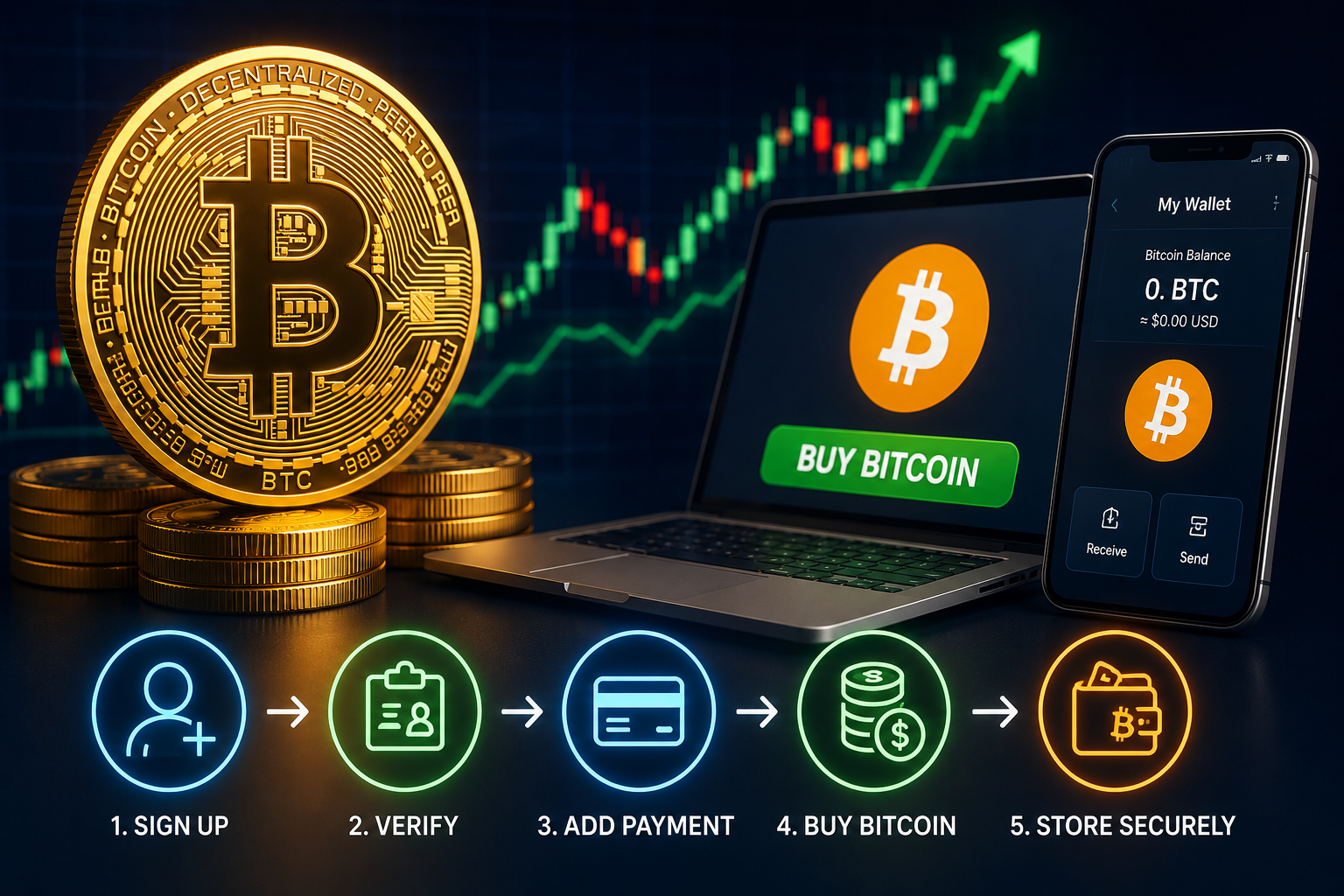
The process of buying Bitcoin in the United States in 2026 is genuinely straightforward when broken into clear steps. Choose a regulated exchange, verify your identity, fund your account via ACH, place a market or limit order, and secure your Bitcoin in appropriate storage. Everything else is details.
The harder discipline is what comes after the purchase: resisting the urge to panic-sell during inevitable downturns, keeping your seed phrase safe, reporting gains to the IRS correctly, and not letting short-term price swings derail a long-term strategy.
Your Bitcoin Buying Checklist
Choose a FinCEN-registered, US-regulated exchange
Complete KYC verification with your government-issued ID
Enable 2FA using an authenticator app (not SMS)
Fund your account via ACH bank transfer for lowest fees
Decide on a DCA schedule or lump sum amount
Use the advanced trading interface to minimize exchange fees
For holdings over $1,000, purchase a hardware wallet
Write your seed phrase on paper and store two copies separately
Track all transactions for IRS reporting purposes
Only invest what you can genuinely afford to lose
Key Takeaways
Bitcoin is legal, regulated, and accessible to all US residents through compliant exchanges.
You do not need to buy a whole Bitcoin — fractional purchases starting at $1 are available everywhere.
Only use exchanges registered with FinCEN. Verify at fincen.gov before funding any account.
ACH bank transfers are the cheapest funding method; credit cards are the most expensive.
The simple buy button on most exchanges is far more expensive than the advanced trading interface.
For amounts over $1,000, self-custody storage on a hardware wallet is strongly recommended.
Your seed phrase is the only key to your wallet. Losing it means losing your Bitcoin permanently.
Buying and holding Bitcoin for over one year qualifies gains for lower long-term capital gains tax rates.
DCA (recurring automatic purchases) removes the stress of trying to time the market.
Never respond to unsolicited crypto investment advice on social media or messaging apps.