Gold vs Bitcoin: Which Is the Better Store of Value in 2026?
Gold (XAU/USD)
~$4,165/oz
All-time high: $5,589 on Jan 28, 2026
Up roughly 41% from May 2025 to May 2026. Central bank demand at record levels. Goldman Sachs targeting $6,000/oz by year-end.
Bitcoin (BTC/USD)
~$61,500
Down roughly 14% year-to-date in early 2026
U.S. Strategic Bitcoin Reserve established. Over 200 public companies hold BTC in treasuries. Long-term institutional adoption accelerating despite near-term volatility.
The United States national debt is barreling toward another trillion-dollar deficit in fiscal 2026. Inflation, though off its 2022 peak, remains sticky and uncomfortable. The Federal Reserve is caught between an economy that needs relief and a price level that punishes patience. Against this backdrop, millions of Americans are asking a fundamental question: what actually holds value?
Two assets dominate that conversation. Gold, the 5,000-year-old store of wealth that has outlasted every empire, currency crisis, and central bank experiment in history. And Bitcoin, the 15-year-old digital protocol that has outperformed every major asset class over the past decade and is now being accumulated by sovereign governments as a strategic reserve.
This is not a simple question with a simple answer. Both assets share critical traits: fixed or near-fixed supply, independence from government monetary expansion, and a track record of appreciating during periods of dollar debasement. But they are profoundly different in maturity, volatility, liquidity profile, and practical utility. In 2026, the gap between them is both narrowing and widening at the same time, depending on which dimension you measure.
This analysis breaks down every meaningful category, draws on the latest 2026 market data and institutional research, and delivers a clear, data-driven verdict. Whether you are a conservative retiree protecting a nest egg, a millennial building generational wealth, or an advisor constructing a balanced portfolio, this guide is built for you.
Historical Performance
Track Record: 5,000 Years vs 15 Years
Gold’s Unbroken Legacy
Gold has served as a store of value across virtually every major civilization in recorded history. From ancient Egypt and the Roman Empire to the Bretton Woods system and today’s modern central bank reserves, gold’s purchasing power has remained remarkably stable over centuries. If you had converted $1 million to gold in 1900, those ounces would be worth roughly $278 million today, demonstrating that gold’s primary function is not to generate spectacular returns but to preserve purchasing power across generations and regime changes.
In more recent times, gold rose from roughly $250 per ounce in 2001 to over $5,500 per ounce at its January 2026 peak, an increase of more than 2,100%. During that same period, it served as a reliable hedge during the 2008 financial crisis, the COVID-19 collapse of 2020, and the geopolitical upheaval of 2022. That crisis-performance consistency is what institutional portfolio managers prize most.
Gold All-Time High
$5,589
Set January 28, 2026
1-Year Return (May 25-26)
+41%
$3,335 to $4,732/oz
YTD 2026 (early)
+7%
Versus S&P 500
Bitcoin’s Explosive but Volatile Ascent
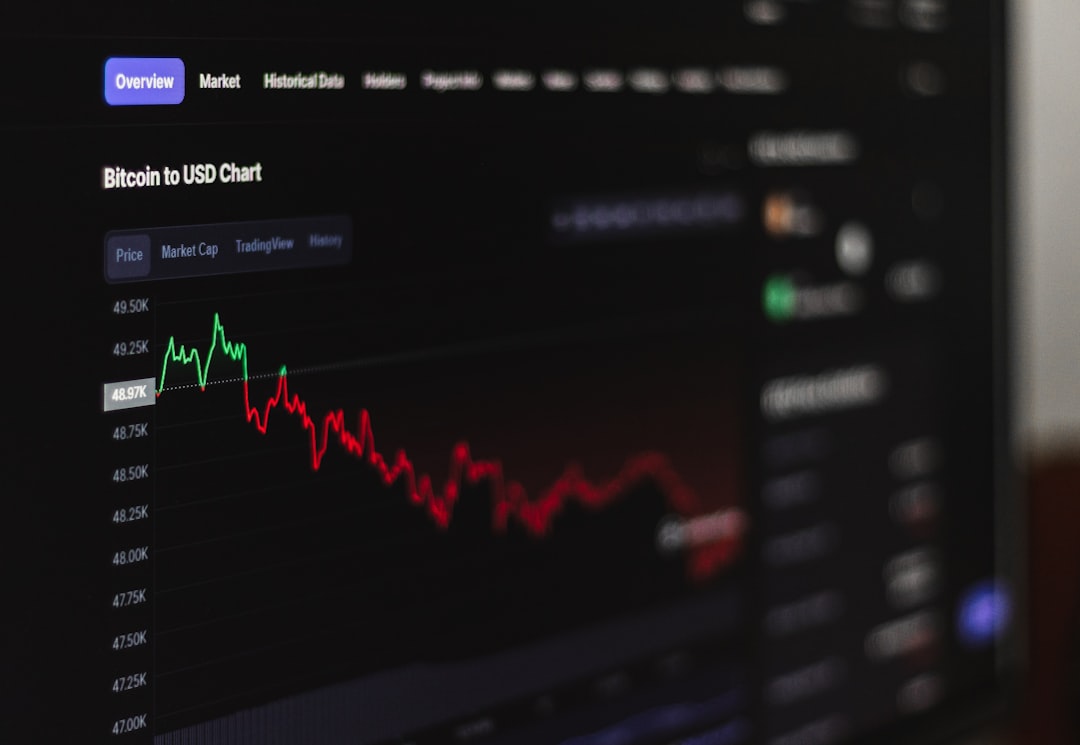
Bitcoin launched in January 2009 at effectively zero value. By the time this article is published in June 2026, it is trading near $61,500, having previously reached an all-time high above $100,000 in late 2024. Over any 4-year window in its history, Bitcoin has produced positive returns for patient investors. Between 2012 and 2022 alone, Bitcoin delivered a staggering inflation-adjusted return of approximately 3,700%, outperforming every other asset class over that decade.
However, those returns came with severe drawdowns. Bitcoin has experienced multiple 70-80% corrections from peak to trough, most recently a sharp 33% drop to the $81,000 range in early 2026 coinciding with gold’s record-setting rally. For investors without the emotional fortitude and time horizon to hold through those drawdowns, the experience can be psychologically devastating even when the long-term math works in their favor.
Bitcoin Current Price
~$61.5K
As of June 2026
10-Year Return
3,700%+
Inflation-adjusted, 2012-2022
YTD 2026 (early)
-14%
Underperforming gold
“Gold has never had a year where it lost more than 30% of its value. Bitcoin has had multiple years like that. That difference in volatility profile is everything for institutional allocators.”
Consensus view among risk managers, 2026
Supply Economics
Scarcity: Nature’s Cap vs Mathematics
Gold’s Physical Scarcity
Gold is scarce because the planet contains a finite amount of it and extracting that gold is extraordinarily expensive and energy-intensive. The above-ground supply currently stands at approximately 220,000 tonnes. Annual mining production runs between 3,600 and 3,700 tonnes, translating to an annual supply inflation rate of roughly 1.6% to 3%. New significant gold deposit discoveries have been declining since the 1990s, and many analysts believe global gold production may be approaching its long-term structural peak.
This supply predictability is a core feature, not a limitation. Central banks and institutional managers know approximately how much new gold will enter the market each year, making it easy to model and rely on. That said, gold’s supply is not perfectly capped. If gold prices rise high enough, marginal deposits that were previously uneconomical become worth mining, and there are estimated 50,000 to 64,000 tonnes of unmined gold remaining underground.
Bitcoin’s Mathematical Certainty
Bitcoin’s scarcity is enforced not by geography but by mathematics, specifically by software code that cannot be changed without a consensus of millions of participants worldwide. There will never be more than 21 million Bitcoin in existence. As of 2026, approximately 20 million have been mined, leaving roughly 1 million yet to enter circulation over the coming century. Beyond that, an unknown but significant number of those existing coins have been permanently lost through misplaced private keys, making the effective circulating supply considerably smaller.
The April 2024 halving reduced Bitcoin’s annual supply inflation rate from approximately 1.8% to around 0.8%, now lower than gold’s rate. Bitcoin issuance is estimated to stop entirely around the year 2140, at which point its inflation rate reaches a hard zero. This mathematical certainty is something gold’s physical scarcity cannot match.
“Following the April 2024 halving, Bitcoin’s annual supply inflation rate dropped to around 0.8%, now lower than gold’s 1.6% to 3% range. No other asset in history has had its monetary supply governed by open-source code.”
Ledger Academy, May 2026
Risk Profile
Volatility: The Defining Difference
If one single factor separates gold from Bitcoin as a store of value, it is volatility. Gold demonstrates significantly greater price stability, a product of its long monetary history, established and deep markets, high liquidity, and low correlation to broader market risks. When geopolitical shocks hit, gold tends to move up steadily and hold its gains. It does not swing 30% in a month.
Bitcoin behaves differently. Its smaller market capitalization relative to gold, its retail investor concentration, its sensitivity to regulatory news and macro sentiment, and its novelty all contribute to violent price swings. In the first quarter of 2026 alone, Bitcoin corrected 33% from its prior highs while gold was simultaneously setting all-time records. Bitcoin ended Q1 2026 down roughly 22% for the quarter, a jarring performance gap versus gold.
That said, BlackRock’s September 2025 research report “Bitcoin: A Unique Diversifier” offered a nuanced counterpoint. Analyzing six major crises between 2020 and 2025, the firm found that while Bitcoin typically underperforms gold in the first 10 days of a crisis, over a 60-day period it almost always outperforms gold. This suggests Bitcoin may be a medium-to-long-term crisis hedge rather than an immediate safe-haven flight-to-quality asset like gold.
“While Bitcoin may underperform gold during the first 10 days of a crisis, over a longer 60-day period Bitcoin almost always outperforms gold.”
BlackRock, “Bitcoin: A Unique Diversifier,” September 2025
For retirees or conservative investors, gold’s lower volatility makes it the clear preference as a core store of value. For younger investors with a 10-plus-year horizon, Bitcoin’s volatility may be an acceptable trade-off for its outsized return potential, particularly if position sizing is appropriate and the investor can hold through drawdowns without panic-selling.
Current Events
What 2026 Has Changed
2026 Breaking Developments
Jan 28Gold sets an all-time record high of $5,589 per ounce driven by persistent inflation, geopolitical fragmentation, and aggressive central bank accumulation. The move marks the first time gold has traded above $5,500 in history.
Q1 2026China’s net gold imports hit 317 tonnes in Q1 2026, nearly three times the prior quarter’s pace. The People’s Bank of China ramped monthly purchases from roughly 1 tonne to 8 tonnes by April, signaling a strategic long-term accumulation program likely tied to de-dollarization efforts.
Q1 2026The U.S. Strategic Bitcoin Reserve is formally established. Over 200 public companies now hold digital assets in their treasuries. Senator Cynthia Lummis’s BITCOIN Act of 2025 moves toward codifying federal Bitcoin management framework.
Q1 2026Bitcoin corrects sharply, sliding roughly 33% from highs to near $81,000, even as gold reaches record territory. The divergence reignites the debate over whether Bitcoin qualifies as a true safe-haven store of value.
May 2026Bitcoin reverses and significantly outperforms gold over a two-month period, with capital flowing into BTC amid Middle East geopolitical tensions. Motley Fool analysts describe Bitcoin as the better near-term store of value in this window, citing its recovery momentum.
June 2026Goldman Sachs strips remaining 2026 rate cuts from its forecast but keeps its $5,400 gold target intact, stating the bull thesis rests on structural demand rather than Fed policy. J.P. Morgan maintains a $6,000/oz gold target by Q4 2026. Gold is trading around $4,165 at time of publication, about 25% below its all-time high.
The most striking story of 2026 is gold’s structural reclassification among central banks worldwide. The freezing of Russian central bank assets in 2022 sent a clear signal to every non-Western sovereign wealth manager: dollar-denominated assets held offshore are not unconditionally safe from U.S. sanctions. In response, nations including China have been systematically building gold reserves as part of long-term strategies to diversify away from dollar dependency. This is a secular demand shift, not a cyclical one, and it is a powerful tailwind that gold did not have in prior decades.
For Bitcoin, the defining 2026 development is the formalization of sovereign accumulation. The U.S. government’s Strategic Bitcoin Reserve, combined with state-level initiatives such as New Hampshire’s 5% digital asset allocation and Texas’s $10 million investment, represents the transition of Bitcoin from a speculative asset to a recognized component of national financial strategy. Switzerland is also considering a popular referendum on whether Bitcoin should be included in central bank reserves. Sweden’s Riksbank received a formal parliamentary inquiry on the same question. This is no longer fringe territory.
Smart Money
Institutional Adoption: Where the Big Money Stands
Gold’s Institutional Depth
Gold’s institutional infrastructure is mature, deep, and global. Central banks worldwide hold gold as a reserve asset, and that trend accelerated sharply after 2022. The World Gold Council estimates Q1 2026 net central bank purchases at 244 tonnes, dramatically higher than the 16 tonnes reported by official IMF channels, suggesting significant unreported accumulation. This structural demand from state-level actors creates a powerful price floor that is relatively insensitive to retail investor sentiment.
Gold is also fully integrated into the derivatives, futures, and ETF ecosystems. Products like GLD and IAU give mainstream investors liquid exposure without the complexities of physical storage. Pension funds, sovereign wealth funds, and insurance companies all hold gold without regulatory ambiguity.
Bitcoin’s Rapidly Maturing Ecosystem
Bitcoin’s institutional story in 2026 is one of rapid but still incomplete maturation. Over 200 public companies now hold Bitcoin in their treasuries. Spot Bitcoin ETFs, approved in the United States in early 2024, have pulled hundreds of billions of dollars in institutional capital into the asset class. BlackRock’s iShares Bitcoin Trust became one of the fastest-growing ETFs in history.
The Strategic Bitcoin Reserve formalized by the U.S. government represents perhaps the most significant institutional validation in Bitcoin’s history. By designating Bitcoin as a long-term store of value at the federal level, the government has normalized its inclusion in diversified portfolios in a way that private institutional adoption alone could not achieve. Institutional holding dominance is also becoming a structural feature: an estimated 64% of Bitcoin’s supply is now held for over one year, reducing selling pressure and contributing to price stability over time.
“By formalizing Bitcoin’s role as a strategic reserve alongside gold and foreign currencies, the U.S. government has catalyzed a paradigm shift in institutional adoption and macroeconomic dynamics.”
Analysis of U.S. Strategic Bitcoin Reserve policy, 2026
Real-World Use
Portability, Divisibility, and Practicality
Where Gold Falls Short
Gold’s physical nature is both its greatest strength and its most meaningful limitation. You cannot email gold across a border. Transferring large amounts of physical gold is expensive, time-consuming, and requires secure logistics. Storing gold at home creates insurance and security complications, while storing it in a vault or depository introduces counterparty risk. Dividing gold for small transactions requires physical refining. And while paper gold products like ETFs solve the portability problem, they reintroduce the counterparty risk that owning physical gold was supposed to eliminate.
Verifying the authenticity of physical gold is also not trivial. A significant portion of counterfeit gold circulates in the market, with 41.2% of U.S. coin dealers reporting customers attempting to sell them fake gold American Eagle bullion coins, according to CoinLedger data. This is a real practical problem with no perfect solution short of professional assay.
Where Bitcoin Has the Edge
Bitcoin is natively digital, permissionless, and borderless. An individual can transfer any amount of Bitcoin, from one satoshi (0.00000001 BTC) to $1 billion, anywhere in the world, in minutes, with fees that are trivial relative to the amount transferred. There is no customs declaration, no shipping insurance, no vault fees, and no bank approval required. This makes Bitcoin the more practical store of value in an increasingly digital and globalized economy, particularly for individuals who may need to move wealth across borders in response to political change or emergency.
Bitcoin is also perfectly divisible and perfectly verifiable. The blockchain provides an immutable, public record of every transaction, making it impossible to pass off counterfeit Bitcoin. These practical advantages are not trivial and represent genuine improvements over physical gold for 21st-century use cases.
Downside Scenarios
Key Risks Every Investor Must Understand
Risks Specific to Gold
Gold does not pay a yield. Unlike bonds, dividend stocks, or real estate, gold generates no income while you hold it. In an environment of high real interest rates, the opportunity cost of holding gold is substantial. This is why gold tends to underperform during periods of rising real yields. Gold also has limited utility beyond its monetary function, making it almost entirely dependent on sentiment and demand for its value. If central banks globally were ever to significantly reduce their gold holdings, the price impact could be severe.
Physical gold also carries logistics risks. Theft, loss, and fraud are all real-world concerns. And while gold-backed ETFs solve many of these problems, they introduce the counterparty risk of the fund provider and the custodian, which is precisely the kind of systemic risk that motivates investors to own gold in the first place.
Risks Specific to Bitcoin
Bitcoin’s primary risk for most investors is volatility. The asset regularly experiences 30-80% drawdowns from peak to trough. For investors who cannot hold through those drawdowns emotionally or financially, that volatility is not just uncomfortable but potentially ruinous if they sell at the bottom of a cycle. Bitcoin also has a much shorter track record than gold. Its behavior during a genuine deflationary depression or a full-scale global financial system collapse is untested. We know how gold performed in 1929. We do not know how Bitcoin would.
Regulatory risk, while substantially reduced by the establishment of the Strategic Bitcoin Reserve and growing bipartisan political support, is not zero. Cybersecurity risks, while mitigated by Bitcoin’s decentralized nature, remain a concern at the custody level. And the risk of user error, sending Bitcoin to the wrong address, losing a private key, or falling for a phishing scheme, is genuinely greater than with gold.
Side by Side
Head-to-Head Comparison
The table below scores each asset across the most important dimensions of a store of value. Scores reflect the 2026 environment and are the editorial judgment of this analysis.
Category
Gold
Bitcoin
Edge
Track Record
5,000+ years of proven store of value across empires, wars, and currency crises
15 years; best-performing asset of the 2010s and 2020s but young relative to gold
Gold
Supply Certainty
Physically scarce, ~1.6-3% annual inflation rate, but not mathematically fixed
Mathematically capped at 21 million; post-2024 halving inflation rate ~0.8%; hard supply limit
Bitcoin
Volatility (Stability)
Low volatility; consistent crisis outperformance in first 10-30 days of a shock
High volatility; 30-80% drawdowns common; better over 60-day crisis windows per BlackRock
Gold
10-Year Return
Strong but measured; driven by monetary demand and central bank buying
Exceptional; 3,700%+ inflation-adjusted return 2012-2022; outperforms all major assets over 4-year windows
Bitcoin
Portability
Physical gold is cumbersome; ETFs reintroduce counterparty risk
Instantly transferable globally, any amount, permissionlessly, with minimal fees
Bitcoin
Divisibility
Divisible but awkward for small transactions; requires physical modification
Divisible to 1/100,000,000 (one satoshi); ideal for any transaction size
Bitcoin
Verifiability
Requires professional assay; counterfeit gold is a documented problem
Blockchain makes verification instant and absolute; counterfeiting is cryptographically impossible
Bitcoin
Institutional Depth
Fully integrated; central banks, pension funds, derivatives markets all established
Rapidly maturing; spot ETFs, 200+ corporate treasury holders, U.S. Strategic Reserve in place
Gold
Regulatory Clarity
Universally accepted; zero legal ambiguity anywhere
Substantially improved with Strategic Reserve and bipartisan support; still evolving globally
Gold
Inflation Hedge
Proven over decades; reliable but slow-moving response to monetary expansion
Strong correlation with M2 money supply growth; inverse correlation to U.S. Dollar Index
Tie
Censorship Resistance
Physical gold cannot be digitally censored, but can be physically seized or embargoed
Decentralized; no government or entity can freeze or confiscate properly secured Bitcoin
Bitcoin
Crisis Safe Haven
First-mover advantage in any crisis; capital flows to gold within days of shock
Tends to underperform early in crises but recovers strongly over 60-day window
Gold
Category scores reflect editorial judgment based on current 2026 data. This table is for informational purposes and does not constitute financial advice.
Choose Gold If…
You are a conservative investor or retiree prioritizing capital preservation over growth
You need a liquid, universally accepted safe-haven asset with zero regulatory risk
Your time horizon is short to medium term (1-5 years)
You cannot tolerate seeing your portfolio drop 30-50% in a single quarter
You are part of a pension fund, endowment, or institution with mandated asset class restrictions
You believe geopolitical fragmentation and central bank demand will sustain structural gold buying
Choose Bitcoin If…
You have a long time horizon of 5-10+ years and can hold through significant drawdowns
You want exposure to the highest-returning asset class of the past decade
You prioritize censorship resistance and sovereign-level confiscation protection
You believe in the long-term trend of digital, decentralized monetary systems
You need an asset that can be transferred anywhere instantly without intermediaries
You want to participate in the early stages of sovereign Bitcoin adoption before it becomes mainstream
The 2026 Verdict
Gold Wins on Stability. Bitcoin Wins on Potential. The Smartest Portfolio Owns Both.
In 2026, gold is the superior store of value for most investors most of the time. Its 5,000-year track record, negligible volatility relative to Bitcoin, proven crisis performance, and structural demand from central banks make it the default answer to the question of wealth preservation. Gold’s January 2026 all-time high above $5,589 was not a speculative bubble. It was driven by sovereign demand, inflation hedging, and de-dollarization. Those drivers are not going away.
But dismissing Bitcoin in 2026 would be a mistake. With the U.S. Strategic Bitcoin Reserve formally established, over 200 institutional treasury allocations in place, spot ETFs integrating BTC into mainstream portfolios, and a halving-reduced supply inflation rate now below gold’s, Bitcoin has crossed a threshold of institutional legitimacy that changes its long-term risk profile. For investors who can bear the volatility, a meaningful allocation to Bitcoin alongside a core gold position delivers the best of both worlds.
GOLD 12%
BTC 8%
OTHER ASSETS 80%
Illustrative moderate-risk portfolio allocation. Not personalized financial advice.
Frequently Asked Questions
Gold vs Bitcoin: Your Questions Answered
Is Bitcoin considered a store of value in 2026?
Yes, increasingly so. The establishment of the U.S. Strategic Bitcoin Reserve in 2026, combined with institutional adoption by over 200 public companies and the introduction of spot Bitcoin ETFs in 2024, has formalized Bitcoin’s status as a recognized store of value at the sovereign level. However, its high volatility means it is more accurately described as a high-risk, high-reward store of value rather than a stable one like gold.
Why did gold outperform Bitcoin in early 2026?
Gold’s early 2026 outperformance was driven by multiple converging factors: record central bank buying (particularly by China, which imported 317 tonnes in Q1 2026 alone), geopolitical fragmentation that drove safe-haven demand, persistent inflation, and dollar weakness. Bitcoin simultaneously experienced a sharp correction from prior highs, reflecting its higher sensitivity to risk sentiment. Gold is typically the first asset to benefit from flight-to-safety capital flows in the early days of any crisis or market stress.
What is the U.S. Strategic Bitcoin Reserve?
The Strategic Bitcoin Reserve is a U.S. government program that designates Bitcoin seized from criminal enforcement actions and other government holdings as a long-term strategic reserve asset, comparable in concept to the Strategic Petroleum Reserve or gold held at Fort Knox. The BITCOIN Act of 2025, introduced by Senator Cynthia Lummis, aims to codify the framework with an initial accumulation target of up to 1 million BTC. The existence of this reserve represents perhaps the single most significant legitimizing event in Bitcoin’s history.
How much gold should I own versus Bitcoin?
Financial advisors generally recommend that precious metals and alternative stores of value represent between 5% and 20% of a total portfolio, depending on risk tolerance and investment goals. Within that allocation, the split between gold and Bitcoin depends heavily on your time horizon and volatility tolerance. Conservative investors might allocate 90% of that portion to gold and 10% to Bitcoin. More aggressive long-term investors might split it 50/50. No single allocation is right for everyone, and this article does not constitute personalized financial advice. Consult a licensed financial advisor before making allocation decisions.
Will gold reach $6,000 per ounce in 2026?
Major financial institutions including J.P. Morgan and Goldman Sachs both maintain price targets in the $5,400 to $6,000 range for gold by the end of 2026, driven by structural central bank demand and persistent inflation. J.P. Morgan specifically targets $6,000/oz by Q4 2026, while Goldman Sachs, even after stripping remaining 2026 rate cuts from its forecast in June 2026, maintained its $5,400 target based on structural demand rather than Fed policy. However, gold is currently trading roughly 25% below its January 2026 all-time high, and forecasts carry inherent uncertainty.
Is Bitcoin more scarce than gold?
In mathematical terms, yes. Bitcoin has a hard cap of 21 million coins enforced by code, and its post-2024 halving annual supply inflation rate of approximately 0.8% is lower than gold’s 1.6% to 3%. Gold’s supply is physically scarce but not mathematically fixed. In theory, high enough prices could incentivize the extraction of lower-grade ore deposits, and an estimated 50,000 to 64,000 tonnes of unmined gold remain underground. Bitcoin’s supply schedule, by contrast, cannot be changed without breaking the network’s consensus rules, making it arguably the most predictably scarce monetary asset ever created.
What happens to Bitcoin during a financial crisis?
Based on BlackRock’s September 2025 research analyzing six crises between 2020 and 2025, Bitcoin typically underperforms gold in the first 10 days of a major shock, as investors initially flee to established safe havens. However, over a 60-day crisis window, Bitcoin almost consistently recovered and outperformed gold. This suggests Bitcoin functions best as a medium-to-long-term crisis hedge rather than an immediate flight-to-safety asset. That said, Bitcoin’s behavior during a deflationary depression or complete global financial system failure remains untested, unlike gold which has a documented crisis history stretching back centuries.