$400B+Projected total crypto ETP assets by year end 2026
100+New crypto ETF filings expected this year
$1.67BWeekly outflow recorded late May 2026, a reminder these funds swing both ways
75 DaysNew SEC generic listing timeline, down from many months
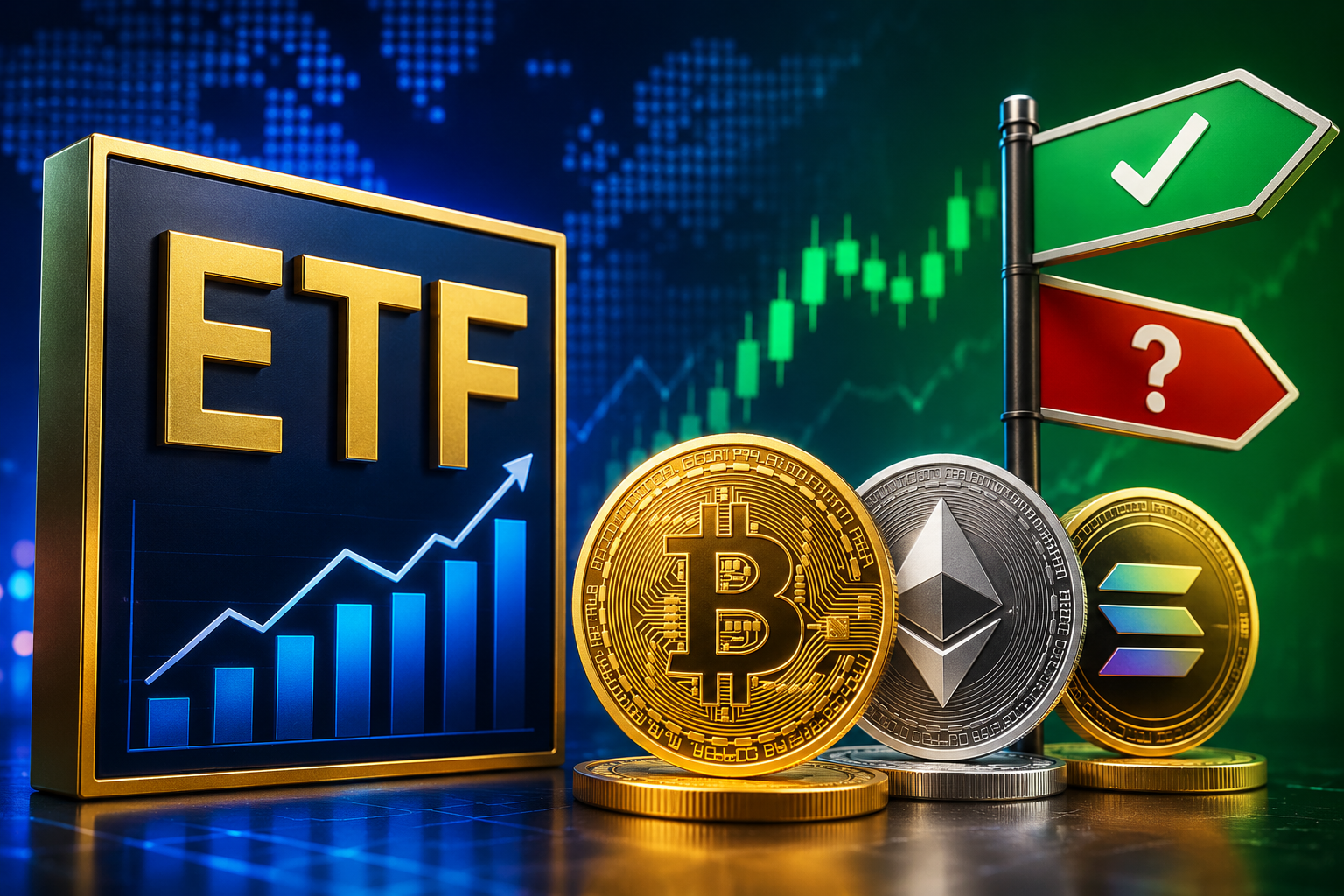
If you have watched financial news in 2026, you have heard the term “crypto ETF” a lot. Bitcoin ETFs, Ethereum ETFs, and now a fast-growing list of altcoin funds covering Solana, XRP, Litecoin, and even Dogecoin, are pulling in billions of dollars from everyday investors and large institutions alike. But what is actually inside one of these funds, how does it differ from buying crypto directly on an exchange, and is it a smart move for your own portfolio right now
This guide breaks down exactly what a crypto ETF is, how the structure works behind the scenes, what changed with U.S. regulation this year, and the real risks you should weigh before buying in. We will also look at the latest 2026 flow data, since the picture has shifted more than once already this year.
A crypto exchange-traded fund is a regulated investment fund that trades on a stock exchange, such as the NYSE Arca, Nasdaq, or Cboe, and is designed to track the price of one or more cryptocurrencies. Instead of opening an account on a crypto exchange, creating a digital wallet, and storing private keys yourself, you simply buy shares of the ETF through a normal brokerage account, the same way you would buy shares of an S&P 500 fund.
Most of the largest crypto ETFs are “spot” funds, meaning the issuer actually holds the underlying cryptocurrency in custody and the ETF share price is meant to track that holding closely, minus fees. This is different from older crypto investment products that relied on futures contracts, which often drifted away from the real spot price over time.
“Once a crypto product trades as an ETF, it becomes easier to access through brokerage platforms and other familiar investment channels.”
Industry analysis on the 2026 altcoin ETF wave
How a Crypto ETF Actually Works
Behind the scenes, a spot crypto ETF works through a few coordinated steps:
Custody. The fund issuer (think BlackRock, Fidelity, Grayscale, or Bitwise) partners with a regulated custodian to hold the actual Bitcoin, Ethereum, or other crypto asset in cold storage.
Share creation. Authorized participants, typically large market-making firms, create new ETF shares by delivering cash or the underlying crypto to the fund in exchange for shares, which keeps the ETF price aligned with the real coin price.
Exchange listing. Those shares then trade all day on a stock exchange, just like shares of Apple or an S&P 500 index fund, with a ticker symbol you can search in any brokerage app.
Fees. The fund charges an annual management fee, called an expense ratio, which is deducted gradually from the fund’s holdings rather than billed to you directly.
Because the ETF itself is the thing being bought and sold, you never touch the crypto directly. You do not need a wallet, you do not manage a seed phrase, and you do not have to worry about sending funds to the wrong address. The trade-off is that you also do not control the underlying coins, which matters for reasons we will cover in the risks section below.
What Changed in 2026
2026 has been an eventful year for crypto ETFs, with momentum, a rule change, and a sharp pullback all happening within the first six months.
A strong start to the year
U.S. spot crypto ETFs opened January 2026 with close to $670 million in single day inflows, led by BlackRock’s iShares Bitcoin Trust (IBIT), which alone pulled in roughly $287 million on the very first trading day of the year. Within two weeks, total crypto ETF assets under management climbed to about $137.7 billion, a sign that institutional appetite had not cooled despite a choppy end to 2025.
2026 Headline Numbers
2025 closed with roughly $23 billion in net crypto ETF inflows for the year.
Bloomberg Intelligence’s base case for 2026 inflows sits around $15 billion, with an upside case as high as $40 billion if the Federal Reserve cuts interest rates further.
Some institutional forecasters, including Galaxy Digital, see total inflows exceeding $50 billion if wealth management platforms keep adding crypto to model portfolios.
Total crypto ETP assets under management are projected to surpass $400 billion by the end of 2026, roughly double where they started the year.
The SEC’s generic listing standards reshaped the pipeline
The single biggest structural change did not happen in 2026 itself, it happened in September 2025, when the SEC approved generic listing standards for commodity-based trust shares on Nasdaq, Cboe, and the NYSE. In plain English, this means exchanges can now list a qualifying crypto ETF without the SEC reviewing every single application individually. That cut typical approval timelines from many months down to as little as 75 days in some cases.
The effect has been immediate. Solana and XRP spot ETFs reached the market by November 2025, some with staking built in for extra yield, and by early 2026 the approved list had expanded to include products tied to Litecoin and Dogecoin, with Avalanche, Chainlink, Polkadot, and BNB also working through the pipeline. Analysts now describe the question driving 2026 less as “will Bitcoin ETFs keep growing” and more as “which altcoin fund clears the next regulatory hurdle.”
Then came the spring pullback
Optimism cooled by April and May. Bitcoin ETF flows weakened earlier in the year, and by late May, the broader crypto ETF and ETP market logged one of its roughest stretches yet, with a weekly outflow of about $1.67 billion in the final week of May, the second largest weekly outflow of 2026 at that point. Over a three week span, outflows topped $4.21 billion, and total Bitcoin ETF assets under management slid from roughly $104 billion down to about $94 billion.
Analysts at CoinShares and Galaxy attributed the pullback to a mix of macro uncertainty and profit taking, but were careful to note that the money was not entirely leaving crypto. Some of it appeared to be rotating into newer, more targeted altcoin products rather than exiting the asset class altogether.
A new regulatory wrinkle in April
In late April 2026, the SEC opened a public comment period on an 85-item NYSE Arca rule change that would tighten the asset eligibility threshold for crypto and commodity trust listings to 85 percent, while explicitly excluding non-fungible assets and collectibles from qualifying as commodities under the generic listing framework. The proposal could either smooth the path for compliant funds or quietly narrow it for borderline products, and the outcome was still being reviewed as of this writing.
A new kind of fund: tokenized exchange ETFs
By May and June 2026, a fresh category emerged: ETFs built around tokens tied to crypto exchange activity rather than a single coin like Bitcoin. Industry commentators have compared the mechanism to a corporate stock buyback, since trading activity on the underlying platform is used to support the token’s value. These products are being pitched as a simpler entry point for investors who want exposure to exchange level activity without running a wallet or trading directly on a decentralized exchange.
Why This Matters For You
The lesson from the first half of 2026 is that crypto ETFs make access easier, but they do not make the underlying asset less volatile. The wrapper changed. The price swings did not.
Types of Crypto ETFs Available Now
The crypto ETF category has grown well beyond just Bitcoin. Here is a breakdown of what is currently available to U.S. investors in 2026.
Type
What It Tracks
Example Focus
Best Suited For
Spot Bitcoin ETF
Actual BTC held in custody
IBIT, FBTC, BITB, GBTC, EZBC
Long-term, lower-complexity crypto exposure
Spot Ethereum ETF
Actual ETH held in custody
Major issuer ETH trusts
Investors who want exposure beyond Bitcoin
Spot Altcoin ETFs
Solana, XRP, Litecoin, Dogecoin, and others
Single-asset altcoin trusts
Investors comfortable with higher volatility
Multi-Asset Crypto ETFs
A basket of several large cryptocurrencies
Grayscale’s Digital Large Cap Crypto Fund
Diversified crypto exposure in one ticker
Staking-Enabled ETFs
Underlying coin plus on-chain staking rewards
Certain Solana and Ethereum products
Investors seeking yield on top of price exposure
Futures-Based Crypto ETFs
Crypto futures contracts, not the coin itself
Older-generation BTC futures funds
Traders, less suited for long-term holding
Generally, financial educators favor spot ETFs over futures-based ETFs for long-term exposure, because futures funds can experience price drag from rolling contracts over time, sometimes underperforming the actual spot price of the cryptocurrency.
Crypto ETF vs Buying Crypto Directly
This is the question most beginners actually want answered. Both approaches give you exposure to crypto price movements, but the experience and the risks are different.
Factor
Crypto ETF
Buying Crypto Directly
Where you buy it
Any standard brokerage account
A crypto exchange or wallet app
Custody
Held by the fund’s custodian
Held by you (or an exchange, if not self-custodied)
Trading hours
Limited to stock market hours
24 hours a day, 7 days a week
Fees
Annual expense ratio
Per-trade fees, network fees, no ongoing fee
Can you use it to pay for things or move it on-chain
No, it is a security, not a wallet asset
Yes
Tax reporting
Standard 1099 from your broker
Often more manual cost-basis tracking
Retirement account eligible
Yes, in most IRA and 401(k) brokerage windows
Rarely, depends on the provider
Pros and Cons of Crypto ETFs
Advantages
No wallet, private key, or seed phrase to manage
Buy and sell through a brokerage account you may already use
Easier to hold inside a retirement account
Simplified, broker-issued tax reporting
Regulated structure with custody and disclosure requirements
Growing menu of assets beyond just Bitcoin
Drawbacks
Annual expense ratio eats into long-term returns
Only tradable during stock market hours
You do not control or own the underlying crypto directly
Newer altcoin ETFs can have thin trading volume
Cannot move ETF shares on-chain or use them like crypto
Still exposed to the full volatility of the underlying asset
Key Risks to Understand Before You Buy
Volatility Does Not Disappear
An ETF wrapper does not make Bitcoin, Solana, or XRP less volatile. The spring 2026 pullback, when crypto ETFs saw billions of dollars in weekly outflows, is a clear example. Prices can move sharply in both directions, sometimes in a matter of days.
Newer Altcoin Funds Can Be Thin
Many single-asset altcoin ETFs launched in late 2025 and 2026 have less than six months of trading history and relatively small asset bases, some under $100 million. Lower trading volume can mean wider bid-ask spreads and more price slippage when you buy or sell.
Regulatory Rules Can Still Shift
The generic listing framework made approvals faster, but it is not the end of regulatory change. The SEC’s April 2026 proposal to tighten asset eligibility thresholds shows that the rules governing which products can list are still being actively revised.
Fees Compound Over Time
Expense ratios may look small on paper, often well under one percent annually, but they are charged every year you hold the fund. Over a long holding period, fees can meaningfully reduce your total return compared to the raw performance of the underlying coin.
How to Buy a Crypto ETF, Step by Step
Open or log into a brokerage account. Most major U.S. brokerages now support crypto ETF trading alongside regular stocks and funds.
Search the ticker symbol. Look up the specific fund you want, such as a spot Bitcoin or Ethereum ETF, using its exchange ticker.
Review the prospectus and expense ratio. Compare fees and custody details across similar funds from different issuers before choosing one.
Decide on a position size. Many financial advisors suggest treating crypto as a small slice of a diversified portfolio, given its volatility.
Place your order during market hours. Remember that crypto ETFs only trade when the stock exchange is open, unlike crypto itself.
Monitor and rebalance periodically. Given how sharply crypto allocations can grow or shrink, check in on your target allocation a few times a year.
Who Should (and Should Not) Invest in a Crypto ETF
A crypto ETF tends to make the most sense for investors who already want some exposure to digital assets but do not want to manage a wallet, are investing through a retirement account, or simply prefer the familiarity of a brokerage platform they already use. It can also suit investors who want exposure to a basket of cryptocurrencies rather than betting heavily on a single coin.
It tends to make less sense for active traders who want 24/7 market access, anyone who wants to actually use their crypto on-chain, or highly risk-averse investors who are not comfortable with double-digit percentage swings happening within a single week, which has already occurred more than once in 2026.
“Investors continue to remain more selective with altcoins and other crypto products, even as demand for Bitcoin continues to persist in a tough market environment.”
2026 crypto ETF trends analysis
Frequently Asked Questions
Is a crypto ETF the same as owning Bitcoin?
Not exactly. A spot crypto ETF is backed by real Bitcoin held by a custodian, and its share price is designed to track Bitcoin’s price closely. However, you own shares of the fund, not the Bitcoin itself, so you cannot withdraw the coins, move them on-chain, or use them outside the fund structure.
Are crypto ETFs safe?
“Safe” depends on what you mean. Crypto ETFs are regulated investment products with custody requirements and disclosure standards, which reduces certain operational risks compared to self-custody. They do not, however, reduce the market volatility of the underlying cryptocurrency, which can still rise or fall sharply.
What fees do crypto ETFs charge?
Most charge an annual expense ratio, a small percentage of your investment deducted gradually by the fund rather than billed directly to you. Fees vary by issuer and by asset, so it is worth comparing similar funds before choosing one.
Can I hold a crypto ETF in my retirement account?
In most cases, yes. Because crypto ETFs trade like regular securities on a stock exchange, many brokerages allow them inside IRA and 401(k) brokerage windows, which is one of the main reasons institutional and retirement-focused demand has grown through 2026.
Why did crypto ETFs see big outflows in May 2026?
Analysts pointed to a mix of macroeconomic uncertainty and profit taking after a strong run, rather than a single cause. Weekly outflows briefly topped a billion and a half dollars, among the largest weekly outflows recorded so far in 2026, though some of that capital appeared to rotate into other crypto products rather than leave the asset class entirely.
What altcoin ETFs are available beyond Bitcoin and Ethereum?
Following the SEC’s generic listing standards, spot ETFs tied to Solana and XRP arrived by late 2025, with Litecoin and Dogecoin products following in early 2026. Funds tied to Avalanche, Chainlink, Polkadot, and BNB have also been moving through the regulatory pipeline.
Should a beginner start with a crypto ETF or buy crypto directly?
For someone new to investing who already has a brokerage account, a crypto ETF can be a simpler starting point since it avoids wallet setup and private key management. Someone who specifically wants to use their crypto on-chain, or trade outside stock market hours, may prefer buying directly on an exchange instead.
Disclaimer: This article is for general educational purposes only and does not constitute financial, investment, tax, or legal advice. Cryptocurrency and crypto ETF prices are highly volatile and can result in significant losses. Always conduct your own research and consult a licensed financial advisor before making investment decisions. Past performance and current trends do not guarantee future results.
This article is reviewed periodically and was last updated on June 19, 2026, to reflect current market conditions.