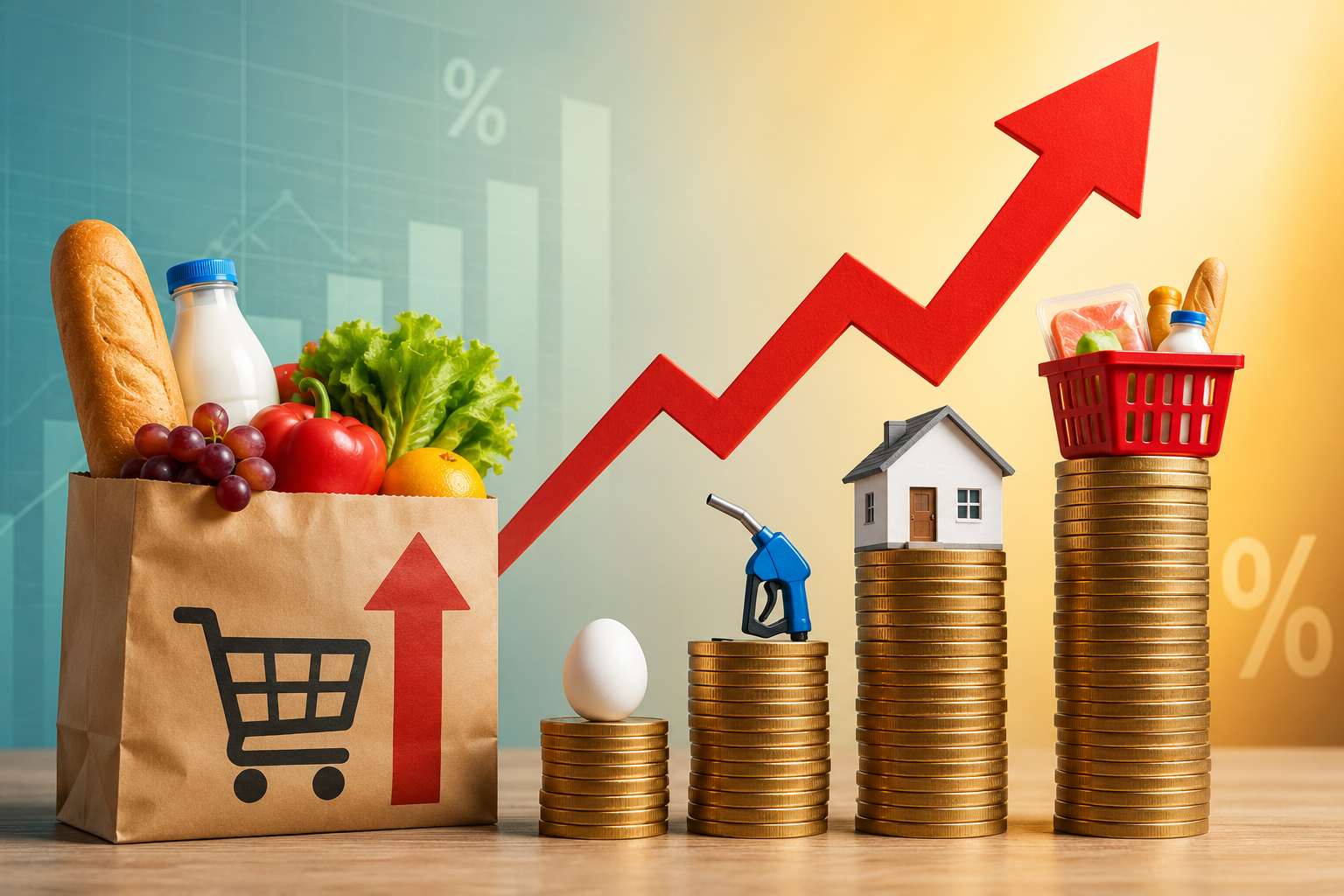
If you have stepped into a grocery store or paid an electric bill lately, you have likely felt the pinch of rising prices. Your money simply does not buy as much as it did a few years ago. This economic reality is known as inflation, and it is one of the most critical concepts influencing your personal financial health and the broader global economy.
But what exactly is inflation, why does it happen, and why are policymakers so obsessed with controlling it?
This comprehensive guide breaks down everything you need to know about inflation. We will explore how it works, what causes it, how it is measured, and how you can protect your purchasing power from its effects.
What Is Inflation? A Simple Definition
Inflation is the gradual loss of purchasing power over time, reflected in a general increase in the prices of goods and services across an economy.
When inflation occurs, every unit of currency buys a smaller percentage of a good or service. For example, if a cup of coffee costs $3.00 today and the annual inflation rate is 5%, that same cup of coffee will cost $3.15 next year. The coffee has not changed, but your dollar has become less valuable.
Personal Inflation & Purchasing Power Calculator
See how inflation changes the value of your money over time.
Future Cost of Goods$0.00
You will need this much to buy what costs $1,000 today.
Real Purchasing Power$0.00
Your uninvested cash will only have this much buying power in the future.
Enter your financial values and click calculate to view your personalized inflation breakdown.
Inflation vs. Deflation vs. Stagflation
To fully understand inflation, it helps to contrast it with other economic states:
Deflation: The opposite of inflation, occurring when prices drop across the economy. While cheaper goods sound positive, widespread deflation often signals a weak economy, falling wages, and high unemployment.
Stagflation: A challenging economic scenario where inflation remains high, but economic growth slows down and unemployment rises.
The Primary Causes of Inflation
Inflation is not an accidental event; it is driven by clear economic forces. Economists generally classify the triggers of inflation into three main categories.
1. Demand-Pull Inflation
This happens when the demand for goods and services outpaces the economy’s capacity to produce them. Think of it as too much money chasing too few goods. When consumers possess high disposable income and a strong desire to spend, businesses can raise prices due to product scarcity.
2. Cost-Push Inflation
This occurs when the aggregate costs of production increase, forcing companies to pass those expenses down to consumers. Common drivers include rising raw material costs, supply chain bottlenecks, or spikes in energy prices. For instance, global geopolitical tensions frequently trigger cost-push inflation by disrupting oil supplies and agricultural logistics.
3. Built-In Inflation (Wage-Price Spiral)
Built-in inflation links directly to human expectations. When people expect prices to keep climbing, they demand higher wages to maintain their lifestyle. Businesses then raise the prices of their goods and services to cover these higher labor costs, creating a continuous loop known as the wage-price spiral.
How Is Inflation Measured?
Governments and central banks track price changes using specialized indices. The two most common metrics are:
Consumer Price Index (CPI)
The CPI tracks the average change over time in the prices paid by urban consumers for a market basket of consumer goods and services, including food, housing, apparel, and transportation. The year-over-year percentage change in the CPI serves as the standard headline inflation rate.
Personal Consumption Expenditures (PCE)
The PCE price index measures changes in the prices of goods and services purchased by consumers throughout the economy. The Federal Reserve prefers the PCE index because it accounts for substitution behavior, such as consumers switching from beef to chicken when beef prices spike.
Metric
Focus Area
Why It Matters
Headline Inflation
Includes all items in the consumer basket (including food and energy).
Reflects the immediate, real-world cost of living for households.
Core Inflation
Excludes volatile food and energy sectors.
Helps economists track long-term, underlying price trends without temporary noise.
Current Economic Context: Inflation Today
Understanding inflation requires looking at the current macroeconomic landscape. Following the massive supply chain disruptions of the early 2020s, global economies have worked to stabilize erratic price movements.
According to data from the International Monetary Fund, global headline inflation is projected to decline to approximately 3.8%. However, regional trends diverge significantly. In the United States, economic indicators highlight ongoing challenges:
The CPI Reality: Recent data reveals that the U.S. Consumer Price Index reached 3.8% year-over-year, tracking above the Federal Reserve’s long-term target of 2.0%.
Commodity and Energy Shocks: Geopolitical tensions, particularly in the Middle East, have triggered a 46% month-on-month surge in critical agricultural inputs like fertilizer, threatening to keep global food costs elevated.
The Affordability Squeeze: Domestic households continue to face mounting pressure from utility rates and gasoline price increases, keeping the high cost of living at the top of consumer concerns.
Why Does Inflation Matter? The Real-World Impacts
A low, predictable level of inflation (around 2% annually) is widely considered a sign of a healthy, growing economy. It encourages consumers to purchase items now rather than waiting, keeping factories running and workers employed. However, when inflation accelerates beyond that baseline, it causes severe economic friction.
1. It Erodes Purchasing Power
The most immediate effect of inflation is that it acts as a hidden tax on your wealth. If your salary stays flat while inflation runs at 4%, you have effectively taken a 4% pay cut in terms of what you can actually afford to buy.
2. It Penalyzes Savers
If you leave cash sitting in a standard bank account earning 0.5% interest while inflation is at 3.5%, your savings are actively losing real value over time. Your balance may look the same on screen, but its future purchasing power shrinks.
3. It Drives Up Interest Rates
Central banks respond to high inflation by raising benchmark interest rates. By making borrowing more expensive, they intentionally cool down consumer demand and business expansion to lower prices.
This monetary policy directly impacts your life by increasing the cost of:
Fixed and variable-rate mortgages
Auto loans and personal financing
Credit card balances
How to Protect Your Money from Inflation
You cannot control global economic policy, but you can build a personal financial strategy designed to withstand inflationary environments.
Shift Toward Assets that Grow
Cash is an underperforming asset when prices are rising. To combat inflation, financial professionals often look toward investments that historically preserve capital or appreciate over time:
Equities (Stocks): Companies can often increase their own prices to counter inflation, allowing corporate earnings and stock values to rise alongside general consumer prices.
Real Estate: Property values and rental income typically scale upward during inflationary cycles, serving as a reliable structural hedge.
Treasury Inflation-Protected Securities (TIPS): These government bonds feature a principal value that automatically adjusts based on changes in the Consumer Price Index.
Re-Evaluate Your Budget
During high-inflation periods, tracking discretionary spending becomes non-negotiable. Audit your fixed costs, substitute premium brand products for generic alternatives where possible, and lock in fixed interest rates on existing debts before central banks enact further rate hikes.
Summary: Finding the Balance
Inflation is a natural byproduct of economic growth, but tracking its trajectory is essential for maintaining household stability. While moderate inflation shows that consumer demand is vibrant, unexpected spikes chip away at household savings and elevate borrowing costs across the financial sector. Keeping an eye on current market indexes, adjusting your investment allocations, and managing debt lines will keep your personal economy resilient against shifting macroeconomic tides.
Deepen Your Financial Knowledge
For those looking to explore advanced economic concepts and the mechanics behind central banking policies, check out these authoritative academic publications and institutional guides:
Review comprehensive monetary policy updates and global growth forecasts directly from the International Monetary Fund.