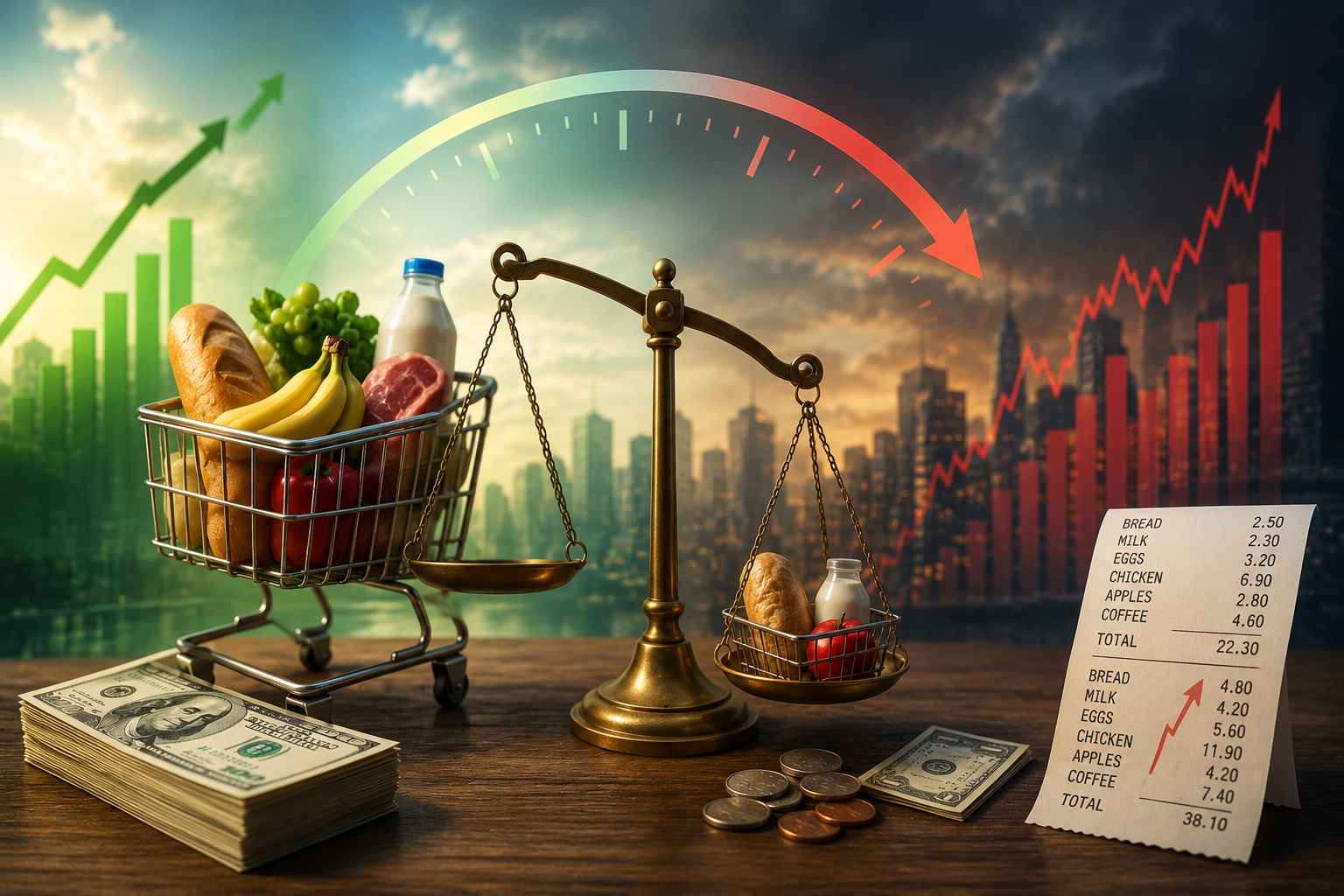
Have you ever looked at old family journals or classic advertisements and noticed that a brand-new automobile used to cost less than 3,000 dollars, or that a gallon of milk could be bought for a handful of copper coins? This phenomenon is not just a quirky piece of historical trivia. It is a real-time reflection of an economic concept that dictates the true strength of your financial health: purchasing power.
Whether you are an investor looking to build multi-generational wealth, a business owner managing corporate cash reserves, or an individual trying to optimize a household budget, understanding how your money retains or loses value is essential. Let us explore the mechanics of purchasing power, examine why it shifts systematically over time, and look at the actionable strategies you can implement to insulate your hard-earned wealth from erosion.
1. Defining Purchasing Power: Money vs. Value
At its core, purchasing power is the value of a currency expressed in terms of the amount of goods or services that one unit of it can buy. It represents the actual, tangible utility of your money rather than the face value printed on a banknote.
Economists divide this concept into two main dimensions:
Nominal Value: The absolute face value of money (e.g., a one hundred dollar bill remains exactly a one hundred dollar bill regardless of changes in the economy).
Real Value: The actual quantity of goods or services that the nominal money can purchase at a specific moment.
When your nominal income stays completely flat while the underlying costs of goods and services escalate, your real purchasing power declines. This distinction explains why a household earning 50,000 dollars in the mid-twentieth century lived in profound luxury, whereas the exact same nominal salary today forces a modern household into tight budgetary constraints.
2. How Modern Economies Measure Purchasing Power
Economists and central banks do not guess when tracking changes in value. They rely on systematic, data-driven frameworks to measure price fluctuations across whole countries.
The Consumer Price Index (CPI)
The most common metric used to monitor purchasing power is the Consumer Price Index (CPI). Government statistical agencies track a hypothetical “basket of goods and services” that mirrors the typical expenditures of an average urban household. This basket includes items across several distinct sectors:
Housing & Utilities: Rent, mortgage interest components, electricity, and water.
Transportation: Vehicle prices, gasoline costs, and public transit fares.
Food & Beverages: Groceries, meat, dairy, produce, and restaurant meals.
Medical Care: Health insurance, prescription pharmaceuticals, and clinical services.
Apparel & Education: Clothing, footwear, university tuition, and textbooks.
By observing how the aggregate price of this basket shifts month over month and year over year, economists calculate the net inflation rate. A rising CPI indicates that the cost of living is climbing, which corresponds directly to a drop in the purchasing power of the currency.
Wholesale and Core Inflation Measurements
While the headline CPI captures the immediate consumer experience, financial experts track other metrics for a clearer picture of the underlying trend:
Producer Price Index (PPI): Measures the average change over time in the selling prices received by domestic producers for their output. This serves as an early indicator of inflation, as rising wholesale costs are eventually passed directly to consumers.
Core Inflation: This metric purposely strips out highly volatile sectors, specifically food and energy markets. By isolating these unpredictable components, core inflation allows policymakers to identify long-term structural changes in structural pricing power.
3. Interactive Purchasing Power Calculator
To see exactly how inflation chips away at the value of your cash reserves, use this interactive calculator. By inputting an initial amount of capital, a projected annual inflation rate, and a specific timeline, you can see how much real value remains over time.
Interactive Purchasing Power Calculator
Visualize how inflation steadily erodes the real value of your cash reserves over time. Adjust the inputs below to see your money’s future value.
Remaining Real Purchasing Power$4,919.34
Total Purchasing Power Lost$5,080.66
Total Value Destroyed50.8%
4. Why Purchasing Power Changes Over Time
The purchasing power of a currency is never static. It fluctuates continuously based on a delicate web of macroeconomic forces. The fundamental driver of this change is inflation, which occurs in three main ways:
Demand-Pull Inflation
Demand-pull inflation happens when the aggregate demand for products and services outpaces the structural capacity of the economy to produce them. Think of it as “too much money chasing too few goods.”
When an economy experiences rapid growth, consumer confidence climbs, unemployment drops, and wages grow. This surge in disposable income causes spending to jump across the board. Because factories, supply lines, and service providers cannot instantly scale up their output to match this demand, they increase prices to clear out inventory and optimize profit margins.
Cost-Push Inflation
Cost-push inflation occurs when the aggregate supply of products or services drops sharply due to escalating input costs, even if general consumer demand remains completely steady.
If the cost of raw materials (like crude oil, industrial steel, or semiconductor chips) spikes, manufacturing companies face squeezed margins. To stay profitable, they pass these elevated operational expenses directly onto end consumers. This phenomenon is frequently triggered by global supply chain blockages, industrial resource depletion, or geopolitical conflicts that shut down critical shipping routes or trade corridors.
Monetary Inflation (Expansion of the Money Supply)
The third primary driver is structural: the rapid expansion of the total money supply by central banks. When a government prints physical currency or a central bank injects liquidity into the commercial banking system through massive asset-purchase programs, the total volume of money in circulation grows much faster than the real economic output of goods and services.
If the volume of currency doubles overnight but the physical quantity of food, housing, and technology remains exactly the same, each individual unit of currency becomes less scarce and less valuable. Consequently, sellers demand more units of that currency to part with the same physical product, causing prices to swell across the entire economy.
5. The Role of Central Banks and Geopolitics
Modern central banks, such as the Federal Reserve in the United States, the European Central Bank, and the Bank of England, play an active role in managing purchasing power. They operate under specific mandates, usually aiming for a steady, predictable long-term inflation target of roughly 2 percent per year.
The Balancing Act of Interest Rates
Central banks manipulate interest rates to influence how fast or slow the economy moves:
When Inflation Spikes: The central bank increases its benchmark interest rate. This action drives up the cost of borrowing for home mortgages, corporate investments, and credit cards. By making debt more expensive, it intentionally cools down consumer spending and business expansion, pulling the brake on demand-pull inflation.
When Recession Threatens: The central bank cuts interest rates to rock-bottom levels. This makes borrowing incredibly cheap, encouraging corporate expansion and consumer borrowing to kickstart an inactive economic ecosystem.
Geopolitical Friction and Supply Shocks
The global economy is deeply interconnected, meaning localized geopolitical changes can trigger massive, worldwide shifts in purchasing power. Recent history demonstrates how conflicts in resource-dense regions can spark significant supply shocks.
For instance, structural disruptions in global energy corridors or maritime shipping straits can cause international crude oil and natural gas prices to surge almost overnight. Because energy is a foundational input for farming, manufacturing, and transport networks, these energy shocks rapidly spill over into consumer categories, causing the price of basic groceries and household goods to climb worldwide.
6. The Cost-of-Living Squeeze: Distributional Impacts
When purchasing power falls rapidly, the negative effects are not distributed evenly across society. Inflation acts like a regressive tax, placing the heaviest economic burdens on those who can least afford it.
Impact on Fixed-Income Households and Wage Earners
Low-income families and retirees living on fixed pensions suffer the most when purchasing power declines. These groups spend a much higher percentage of their total monthly income on absolute essentials, such as fresh groceries, electricity, and rent.
When luxury items go up in price, affluent consumers can simply defer purchases. However, when bread, heating oil, and medical care rise by 15 percent, fixed-income households are forced to cut back on basic necessities. Unless nominal wages or public benefits rise at the exact same pace as market prices, real living standards drop immediately.
Savers vs. Debtors
A shifting inflation rate also reshapes the balance between savers and debtors:
Economic Group
Impact of High Inflation
Primary Reason
Cash Savers
Highly Negative
Cash sitting in low-yield savings accounts loses real value daily as consumer prices outpace interest earnings.
Fixed-Rate Debtors
Highly Positive
Borrowers repay their long-term loans using depreciated currency that is worth less than the money they originally borrowed.
Variable-Rate Borrowers
Moderately Negative
Credit lines and adjustable loans get more expensive as central banks push interest rates higher to combat inflation.
7. Current Macroeconomic Landscape (2026 Analysis)
Looking at the current global economic situation in 2026, we see a complex picture shaped by lingering post-pandemic adjustments, shifting trade policies, and unexpected geopolitical disruptions.
According to data from the International Monetary Fund (IMF), global headline inflation is projected to average roughly 3.8 percent in 2026, down from 4.1 percent in 2025. While this downward trend suggests general pricing pressures are easing slightly, the underlying reality varies across different regions:
United States: The inflation process has shown structural persistence. While consumer price gains have moderated compared to the peaks seen a few years ago, the absolute cost of living remains a top concern in household surveys. A high average effective tariff rate on imports continues to create sticky, elevated input prices across domestic supply lines.
Eurozone: The economic landscape remains soft, with output growth hovering around 1.1 percent for 2026. Energy supply strains stemming from external geopolitical events continue to impact consumer confidence, keeping headline inflation near 3.0 percent in major manufacturing hubs like Germany.
Emerging Markets: Developing nations are experiencing much higher baseline inflation rates, which causes continuous pressure on domestic purchasing power and creates structural challenges for local monetary policy.
Research published by the Federal Reserve notes that inflation remains unusually widespread across economic categories compared to historical norms. Price trends in the services sector are proving highly resistant to interest rate hikes, driven by steady, broad-based wage growth. This means that while the era of extreme inflation spikes has cooled, consumers are still dealing with a permanent step-up in the baseline cost of living.
8. Practical Strategies to Protect Your Wealth
Leaving substantial amounts of capital sitting in physical cash or traditional, low-yield checking accounts guarantees a slow loss of value over time. To defend your long-term purchasing power, you must outpace inflation by allocating your capital into assets that grow in line with, or ahead of, the shifting cost of living.
1. Broad-Market Equities
Investing in high-quality corporate stocks is a historically sound method for beating inflation over the long haul. Businesses are not helpless victims of inflation; they can adapt to it.
When input costs climb, well-managed corporations with strong brand loyalty and high pricing power simply raise their retail prices. This keeps their corporate revenues and net profit margins growing alongside inflation, which translates over time into higher stock prices and growing dividend payouts for investors.
2. Real Estate and Tangible Commodities
Physical real estate is a classic hedge against falling purchasing power for two reasons:
Asset Appreciation: The physical value of property tends to drift higher alongside building material inflation and local population growth.
Rental Income Streams: Landlords can adjust lease agreements over time to reflect the climbing cost of living, providing a reliable source of inflation-adjusted income.
Similarly, direct exposure to commodities, such as industrial metals, agricultural goods, and energy infrastructure, offers protection, since these are the very input materials whose price spikes cause inflation in the first place.
3. Inflation-Indexed Fixed Income
For the conservative portion of your portfolio where volatile stock investments are too risky, consider Treasury Inflation-Protected Securities (TIPS) or local equivalents.
Unlike standard corporate bonds that pay a fixed coupon rate, the principal value of a TIPS bond adjusts upward automatically based on changes in the Consumer Price Index. When inflation climbs, your bond principal rises, ensuring your fixed-income yields keep up with the shifting cost of living.
Conclusion: Take Control of Your Financial Future
Purchasing power is the ultimate metric of financial reality. A bank account balance is just a number; what matters is the real-world volume of housing, food, healthcare, and security that those numbers can secure for you and your family.
While you cannot personally control global monetary policies, international supply lines, or macroeconomic inflation cycles, you can fully control your personal allocation of capital. By moving away from purely cash-based savings and building a diversified portfolio of productive, inflation-resistant assets, you can shield your hard-earned wealth and ensure your long-term financial security remains rock-solid, no matter how the global economic landscape changes.