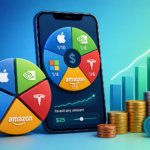
The biggest myth in personal finance is that investing requires a lot of money to start. It does not. In 2026, every major brokerage in the United States offers commission-free trading, fractional shares, and zero account minimums, which means $100 is genuinely enough to open a brokerage account and own a slice of companies like Apple, Microsoft, or an entire index fund that tracks the S&P 500.
The harder part is not the money. It is knowing where to put it, which account to use, and how to avoid the common mistakes that cause beginners to either freeze up and never start, or jump in and panic-sell during the first dip. This guide walks through exactly that, using the account types and tools available right now.
Step 1: Decide What the $100 Is For
Before opening any account, get clear on the goal, because the goal determines where the money should go. Money you might need in the next one to three years should not be invested in stocks at all. Money you will not touch for five or more years is where investing makes sense.
If you do not have an emergency fund yet. Most financial planners recommend building at least a small cash cushion, often three to six months of expenses, before putting money into the stock market. If that describes you, the $100 might be better placed in a high-yield savings account first. As of mid-June 2026, top high-yield savings accounts in the U.S. are paying up to 5.00 percent APY, compared with the national average of just 0.38 percent, according to data tracked by Fortune and Curinos. That gap is enormous. Parking even a small amount in the right savings account earns more than ten times what a typical bank pays, with zero market risk and FDIC insurance up to $250,000.
If you already have a basic cash cushion. Then $100 earmarked for long-term goals, such as retirement or general wealth building, is a perfectly reasonable amount to start investing with.
Step 2: Choose the Right Account
This is the step most beginners skip, and it matters more than which stock you pick first. The account type determines your tax treatment, not just where the money sits.
Roth IRA. For most beginners with $100 to invest and long-term goals, a Roth IRA is the strongest starting point. You contribute after-tax dollars, the money grows tax-free, and qualified withdrawals in retirement are also tax-free. Nearly every major broker now offers Roth IRAs with no minimum to open and no account fees.
Standard taxable brokerage account. If the money might be needed before retirement age, a regular taxable brokerage account offers full flexibility. There is no tax advantage, but also no penalty for withdrawing early, unlike a retirement account.
Employer 401(k). If your employer offers a 401(k) match, that should usually come before anything else, even before a Roth IRA, because an employer match is an immediate, guaranteed return on your money that no stock market investment can reliably beat.
Quick Priority Order
1. Capture any employer 401(k) match
2. Build a small emergency cushion in a high-yield savings account
3. Open a Roth IRA for long-term, tax-free growth
4. Use a taxable brokerage account for anything else
Step 3: Pick a Broker That Fits a $100 Budget
What used to be simple stock-trading apps have become full investing platforms, and in 2026 every option below offers commission-free trades, fractional shares, and no account minimum, so $100 stretches just as far on any of them.
Broker
Best For
Fractional Shares
Fidelity
Overall beginners; no payment for order flow
From $1
Charles Schwab
Wide investment selection, strong research tools
Yes
SoFi Invest
Beginners who also want banking in one app
From $5
Robinhood
Simple mobile-first interface
Yes
Webull
Active learners who want charting tools and paper trading
Yes
The honest truth is that for a first $100, almost any of these will work fine. What matters far more than which app you pick is what you actually buy once the account is funded, and whether you keep adding to it regularly.
Step 4: Decide What to Actually Buy
This is where most beginners overthink things. With $100, you do not need to pick individual winning stocks. You need broad, low-cost exposure to the market.
Low-cost index funds and ETFs. A fund that tracks the S&P 500 gives you partial ownership of 500 of the largest U.S. companies in a single purchase. These funds typically charge a tiny annual fee, often well under 0.10 percent, and have historically outperformed the majority of actively managed funds over long time horizons. For a first investment, a total U.S. stock market fund or an S&P 500 fund is the most common recommendation among financial advisors precisely because it requires no stock-picking skill.
Fractional shares of individual companies. If you specifically want to own a piece of a company you believe in, such as a major tech or consumer brand, fractional share investing lets you buy as little as one dollar’s worth rather than needing hundreds of dollars for a single full share. This is useful for learning and engagement, but it is generally smarter to treat individual stock picks as a small slice of your investing, not the whole strategy, especially when starting with a small amount.
Robo-advisors. If choosing investments feels overwhelming, a robo-advisor builds and automatically rebalances a diversified portfolio for you based on your goals and risk tolerance, often for a small annual fee, and some platforms waive that fee entirely on smaller account balances.
Step 5: Automate Contributions So $100 Becomes a Habit
A single $100 deposit is a fine way to start, but the real wealth-building happens through consistency. Setting up an automatic transfer of even $25 or $50 a week turns investing into a habit rather than a decision you have to make over and over. This approach, often called dollar-cost averaging, also smooths out the impact of buying at any single price point, since you are purchasing at regular intervals regardless of whether the market is up or down that week.
Most brokers let you schedule recurring investments directly into a chosen fund, so once it is set up, the habit largely runs itself.
Why 2026 Is a Reasonable Time to Start
Some beginners hesitate because they are waiting for the “right” moment to start investing. A few current conditions are worth knowing, though none of them should be the deciding factor in whether you begin.
The Federal Reserve has held its benchmark interest rate steady at 3.50 to 3.75 percent through four consecutive meetings in 2026, with the most recent decision under new Fed Chair Kevin Warsh keeping rates unchanged while signaling that inflation, still running above the Fed’s 2 percent target, remains the central focus. That backdrop has kept both stock and bond markets somewhat unsettled this year, with episodes of real volatility, including a sharp pullback in gold and choppy trading tied to geopolitical headlines around Iran and shifting rate expectations.
For a long-term investor starting with $100, none of that changes the fundamentals. Markets go through periods of volatility in every single year, and trying to perfectly time an entry point is a strategy that consistently fails even professional investors. What you control is starting early, choosing low-cost diversified funds, and contributing regularly, and those three things matter far more over a multi-decade horizon than whether you started in a calm month or a turbulent one.
Mistakes That Trip Up New Investors
Waiting for a perfect entry point. Time in the market consistently matters more than timing the market. Waiting on the sidelines for a dip means missing out on the compounding that happens while you wait.
Checking the account every day. Daily price swings are normal and largely meaningless for a long-term investor. Checking constantly tends to trigger emotional decisions, like selling during a temporary downturn.
Putting all $100 into one speculative stock or coin. Concentration in a single high-risk asset turns investing into gambling. Diversified funds spread that risk across hundreds of companies.
Ignoring fees. A fund with a 1 percent annual fee versus one with a 0.05 percent fee can mean a difference of tens of thousands of dollars over several decades, simply due to compounding. Always check a fund’s expense ratio before buying.
Not increasing contributions over time. $100 is a great start, not a finish line. As income grows, increasing how much gets invested each month is what turns a small first deposit into meaningful long-term wealth.
Frequently Asked Questions
Is $100 actually enough to start investing?
Yes. Every major U.S. brokerage now offers commission-free trades, fractional shares, and no account minimums, so $100 can be split across a diversified fund or used to open a Roth IRA. The amount matters far less than starting and staying consistent.
Should I pay off debt before investing $100?
If you are carrying high-interest debt, such as credit cards charging well above 15 to 20 percent interest, paying that down typically offers a better guaranteed return than investing. Lower-interest debt, such as some federal student loans, is more of a personal judgment call.
What is the safest way to invest $100 in 2026?
A broad, low-cost index fund tracking the total U.S. stock market or the S&P 500 is widely considered one of the more conservative ways to get diversified stock market exposure, though it still carries normal market risk and is not guaranteed against loss. For money you cannot afford to risk at all, a high-yield savings account, currently paying up to roughly 5.00 percent APY at top banks, is the safer option since it is FDIC-insured.
Can I lose all my money investing $100?
If you put it into a single speculative asset, significant losses are possible. If you invest in a diversified index fund, losing the entire amount would require an extreme, market-wide event, though normal ups and downs, including temporary double-digit percentage declines, are a routine part of investing.
How much can $100 grow into over time?
That depends entirely on future market returns, which cannot be predicted, and on whether you keep contributing. The U.S. stock market has historically returned roughly 7 to 10 percent annually before inflation over long periods, but past performance does not guarantee future results, and a single $100 deposit without further contributions will grow far more slowly than a habit of regular investing.
The Bottom Line
Starting with $100 is not a limitation, it is simply a starting point. The combination of zero-commission trading, fractional shares, and no account minimums has made the U.S. investing landscape in 2026 more accessible to beginners than at almost any point in history. The steps that matter are straightforward: cover any employer match first, keep a small cash cushion in a high-yield account, open the right type of investment account, choose low-cost diversified funds over speculative bets, and automate contributions so the habit continues long after the first $100 is invested.
None of this requires predicting where the market goes next. It requires starting, staying consistent, and giving compounding enough time to work.
Disclaimer: This article is for informational and educational purposes only and does not constitute financial or investment advice. All investing involves risk, including the potential loss of principal. Interest rates, APYs, and market conditions referenced are current as of June 2026 and are subject to change. Always conduct your own research and consult a licensed financial advisor before making investment decisions.