Economics is often viewed through the lens of cold data like corporate earnings, trade balances, and gross domestic product. However, one of the most powerful forces driving global markets is completely psychological: how people feel about their financial future. This psychological force is measured through consumer confidence.
When everyday people feel secure in their jobs and optimistic about the economy, they spend money. Because consumer spending accounts for over two thirds of total economic activity in major economies like the United States, keeping a finger on the pulse of the public mind is crucial for investors, policymakers, and business owners alike.
This guide breaks down exactly what consumer confidence means, how organizations calculate it, why Wall Street reacts intensely to its shifts, and what the latest economic reports tell us about today’s market environment.
Defining Consumer Confidence
Consumer confidence is an economic indicator that measures the overall degree of optimism or pessimism that households feel regarding their current financial situations and the short term future of the broader economy.
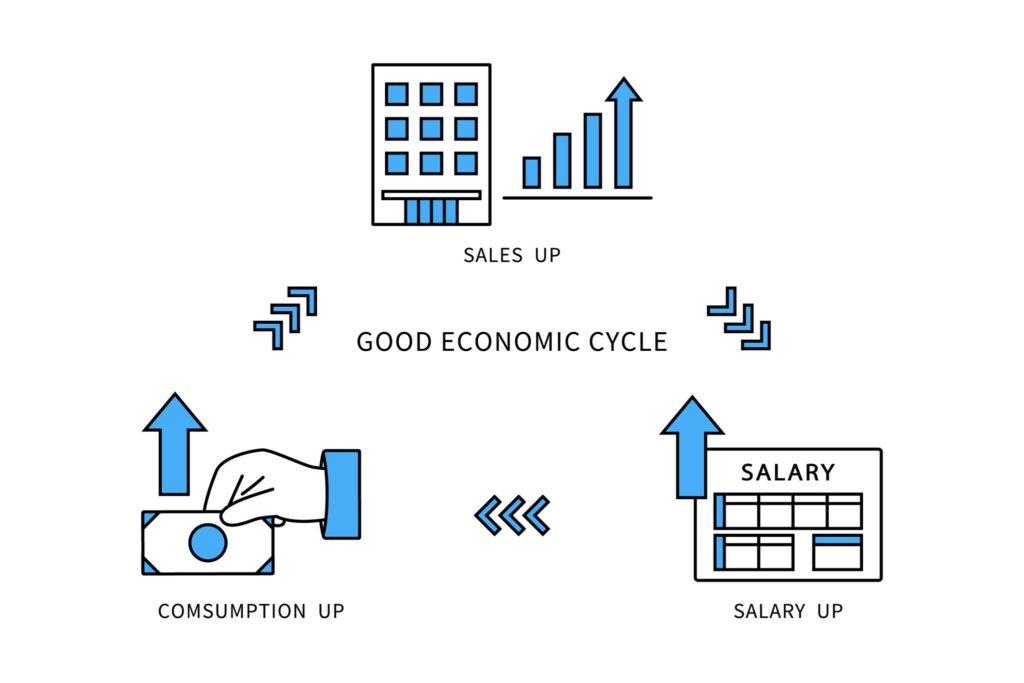
Think of it as a thermometer for consumer sentiment. When the reading is high, consumers are comfortable opening their wallets to purchase houses, new cars, and retail goods. When the reading is low, people tighten their belts, increase their savings, and delay major purchases.
This shift in behavior creates a direct loop that impacts corporate revenues, employment rates, and the stock market.
The Core Indicators: How Confidence Is Measured
Economists do not guess how the public feels. Instead, they rely on highly structured, monthly surveys conducted by major research institutions. In the United States, two primary benchmarks rule the market:
1. The Conference Board Consumer Confidence Index (CCI)
The Conference Board survey focuses heavily on the labor market and employment conditions. It polls thousands of US households every month to gauge two specific areas:
The Present Situation Index: How consumers view current business conditions and job availability.
The Expectations Index: How consumers view their income, business prospects, and the job market six months down the road.
2. The University of Michigan Index of Consumer Sentiment (MCSI)
The University of Michigan survey leans a bit more toward personal finances and buying conditions for big ticket household items. It is famously watched for its tracking of consumer inflation expectations, which gives central banks a clear view of whether people expect prices to continue climbing.
Feature
The Conference Board (CCI)
University of Michigan (MCSI)
Primary Focus
Labor market and current employment
Personal finance and inflation expectations
Sample Size
Around 3000 to 5000 households monthly
Around 500 to 600 households monthly
Base Year Value
100 (Set in 1985)
100 (Set in 1966)
Key Metric Watched
Expectations vs Present Situation
Short term and long term inflation views
Why Financial Markets Watch It Closely
When the clock strikes 10:00 AM Eastern Time on a release day, institutional traders stop what they are doing to parse the numbers. A sudden deviation from market expectations can trigger sharp volatility across stocks, bonds, and currencies.
The Impact on the Stock Market
Consumer confidence serves as a leading indicator for corporate earnings. If sentiment drops for three consecutive months, retail companies, automakers, and travel providers know that lower sales are likely right around the corner.
Conversely, rising confidence signals upcoming revenue growth, encouraging investors to buy cyclical stocks. These are companies that thrive when the public feels wealthy, such as luxury goods, technology, and entertainment providers.
The Impact on Fixed Income and Bonds
The bond market reads consumer confidence to predict what central banks like the Federal Reserve will do next.
High Confidence: If confidence skyrockets alongside high inflation expectations, the central bank may raise interest rates to prevent the economy from overheating. This causes bond yields to rise and bond prices to fall.
Low Confidence: If confidence crashes, it implies that consumer demand will dry up, slowing inflation down. This often prompts central banks to cut interest rates to stimulate growth, making existing fixed income bonds more valuable.
The Impact on Currencies
A strong consumer confidence reading typically boosts the nation’s currency. For example, if US consumer sentiment beats expectations, it signals a resilient domestic economy, attracting foreign investment and driving up the value of the US Dollar relative to other global currencies.
Current Economic Context: What the Data Shows Right Now
Looking at the most recent economic updates reveals a highly unique, bifurcated economic landscape.
According to data released by the University of Michigan, the Index of Consumer Sentiment recorded a modest rebound to 48.9, rising from a historical low of 44.8. While the single-month bounce brought brief relief to the markets, historical context reveals that consumer outlook remains highly compressed, sitting roughly 19% lower than the same period last year.
At the same time, The Conference Board Consumer Confidence Index hovered at 93.1. Economists note that geopolitical supply chain interruptions, particularly surrounding key shipping lanes like the Strait of Hormuz, have kept energy and fuel prices elevated, weighting heavily on the median household budget.
The K-Shaped Consumer Divide
A critical takeaway for investors in the current climate is what analysts call a K-shaped consumer trend. While consumer confidence metrics reflect the stress of the median household dealing with high everyday costs, actual retail spending has remained surprisingly resilient.
Data from the Bureau of Labor Statistics and Moody’s Analytics shows that the top 20% of households by income account for anywhere from 40% to over 60% of all consumer spending. This upper tier of consumers is buoyed by massive wealth gains in the real estate and stock markets, offsetting the belt tightening happening across lower income brackets.
Market Sentiment & Consumer Spending Estimator
Adjust the simulated consumer index levels below to analyze how sudden variations in psychological optimism translate into retail consumption adjustments and tactical stock market projections.
Simulated Confidence Index Level90.0
Recessionary Squeeze (40)Booming Optimism (140)
Household Inflation PressureModerate
Low StrainSevere Cost Squeeze
Systemic Market Impact Projections
Est. Retail Spending Trajectory:+2.1%
S&P 500 Volatility Forecast:Stable
Baseline Consumer Equilibrium
The Mechanics of Sentiment Shifts
Consumer sentiment changes based on a combination of local realities and global headlines. The primary drivers include:
Gas and Food Prices: Because these items are purchased frequently, fluctuations at the gas pump or grocery store have an immediate psychological impact on how people perceive their financial health.
Job Security and Wage Growth: If layoffs are hitting the headlines, even workers with stable jobs become hesitant to spend money.
Monetary Policy: High interest rates increase the cost of credit cards, auto loans, and mortgages, directly dampening buying conditions for major purchases.
Understanding these baseline psychological drivers allows businesses to alter their messaging and inventory plans before macro changes hit official economic reporting cycles.