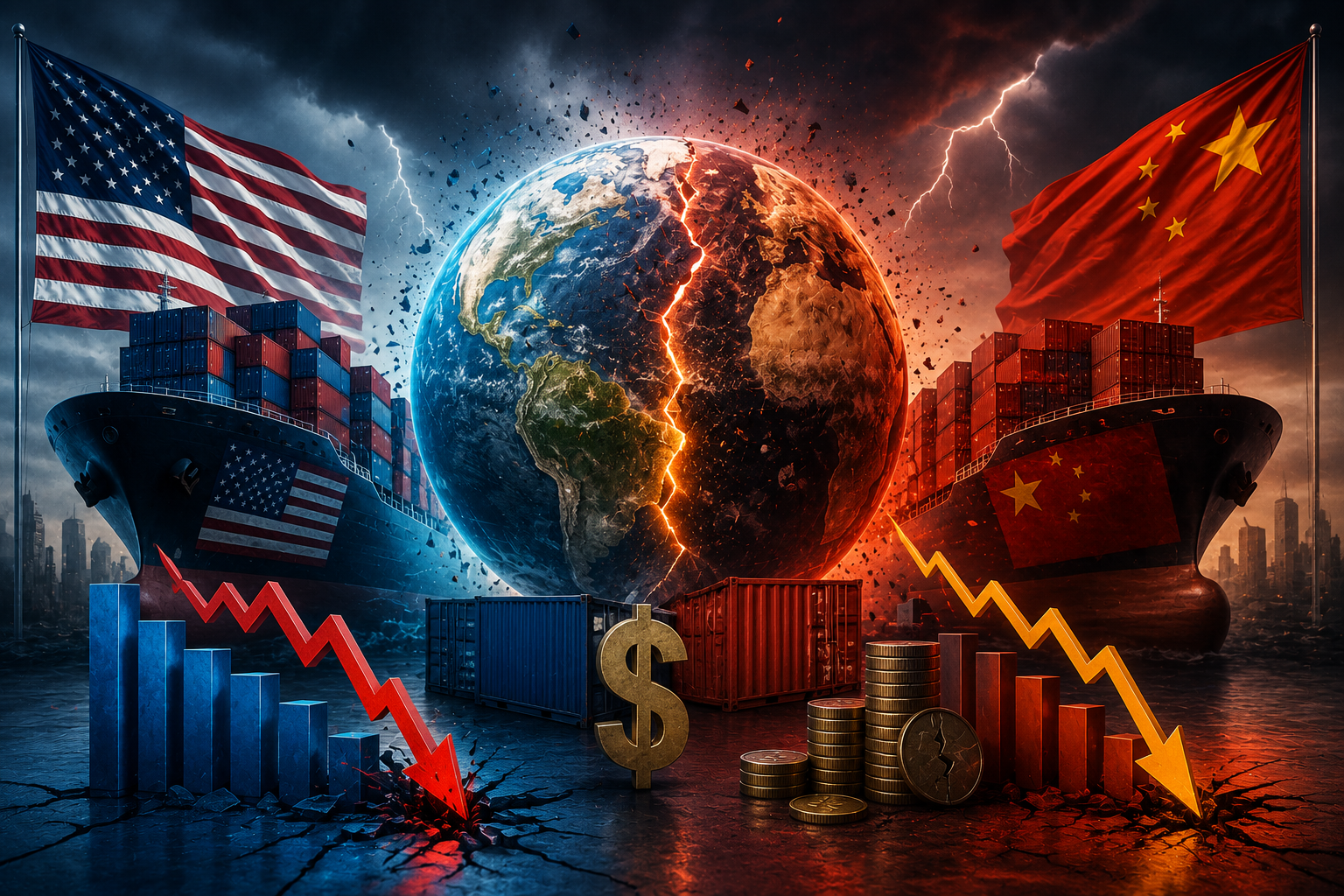
In an era of deep economic integration, the phrase “no man is an island” applies perfectly to modern nations. For decades, global prosperity relied on the predictable flow of microchips, agricultural goods, and heavy machinery across borders. However, the global landscape has shifted significantly. Protectionism, geopolitical positioning, and aggressive trade policies have triggered multi-front economic conflicts.
A trade war occurs when one country imposes tariffs or import quotas on another nation, prompting defensive, retaliatory trade measures. While these policies are often introduced under the banner of protecting local workers and strategic manufacturing sectors, the cascading impacts extend far beyond the two original combatants.
This deep-dive economic guide explores the mechanics of trade wars, their structural damage to global supply chains, historical precedents, and how current international tensions shape everyday inflation, corporate investment strategies, and consumer purchasing power.
What Is a Trade War? The Policy Mechanics
A trade war typically begins as a localized dispute over unfair trade practices, currency manipulation, or intellectual property theft. When diplomatic negotiations fail, governments turn to protectionist policies.
The core tools deployed in these economic conflicts include:
Tariffs: Taxes levied directly on imported goods. They are designed to make foreign products more expensive, encouraging consumers to purchase domestic alternatives.
Import Quotas: Strict legal limits on the total physical volume of a specific good allowed into a country during a set timeframe.
Subsidies: Direct government financial assistance handed to domestic industries, making them artificially competitive against foreign entities.
Embargoes and Sanctions: Total bans on specific types of trade, often deployed under national security provisions.
How Trade Tensions Reshape Global Shipping Channels
Modern trade dependencies are highly intricate. Components for a single electronic device or vehicle routinely cross multiple borders before final assembly. When unexpected protectionist barriers emerge, these highly optimized networks face severe operational disruption.
The map below illustrates the dense web of global shipping routes that keep international industries connected. When major ports or specific trade lanes face sudden regulatory changes, the operational drag is felt worldwide.
The Macroeconomic Cascade: How Tariffs Impact Society
1. The Burden on Domestic Manufacturers
When a government introduces tariffs on foundational commodities like steel, aluminum, or electronic components, it aims to support domestic miners or suppliers. However, it simultaneously penalizes domestic factories that rely on those raw materials to construct specialized equipment, commercial machinery, and consumer appliances.
Faced with higher material costs, these downstream companies must either absorb lower profit margins or increase the prices of their finished products, which can reduce their competitiveness in global markets.
2. Consumer Price Inflation
Tariffs act as a regressive tax on regular households. When international manufacturers face higher production and compliance expenses, those costs are typically passed down to the consumer. From everyday grocery store staples to premium tech hardware, consumers pay higher out-of-pocket costs for the same goods, which can drag down overall consumer confidence.
3. Reduced Capital Expenditures and Corporate Investment
The primary enemy of business expansion is economic uncertainty. When the rules of international commerce change unexpectedly due to fluid political developments, multinational companies often freeze their long-term capital investments. Instead of building new distribution hubs, expanding manufacturing lines, or funding research and development, corporations hold onto cash to buffer against potential supply chain disruptions.
Comparing Free Trade and Protected Trade Models
The core differences between open trade policies and protectionist regimes highlight why trade wars can alter systemic growth trajectories over long horizons.
Economic Framework Component
Free Trade Architecture
Protectionist / Trade War Regime
Consumer Price Environment
Highly competitive pricing, optimized access to specialized global products.
Higher retail inflation driven by import duties and localized scarcity.
Supply Chain Design
Just-in-Time optimization prioritized around absolute cost efficiency.
Redundant, defensive supply lines built around geographic safety and near-shoring.
Corporate Profit Focus
Driven by cross-border scaling, global talent access, and open tech transfers.
Dominated by regulatory compliance, tariff navigation, and local resource acquisition.
Long-Term Macro Impact
Maximizes overall GDP growth through global specialization and efficiency.
Prioritizes national security and targeted local employment, but often lowers net GDP growth.
Historical Precedents: The Costly Lessons of Protectionism
Modern political bodies often argue that trade actions protect domestic interests, but economic history suggests that widespread protectionism can bring unintended, systemic consequences.
1930: The Smoot-Hawley Tariff Act
The United States passed high tariffs on thousands of imported items to protect local farmers and factories during the onset of the Great Depression. Foreign countries quickly retaliated with matching barriers. This protectionist cycle caused global trade volume to plunge by over 60%, worsening the worldwide economic downturn.
1963: The Chicken War
The European Common Market introduced steep tariffs on American chicken imports, leading France and Germany to adopt protectionist agricultural stances. The United States retaliated by levying heavy duties on European light trucks, brandy, and potato starch, disrupting auto and agricultural investment patterns for nearly a decade.
2018: The US-China Structural Trade Conflict
The United States introduced extensive tariffs on hundreds of billions of dollars worth of Chinese industrial inputs, machinery, and consumer technology, citing intellectual property and trade balance concerns. Beijing countered with targeted agricultural and industrial duties, shifting global supply networks toward alternative production hubs.
Modern Realities: Supply Chain Restructuring and Fractured Alliances
Today’s geopolitical environment is reshaping corporate risk management. The world is moving away from hyper-optimized, single-source global manufacturing hubs toward a more fragmented system.
The Shift Toward Near-Shoring and Friend-Shoring
To avoid shifting tariff schedules and regulatory barriers, major multinational corporations are moving their production out of politically sensitive regions. Businesses are actively embracing two strategic alternatives:
Near-Shoring: Relocating core production infrastructure closer to the primary consumer market, such as European firms expanding manufacturing footprints into eastern Europe, or American tech giants shifting operations to Mexico.
Friend-Shoring: Restructuring critical supply lines strictly within a network of allied countries that share similar regulatory frameworks and democratic values.
While these strategies make companies more resilient to trade disruptions, duplicating factory infrastructure across multiple countries can introduce higher production costs, keeping baseline inflation higher than it was during the peak era of free trade.
Tariff & Retail Price Impact Simulator
Adjust import values and tariff rates to see how protectionist measures shift business expenses and consumer costs.
Tariff Burden Added
$22.50
Direct tax paid at port entry
Adjusted Landed Cost
$197.50
Total business investment expense
Estimated Minimum Retail Price (Sustained Margin)
$256.75
Assuming traditional consumer markup protections
Evaluating protectionist metrics…
Summary: The Hidden Toll of Economic Disruption
Trade wars are rarely clean or easy to win. While protectionist policies can offer short-term political advantages or shield specific, localized domestic businesses from foreign competition, they often create broader challenges for the wider economy.
The complex networks of modern supply chains mean that a tariff levied on an input in one region can ripple out to compress profit margins, increase consumer prices, and delay corporate investments thousands of miles away.
As global challenges require closer cooperation, fostering open, predictable, and rule-based trade frameworks remains an effective way to drive long-term, sustainable economic growth.
Verified Global Trade Resources
To monitor shifting tariff policies, trade statistics, and global economic updates in real time, explore these authoritative platforms: