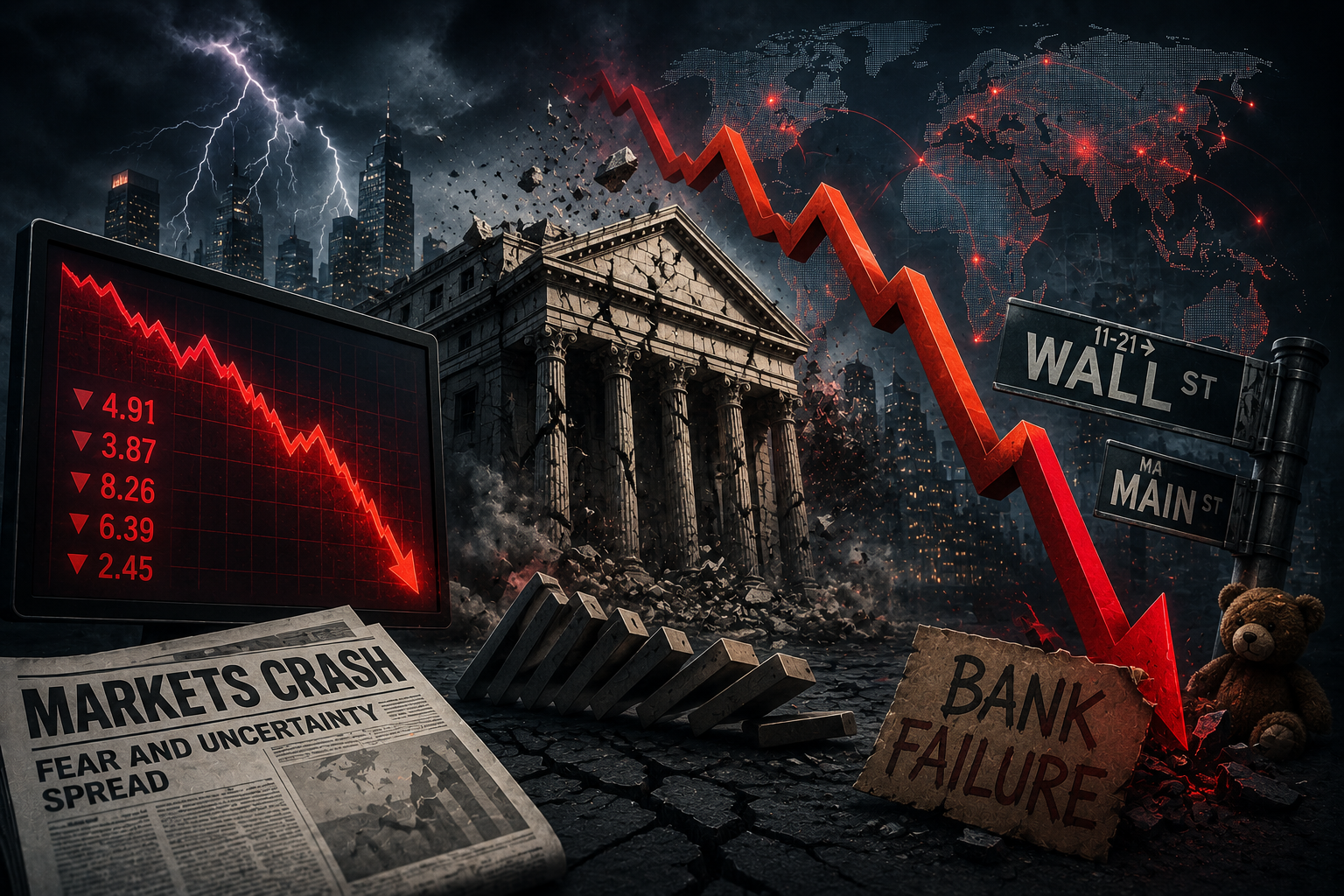
When the complex machinery of the global economy breaks down, it does not happen in a vacuum. It unfolds as a highly predictable, systemic chain reaction. While everyday market corrections or normal business cycles can cause temporary stock dips, a true financial crisis is a fundamental breakdown of the credit and banking architecture.
A financial crisis occurs when value-producing assets experience a sharp, sudden drop in nominal value, businesses and consumers find themselves unable to pay their debts, and prominent financial institutions face severe liquidity shortages.
Understanding the mechanics of an economic collapse is essential for safeguarding assets. This guide explores what happens behind the closed doors of central banks and corporate boardrooms during a financial crisis, maps out the systemic phases of a crash, and breaks down the modern vulnerabilities shaping today’s financial landscapes.
The Genesis: What Triggers a Structural Crash?
A financial crisis rarely appears without warning. It is usually the result of long-term economic imbalances that build up silently during times of economic prosperity.
The primary catalysts include:
Asset Bubble Bursts: Investors drive the prices of specific assets, such as real estate, tech stocks, or niche commodities, far beyond their actual baseline value. When market sentiment shifts, panic selling causes prices to collapse.
Credit and Leverage Spikes: Low interest rates encourage excessive borrowing. Financial institutions, corporations, and households take on more debt than their cash flows can support.
Regulatory Gaps: Financial innovation often outpaces government oversight. New, complex investment products can spread systemic risk across the global economy before regulators understand the danger.
Anatomy of a Crash: The Chronological Phases
While every economic downturn has its own unique features, historical collapses like the Great Depression of 1929 and the Global Financial Crisis of 2008 follow a similar systemic timeline.
Phase 1: Displacement & Speculation
A new technology, policy change, or period of low interest rates creates highly optimistic growth expectations. Capital floods into a specific sector, and traditional lending standards begin to ease.
Phase 2: The Distress Signal
A prominent institutional fund halts withdrawals, a major bank faces unexpected losses, or debt defaults begin to tick upward. Insider investors quietly start liquidating their speculative positions to secure cash.
Phase 3: The Liquidity Crunch
Panic spreads to the broader public. Financial institutions stop lending to one another out of fear of counterparty default. Cash becomes scarce, and asset values drop sharply across multiple sectors.
Phase 4: Macroeconomic Recession
The financial shock hits the real economy. Businesses lose access to working capital lines, leading to cost-cutting, frozen projects, and widespread layoffs. Consumer spending drops, reducing corporate revenues further.
The Real-World Impacts: How a Crisis Affects Society
When the financial system experiences a shock, the fallout spreads across every level of society, impacting businesses, workers, and governments alike.
1. The Credit Freeze
Modern commerce relies heavily on short-term credit. Businesses use lines of credit to purchase raw inventory, manage global logistics, and meet weekly payroll obligations. During a severe banking crisis, financial institutions prioritize capital preservation. They stop approving new loans and reduce existing credit lines, forcing even healthy corporations into survival mode.
2. The Wealth Effect Reverses
The wealth effect is a psychological phenomenon where people spend more money when their investment portfolios and home values are rising. When a financial crisis hits, this dynamic reverses. As housing prices fall and retirement accounts lose value, families cut back on non-essential spending, which can reduce overall economic activity.
3. Sovereign Debt Strains
To keep the financial system from collapsing, national governments often step in to bail out systemically important institutions and expand social safety nets. This intervention requires significant government spending, which can quickly increase national debt levels and put long-term fiscal stability under strain.
Comparing Normal Recessions vs. Structural Financial Crises
Understanding the scale of an economic downturn helps clarify why a structural financial crisis requires much deeper policy interventions than a typical business cycle correction.
Macroeconomic Metric
Standard Business Cycle Recession
Structural Financial Crisis
Primary Root Cause
Overproduction or moderate interest rate hikes by central banks.
Asset bubble bursts, excessive leverage, and a breakdown of the banking core.
Banking System Health
Liquid and stable; banks continue providing standard loans to eligible borrowers.
Illiquid or insolvent; widespread credit freezes and risk of bank runs.
Recovery Timeline
Relatively short, with normal growth resuming within 10 to 18 months.
Prolonged and uneven, often taking several years or even a decade to fully recover.
Policy Responses
Moderate cuts to interest rates and standard, targeted fiscal stimulus packages.
Massive central bank bailouts, emergency asset purchases, and deep structural reforms.
Modern Realities: Emerging Risks in Today’s Economy
The financial world continues to evolve, bringing new risks that challenge traditional crisis management frameworks.
The Interconnection of Private Credit
As traditional commercial banks face tighter capital requirements, a significant amount of corporate lending has shifted toward private credit markets. Private credit funds now manage an estimated 41 trillion dollar addressable credit market globally.
While this shift has helped diversify lending outside the traditional banking sector, the growing connections between commercial banks and private funds create new, less transparent channels for potential systemic risk.
Geopolitical Pressures and Energy Shocks
Recent reports from institutions like the International Monetary Fund (IMF) highlight how geopolitical tensions can introduce sudden volatility into financial markets. Ongoing conflicts can disrupt international supply chains and cause energy prices to fluctuate.
For countries that rely heavily on imported commodities, these price spikes can increase inflation and prompt central banks to keep interest rates elevated, adding pressure to highly indebted sectors.
Accelerated Digital Transitions
The speed of modern banking has changed significantly in the digital era. With online banking and automated asset management tools, capital can move across borders almost instantly. This speed means that if confidence in an institution wavers, a bank run can unfold much faster than in the past, giving regulators very little time to step in and stabilize the situation.
Financial Resilience & Debt Sustainability Tool
Input your monthly financial metrics to evaluate your structural safety buffer against unexpected credit market disruptions.
Debt Coverage Ratio (DSCR)
3.04
Values above 1.00 show safety
Survival Runway Buffer
4.3 Months
Time cash covers debt obligations
Analyzing defensive financial buffers…
Summary: Preparing for Economic Shifts
A financial crisis is a challenging reminder of how interconnected modern economies have become. When confidence wavers, a problem in one sector can quickly ripple through global supply chains, credit markets, and local businesses.
While governments and central banks continue to refine their toolkits to handle these disruptions, understanding these patterns can help individuals and businesses make more informed decisions. By keeping a close eye on debt levels, maintaining adequate cash reserves, and diversifying assets, investors can better navigate periods of economic uncertainty.
Verified Macroeconomic Resources
To monitor global economic stability, tracking data from these official international organizations can provide useful insights: