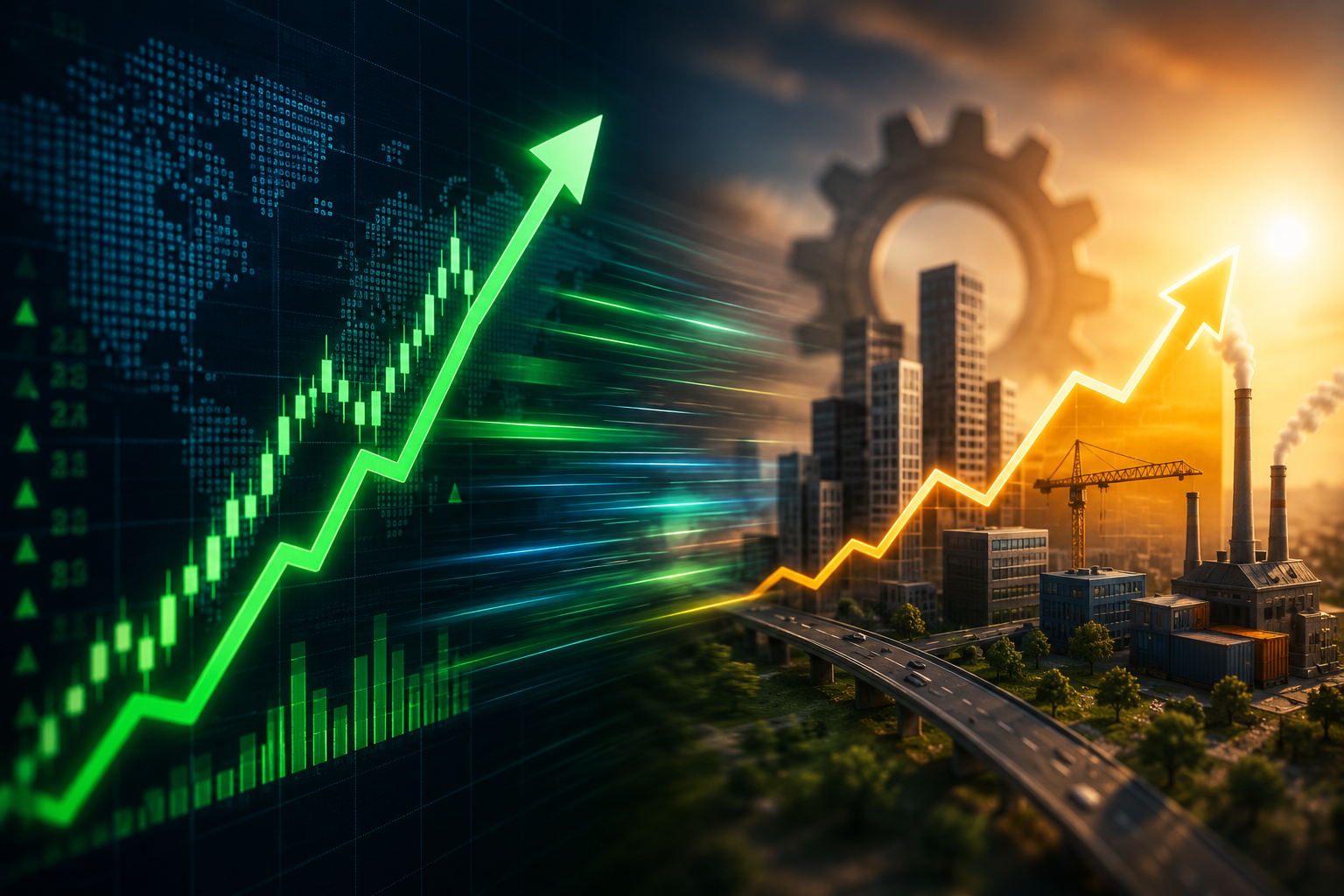
If you want to understand where the economy is going, do not look at current gross domestic product data, employment statistics, or corporate earnings reports. By the time these numbers are printed, they are already old news. Instead, look at the stock market.
Historically, the stock market functions as a reliable leading economic indicator, meaning it rises or falls months before the broader economy follows suit. But why does a collection of digital ticker symbols possess this forecasting power? How can Wall Street be booming when main street is still struggling?
Understanding this disconnect is essential for investors, business owners, and anyone trying to navigate financial markets. Let us dive deep into the mechanics of why the stock market lives in the future.
1. The Core Mechanism: Discounting the Future
The single most important concept to grasp about financial markets is that they do not trade based on current reality. Instead, they trade on expected future realities.
In finance, this is known as the efficient market hypothesis or the forward discounting mechanism. When you buy a share of a company, you are not paying for what the company earned last year, or even what it is earning today. You are buying a claim on all its future cash flows, discounted back to today’s value.
Because institutional investors, hedge funds, and algorithmic trading systems are constantly projecting corporate health six to nine months into the future, stock prices adjust almost instantly when those outlooks change.
The Information Disparity
Economic Data is Lagging: Government metrics like GDP growth, the consumer price index, and unemployment rates are inherently backward looking. They tell us what happened last month or last quarter.
Stock Market Pricing is Real Time: Stock prices react instantly to new information, shifts in consumer behavior, supply chain updates, and geopolitical developments.
Therefore, if investors collectively realize that a recession is likely to end in six months, they will start buying stocks today while prices are low. The market will rally even though current headlines are filled with layoffs and corporate bankruptcies.
2. Liquidity and the Speed of Capital
Economic adjustments take time in the real world. If a business wants to expand, it must secure financing, order equipment, lease property, and interview candidates. This process can take quarters, if not years.
Capital moves at the speed of light. If a fund manager wants to shift billions of dollars out of cash and into equities because they foresee an economic recovery, they can execute that trade in milliseconds.
Market Liquidity vs. Economic Inertia
Feature
The Stock Market
The Real Economy
Transaction Speed
Milliseconds
Months to years
Friction
Extremely low commissions and spreads
High (regulatory compliance, hiring, logistics)
Participant Reaction
Instantaneous capital reallocation
Delayed strategic adjustments
Primary Driver
Shift in asset demand and sentiment
Physical supply and demand cycles
This disparity in friction means the stock market acts like an agile scout car, while the real economy behaves like a massive container ship that takes miles to change direction.
Market vs. Economy Lead-Time Simulator
Adjust future growth expectations and interest rates to see how the market discounts the future today, months before the real economy catches up.
%
Stock Index Reaction (Today)
+13.40%
Immediate forward repricing
Estimated Economic Lag Time
6 to 9 Months
Until data reflects this shift
Running forward discounting simulator models…
3. Current News: How the 2026 Market Proves the Rule
We can observe this phenomenon playing out clearly right now. Throughout early 2026, global markets have experienced dramatic swings that perfectly highlight how expectations outrun real economic data.
The Geopolitical Rebound
In the first half of 2026, markets faced severe volatility due to supply chain strains and geopolitical flareups in the Middle East. However, the moment a peace agreement was reached to secure vital shipping lanes, global stock indices like the S&P 500 and the Dow Jones Industrial Average surged to historic highs.
The physical flow of goods and lower energy bills will take months to filter down to corporate balance sheets and consumer wallets. Yet, Wall Street repriced equities immediately because the expectation of future inflation and supply chain risk dropped overnight.
The AI Infrastructure Supercycle
Similarly, major investment banks like Goldman Sachs and Morgan Stanley note that while real economic GDP growth is projected to be a steady but modest 2.25% to 2.8% for 2026, stock markets are looking much further ahead.
Investors are actively pouring billions into tech infrastructure, software providers, and power utilities to support artificial intelligence adoption. The massive productivity gains and macroeconomic transformations promised by these investments will not show up in official productivity data for years, yet the stock prices of the companies involved are soaring today.
4. The Role of Central Banks and Monetary Policy
Another primary driver of the market's leading nature is its relationship with central bank policy. Central banks, like the Federal Reserve, use interest rates to control economic speed.
Policy Shifts Occur: If the economy slows down, the central bank cuts interest rates to make borrowing cheaper.
Markets React First: Lower interest rates mean that safer assets like bonds or cash deposits yield lower returns. Investors immediately move money into stocks to find better yields, driving equity prices up.
The Economy Reacts Second: It typically takes 12 to 18 months for an interest rate cut to fully work its way through the financial system and stimulate consumer spending and business hiring.
Because the stock market prices in these rate cuts on day one, the market turns bullish long before the cheap credit actually saves businesses on Main Street.
5. Sentiment, Psychology, and Feedback Loops
Finally, we cannot ignore collective human psychology. The stock market is heavily driven by changes in sentiment.
When professional investors see early signs of consumer health improving, order books filling up, or regulatory burdens easing, their confidence jumps. This shift in sentiment causes a surge in buying activity, creating a positive market trend.
Interestingly, this can create a self fulfilling prophecy:
A rising stock market builds corporate confidence.
Companies use their higher valuations to secure cheaper capital or issue equity.
This capital is then used to hire workers and fund innovation, which ultimately drives the real economic recovery.
Conclusion: The Ultimate Look-Ahead Machine
The stock market moves before the economy because it is designed to look forward. It aggregates the collective wisdom, fears, predictions, and capital of millions of participants worldwide, distilling them into a real time price feed.
For everyday observers, understanding this dynamic prevents confusion. When you see the stock market rising during tough economic times, remember: it is not reacting to how things are today, it is celebrating how it expects things to be tomorrow.